Ultimate Bavarian Pretzel Rolls
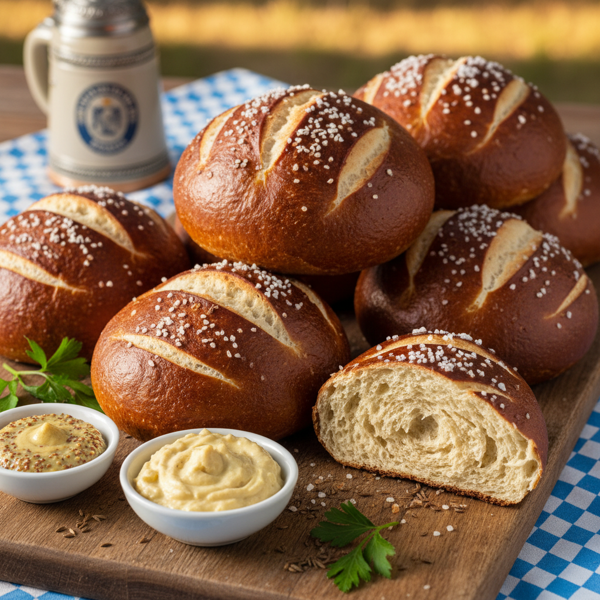
These Ultimate Bavarian Pretzel Rolls are the perfect combination of soft, chewy, and incredibly flavorful. Crafted with a simple one-rise method, this recipe creates pillowy rolls that are ideal for any meal, especially when paired with hearty dishes like Sauerkraut Chowder. With minimal effort and quick preparation, you can impress your family and friends with these delightful rolls that offer a traditional Bavarian experience. They have a beautiful golden-brown exterior, a soft interior, and a subtle hint of sweetness from the brown sugar. Perfect for dipping or enjoying on their own, these rolls will surely become a favorite at your table!
6
Servings
200
Calories
10
Ingredients
Ingredients
Warm water
1 cup (Warm to a temperature of approximately 110°F (43°C).)
Brown sugar
3 tablespoons (Lightly packed.)
Salt
1 teaspoon (Coarse or fine salt.)
Vegetable oil
1/4 cup (Canola or any neutral oil.)
Bread flour
3 cups (Measure by spooning flour into measuring cup.)
Yeast
1 tablespoon (Active dry or instant yeast.)
Water for simmering
6 cups (For the pretzel bath.)
Baking soda
3 tablespoons (To create the pretzel bath.)
Egg white
1 (Beaten, for egg wash.)
Kosher salt
1 tablespoon (For sprinkling on top.)
Instructions
1
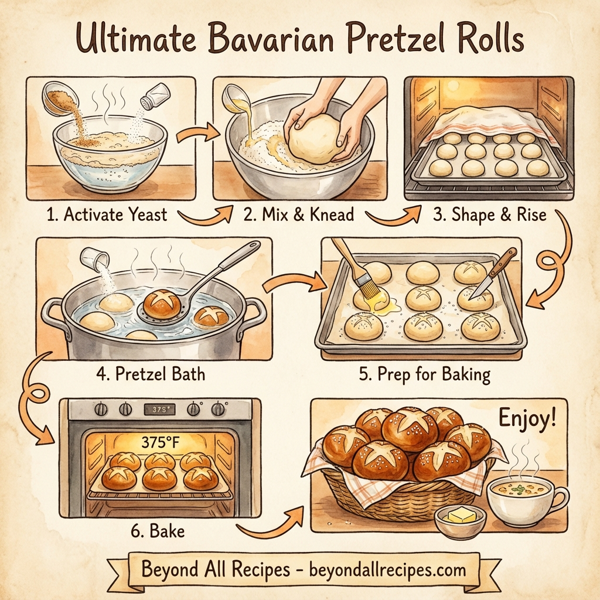
In a large mixing bowl, combine the warm water, brown sugar, salt, and yeast. Allow the mixture to sit for about 5 minutes until foamy.
2
In a separate bowl, mix the oil into the water, and then pour this mixture into the yeast mixture.
3
Gradually add the bread flour to the wet ingredients, mixing until a soft dough forms. The dough should not be sticky. Knead the dough for a few minutes until smooth.
4
Divide the dough into 12 equal portions, rolling each into a ball. Shape each ball into an elongated roll and place them on a greased sheet of foil. Cover with a towel or plastic wrap.
5
For rising, place the dough in a warm oven (set to the lowest temperature, then turn it off) for 20-30 minutes, or until they have doubled in size.
6
While the rolls are rising, prepare the pretzel bath by bringing 6 cups of water and 3 tablespoons of baking soda to a simmer in a wide, straight-sided pan.
7
Once the rolls have risen, carefully place 4 rolls into the simmering water. Simmer each side for 1 minute, ensuring they are fully submerged.
8
Remove the rolls, letting them drain for a moment, and place them on a baking sheet lined with parchment paper. Repeat the process with the remaining rolls.
9
Brush each roll with the beaten egg white and sprinkle generously with kosher salt. For decoration, use a sharp blade to slash the tops of the rolls.
10
Preheat your oven to 375°F (190°C). Once preheated, bake the pretzel rolls for 12-15 minutes until they are a deep golden brown.
11
Remove from the oven, let cool slightly, then serve warm. Enjoy these delightful Bavarian pretzel rolls with your favorite dishes!
Nutrition Information
6g
Fat
32g
Carbs
4g
Protein
Frequently Asked Questions
Frequently Asked Questions
What are Ultimate Bavarian Pretzel Rolls?
They are soft, chewy yeast rolls with a traditional golden-brown pretzel crust and a pillowy interior, inspired by Bavarian baking.
What makes this recipe 'ultimate'?
This recipe is considered ultimate because it uses a simple one-rise method that produces bakery-quality results with minimal effort and quick preparation.
What type of yeast is required?
You can use either active dry yeast or instant yeast for this recipe.
What temperature should the warm water be?
The warm water should be approximately 110°F (43°C) to properly activate the yeast without killing it.
Why is brown sugar used in the dough?
Brown sugar provides a subtle hint of sweetness and helps feed the yeast for a better rise.
Can I use all-purpose flour instead of bread flour?
While bread flour is recommended for the best chewy texture, all-purpose flour can be used as a substitute if needed.
How many rolls does this recipe make?
This recipe is designed to produce 12 equal-sized pretzel rolls.
How long should I knead the dough?
Knead the dough for a few minutes until it becomes smooth and is no longer sticky.
What is the best way to let the dough rise?
Place the shaped rolls in a warm, turned-off oven for 20-30 minutes or until they have doubled in size.
What is a pretzel bath?
A pretzel bath is a mixture of simmering water and baking soda used to treat the dough before baking to create the signature crust.
How much baking soda is needed for the water bath?
You will need 3 tablespoons of baking soda for 6 cups of simmering water.
How long do the rolls stay in the simmering water?
Each roll should simmer for 1 minute per side while ensuring they stay submerged.
What is the purpose of the egg white wash?
The beaten egg white helps the kosher salt adhere to the rolls and gives them a beautiful glossy finish.
What kind of salt is used for the topping?
Kosher salt is recommended for sprinkling on top of the rolls for the best flavor and texture.
What temperature should the oven be set to?
The oven should be preheated to 375°F (190°C).
How long do the pretzel rolls take to bake?
The rolls typically bake for 12-15 minutes until they achieve a deep golden brown color.
Why do I need to slash the tops of the rolls?
Slashing the tops with a sharp blade allows the dough to expand evenly during baking and provides a decorative look.
Are these rolls suitable for sandwiches?
Yes, their sturdy yet soft texture makes them excellent as sandwich buns or for dipping in soups.
What dishes pair well with Bavarian pretzel rolls?
They pair exceptionally well with hearty dishes like Sauerkraut Chowder, stews, or roasted meats.
How should I store leftover rolls?
Store them in an airtight container at room temperature for up to 2 days for the best freshness.
Can I freeze these pretzel rolls?
Yes, these rolls can be frozen in a freezer-safe bag for up to 3 months. Reheat them in the oven for the best texture.
How many calories are in one serving?
Each serving contains approximately 200 calories.
Is this a vegan-friendly recipe?
As written, it contains egg white; however, you can omit the egg wash or use a plant-based substitute to make it vegan.
What type of oil should I use?
Any neutral oil like vegetable or canola oil is perfect for this dough.
How do I know when the rolls have risen enough?
The rolls are ready when they have approximately doubled in size, which usually takes 20-30 minutes in a warm environment.
Can I make the dough in a bread machine?
Yes, you can use the dough setting on a bread machine to mix and knead the dough before shaping and simmering.
Why did my rolls turn out flat?
This usually happens if the yeast was expired, the water was too hot, or the rolls were over-proofed during the rising stage.
What is the serving size for this recipe?
The recipe makes 6 servings, which typically equates to 2 rolls per person.
Do I need parchment paper for baking?
Yes, parchment paper is highly recommended to prevent the rolls from sticking to the baking sheet after the water bath.
Can I use honey instead of brown sugar?
Yes, honey can be used as a 1:1 substitute for brown sugar to provide the necessary sweetness for the yeast.