Tunisian Chickpea Stew (Lablabi)
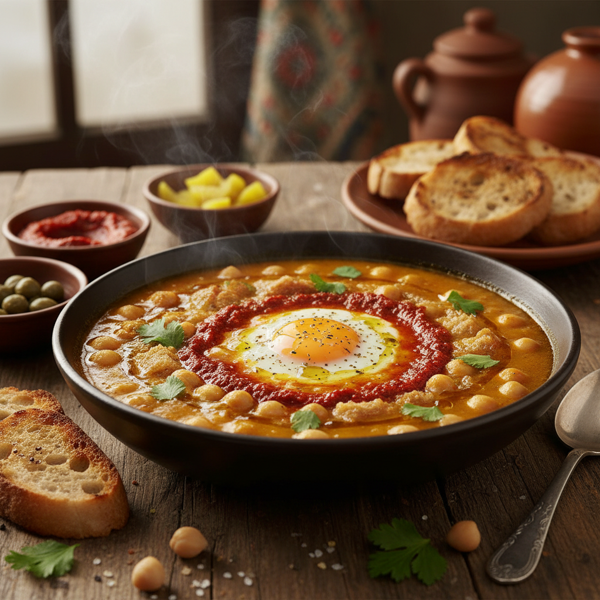
Lablabi is a cherished Tunisian breakfast stew known for its hearty and warming qualities, making it a beloved choice during the colder months. This comforting dish features nutrient-rich chickpeas simmered in a flavorful broth infused with aromatic spices such as cumin and garlic, harmoniously complemented by a kick of hot harissa. Garnished with fresh herbs, tangy pickled turnip, and vibrant vegetables, this versatile stew can be tailored to suit personal preferences. Whether topped with a perfectly coddled egg or dollops of additional harissa, each bite captures the essence of Tunisian morning traditions. Lablabi is not only a meal but an experience, transporting you straight to the bustling streets of Tunis where it is a staple breakfast for hardworking stevedores and food lovers alike.
4
Servings
N/A
Calories
18
Ingredients
Ingredients
Cooked chickpeas
4 cups (drained)
Hot harissa
2 tablespoons (n/a)
Garlic cloves
4 large (mashed)
Freshly ground cumin seed
1 tablespoon (n/a)
Salt
to taste (n/a)
Lemon
1 (juiced)
Extra-virgin olive oil
1/4 cup (n/a)
Coarse sea salt
to taste (n/a)
Coddled egg
1 per serving (cooked)
Green bell pepper
1 (seeded and finely chopped)
Very ripe tomatoes
2 (chopped)
Harissa
as desired (dollops)
Capers
2 tablespoons (rinsed)
Pickled turnip
1/4 cup (sliced)
Fresh parsley leaves
1/4 cup (finely chopped)
Fresh cilantro leaves
1/4 cup (finely chopped)
Leftover bread
as needed (ripped)
Extra-virgin olive oil
for drizzling (n/a)
Instructions
1
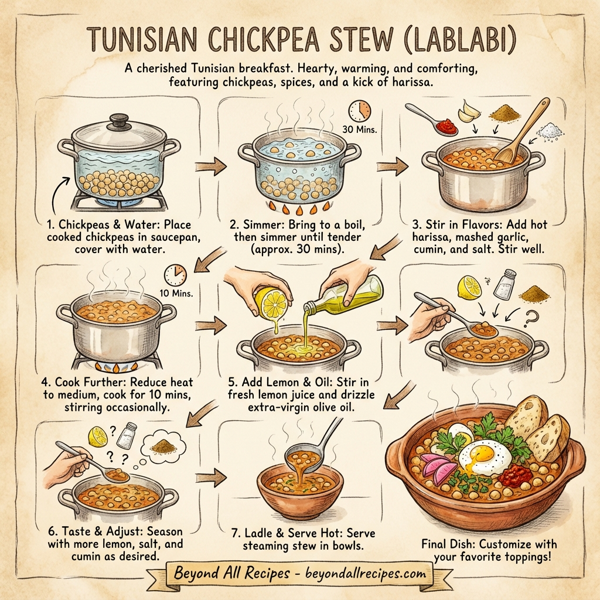
In a large saucepan, place the cooked chickpeas and cover them with enough water.
2
Bring the water to a boil and let the chickpeas simmer until they are tender, approximately 30 minutes.
3
Once softened, add the hot harissa, mashed garlic cloves, freshly ground cumin, and salt. Stir well to combine.
4
Reduce the heat to medium and allow the mixture to cook for an additional 10 minutes, stirring occasionally to enhance the flavors.
5
Add the freshly squeezed lemon juice and drizzle in the extra-virgin olive oil, stirring gently to incorporate.
6
Taste the stew and adjust the seasoning with additional lemon juice, salt, and ground cumin as desired.
7
Ladle the steaming stew into bowls and serve hot, inviting diners to customize their bowls with a selection of optional garnishes.
Nutrition Information
Frequently Asked Questions
Frequently Asked Questions
What is Lablabi?
Lablabi is a cherished Tunisian breakfast stew known for its hearty and warming qualities, featuring chickpeas in a flavorful broth.
What are the primary ingredients in Tunisian Chickpea Stew?
The main ingredients include cooked chickpeas, hot harissa, garlic cloves, freshly ground cumin, lemon, and extra-virgin olive oil.
Is Lablabi considered a breakfast food?
Yes, it is a staple breakfast for hardworking stevedores and food lovers in the bustling streets of Tunis.
How long should the chickpeas simmer?
The chickpeas should simmer for approximately 30 minutes until they are tender.
What gives Lablabi its spicy kick?
The spiciness comes from the addition of hot harissa, which can be adjusted to personal preference.
How is garlic prepared for this recipe?
The recipe calls for four large garlic cloves that have been mashed.
Is Lablabi a vegetarian dish?
Yes, the base of the stew is vegetarian, though it is often served with an optional coddled egg.
How many servings does this recipe provide?
This recipe is designed to serve 4 people.
What kind of bread is used in Lablabi?
The stew is traditionally served with ripped pieces of leftover bread.
What type of cumin is best for this stew?
Freshly ground cumin seed is recommended for the most aromatic flavor.
Can I add an egg to the stew?
Yes, it is common to top each serving with one cooked coddled egg.
What role does lemon play in the recipe?
Freshly squeezed lemon juice is added at the end of cooking and used for final seasoning adjustments.
What vegetables can be used as garnishes?
Recommended garnishes include chopped green bell peppers and very ripe chopped tomatoes.
Are there specific herbs used in Lablabi?
Yes, finely chopped fresh parsley and cilantro leaves are used as garnishes.
What is the importance of olive oil in this dish?
Extra-virgin olive oil is stirred into the stew and also used as a final drizzle for richness.
What kind of salt should I use?
The recipe suggests using both regular salt for cooking and coarse sea salt to taste.
Are capers used in Tunisian Chickpea Stew?
Yes, two tablespoons of rinsed capers can be used as a garnish.
Is pickled turnip included in the recipe?
Yes, 1/4 cup of sliced pickled turnip is a traditional tangy garnish for this dish.
During which season is Lablabi most popular?
It is particularly beloved during the colder winter months for its warming qualities.
How long do you cook the stew after adding the spices?
After adding the harissa, garlic, and cumin, you should cook it for an additional 10 minutes.
Can I customize the flavor of my bowl?
Yes, the stew is designed to be tailored to personal preference with a selection of optional garnishes.
What is the texture of the chickpeas in the final dish?
The chickpeas should be cooked until they are tender and softened.
Is this a one-dish meal?
Yes, Lablabi is considered a hearty one-dish meal that is nutrient-rich.
Should the chickpeas be drained before starting?
Yes, the 4 cups of cooked chickpeas should be drained before being placed in the saucepan.
Can I add more harissa at the table?
Yes, diners are encouraged to add dollops of additional harissa as desired.
What type of peppers are used?
The recipe uses one seeded and finely chopped green bell pepper.
How should the stew be served?
Ladle the steaming stew into bowls and serve it hot with various toppings.
Is Lablabi a traditional street food?
Yes, it is a staple of Tunisian morning traditions found in the streets of Tunis.
How much cumin is required?
The recipe calls for one tablespoon of freshly ground cumin seed.
Can I adjust the seasonings after cooking?
Yes, you should taste the stew and adjust with more lemon, salt, or cumin as desired before serving.