Tropical Pork Chow Mein
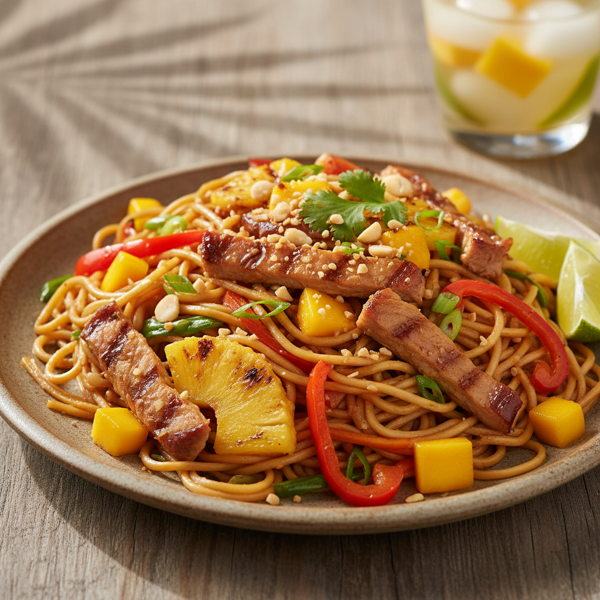
This delightful Tropical Pork Chow Mein takes conventional stir-fry to an entirely new level with the unexpected sweetness of ripe mango combined with tender slices of pork. Developed on a whim when I found myself short on hoisin sauce, this dish pairs classic chow mein ingredients such as sautéed cabbage, carrots, and onions, with the vibrant, fruity flavor of mango. A harmony of Eastern and tropical flavors emerges, boosted by a hint of spice from sriracha and the depth from fish sauce and plum sauce. Perfect for a weeknight dinner or impressing guests, this recipe makes use of readily available ingredients while bringing a fresh twist to your table!
N/A
Servings
500
Calories
18
Ingredients
Ingredients
Top Ramen noodles
6 (3-ounce packages, any flavor)
Cabbage
1/4 head (chopped)
Carrots
8 ounces (shredded)
White onion
1 medium (sliced thinly)
Scallions
5 (chopped)
Hoisin sauce
3-4 tablespoons (to taste)
Soy sauce
to taste
White pepper
1 1/2 teaspoons
Pork loin
12 ounces (sliced thinly)
Mango
1 medium (diced)
Sriracha hot sauce
1 tablespoon
Plum sauce
1 1/2 tablespoons
Fish sauce
2 teaspoons
Lime
1/2 (juice of)
Water
1 tablespoon
Cornstarch
1 tablespoon
Sugar
1 tablespoon
White vinegar
2 teaspoons
Instructions
1
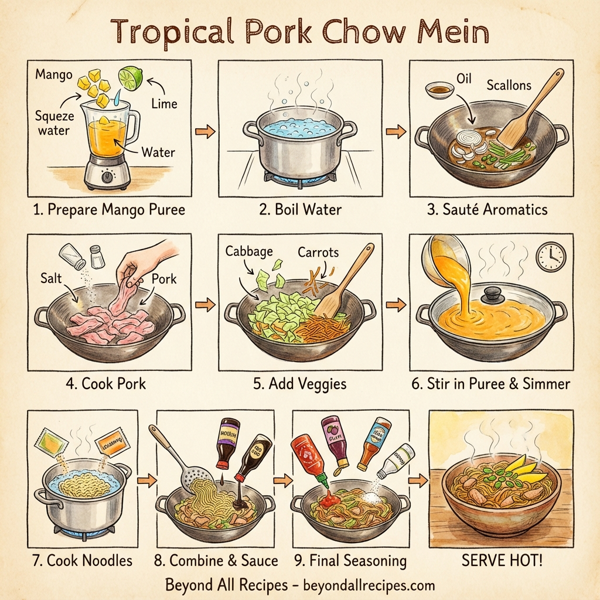
Prepare the mango puree by combining the diced mango, lime juice, and a tablespoon of water in a blender. Blend until smooth and set aside.
2
In a large pot, fill with water 2/3 to 3/4 full and set to boil over high heat. Optionally, cover with a lid to speed up boiling.
3
While the water is heating, heat a tablespoon of oil in a wok over medium-high heat.
4
Add the sliced onions and chopped scallions to the wok. Sauté for 1-2 minutes until the onions become translucent.
5
Introduce the thinly sliced pork loin to the wok, seasoning with salt and 1 1/2 teaspoons of white pepper. Toss quickly for about 20 seconds until the pork starts to brown.
6
Add the chopped cabbage and shredded carrots to the wok, tossing everything together for about 45 seconds until slightly tender.
7
Stir in the mango puree and lower the heat to medium. Cook for an additional 5-8 minutes, stirring continuously, until the pork is fully cooked and flavors meld together.
8
Once the water has reached a rolling boil, add the ramen noodles and cook according to package instructions until slightly undercooked. Remove from heat and incorporate the included seasoning packets, mixing well.
9
Using a slotted spoon, transfer the cooked ramen to the wok with the pork and vegetables. Add 3-4 tablespoons of hoisin sauce and a splash of soy sauce. Toss everything together to combine evenly and coat the noodles in the sauce.
10
Finally, drizzle with sriracha hot sauce, plum sauce, fish sauce, and a sprinkle of sugar and white vinegar to enhance the flavors. Stir well and serve hot.
Nutrition Information
13g
Fat
75g
Carbs
25g
Protein
Frequently Asked Questions
Frequently Asked Questions
What is Tropical Pork Chow Mein?
Tropical Pork Chow Mein is a unique stir-fry dish that combines traditional chow mein ingredients like pork, cabbage, and carrots with the sweetness of fresh mango and a blend of tropical and Asian sauces.
What inspired the creation of this mango-infused chow mein?
The recipe was developed on a whim when the cook was short on hoisin sauce and decided to experiment with ripe mango to create a sweet and savory flavor harmony.
How many calories are in a serving of Tropical Pork Chow Mein?
This dish contains approximately 500 calories per serving.
How much protein is in this recipe?
Each serving provides 25g of protein, primarily from the pork loin.
What are the primary carbohydrates in this dish?
The carbohydrates, totaling 75g per serving, come mainly from the ramen noodles and the fresh mango.
What type of noodles are used in this recipe?
The recipe uses six 3-ounce packages of Top Ramen noodles, which can be any flavor.
Which cut of pork is recommended for this chow mein?
The recipe calls for 12 ounces of thinly sliced pork loin.
How do I prepare the mango for the sauce?
Dice one medium mango and blend it with lime juice and a tablespoon of water until smooth to create a puree.
What vegetables are included in the stir-fry?
The dish includes a quarter head of chopped cabbage, 8 ounces of shredded carrots, one sliced white onion, and five chopped scallions.
Is Tropical Pork Chow Mein spicy?
It has a moderate kick from one tablespoon of sriracha hot sauce and 1.5 teaspoons of white pepper.
What gives the dish its 'tropical' flavor profile?
The combination of fresh mango puree, lime juice, and plum sauce creates the vibrant tropical profile.
Should I use the seasoning packets that come with the ramen?
Yes, the instructions specify to incorporate the seasoning packets into the noodles after they are cooked and drained.
How long does it take to cook the pork and vegetables together?
After the initial sauté, the pork and vegetables are cooked with the mango puree for an additional 5-8 minutes.
Can I substitute the white onion?
Yes, while white onion is specified for its sharp flavor, a yellow onion can be used as a substitute.
What is the purpose of adding fish sauce?
Fish sauce adds a salty, savory depth (umami) that balances the sweetness of the mango and plum sauce.
How much hoisin sauce should I use?
The recipe recommends 3 to 4 tablespoons of hoisin sauce, adjusted to your personal taste.
Do I need to cook the ramen noodles fully in the water?
No, you should cook them until they are slightly undercooked so they don't become mushy when tossed in the wok.
What is the role of cornstarch in this recipe?
Cornstarch is included in the ingredients to help thicken the sauce and provide a better coating for the noodles and pork.
Can I use bottled lime juice instead of fresh lime?
Fresh lime is preferred for the puree, but bottled juice can be used if fresh is unavailable.
How much fat is in this recipe?
There are 13 grams of fat per serving.
Is there any added sugar in this recipe?
Yes, one tablespoon of sugar is added at the end to enhance and balance the overall flavor.
What kind of vinegar is used for the finishing touch?
The recipe calls for two teaspoons of white vinegar to provide a slight tang.
How many scallions do I need?
You will need five scallions, which should be chopped before adding to the stir-fry.
Can I make this dish vegetarian?
You can make it vegetarian by substituting the pork for tofu and ensuring the ramen and fish sauce are vegetarian-friendly.
When do I add the plum sauce?
Plum sauce is drizzled over the dish at the final stage along with the sriracha and fish sauce.
How much water is added to the mango puree?
One tablespoon of water is blended with the mango and lime juice.
What is the first step in the instructions?
The first step is preparing the mango puree by blending diced mango, lime juice, and water.
How should I cut the cabbage?
The cabbage should be chopped into bite-sized pieces for even cooking.
Is this recipe suitable for a quick weeknight dinner?
Yes, its use of ramen noodles and quick-cooking pork makes it an ideal fast and impressive meal.
Should the noodles be rinsed after boiling?
The recipe does not require rinsing; instead, you incorporate the seasoning packets and transfer them directly to the wok.