Tropical Coconut Rice Pancakes
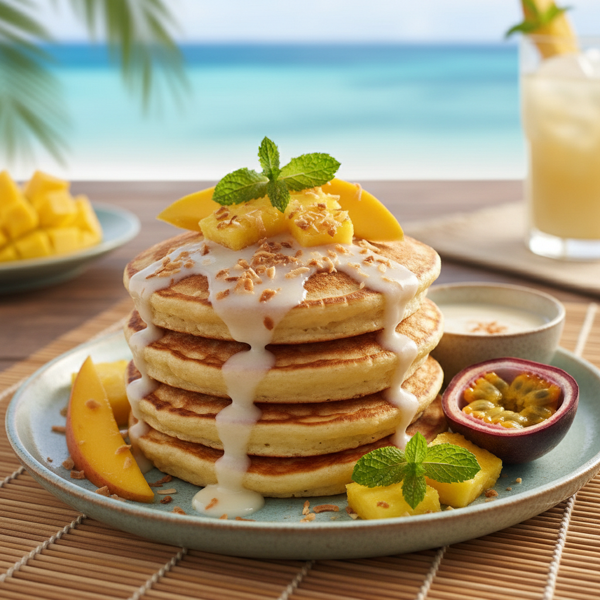
Tropical Coconut Rice Pancakes, known as Vibibi in Swahili, are a beloved breakfast treat throughout East Africa, particularly in Kenya and Tanzania. This unique pancake is made with rice flour and enriched with creamy coconut milk, creating a delightful flavor and texture that transports your taste buds to sun-soaked shores. The key to achieving the perfect pancake lies in the consistency of the batter—it should be just right: neither too thick nor too thin. These pancakes are not only gluten-free but also a deliciously comforting meal that pairs beautifully with a hot cup of masala chai or fresh fruit. Perfect for breakfast, brunch, or as a satisfying snack, these pancakes will delight anyone eager to explore the vibrant tastes of East Africa.
N/A
Servings
N/A
Calories
7
Ingredients
Ingredients
Yeast
1 (tablespoon)
Warm Water
1/2 (cup)
Rice Flour
2 (cups)
Coconut Milk
1 1/2 (cups (canned))
Cardamom
1/4 (teaspoon)
Sugar
1 (cup)
Oil
1/4 (cup (for cooking))
Instructions
1
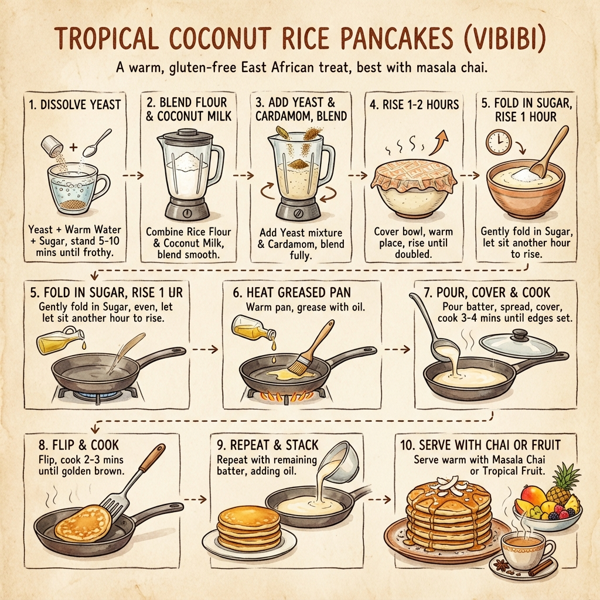
Start by dissolving the yeast in 1/2 cup of warm water with a pinch of sugar. Allow it to stand until frothy, about 5-10 minutes.
2
In a blender, combine the rice flour and coconut milk. Blend until smooth and without lumps, creating a creamy batter.
3
Add the frothy yeast mixture and ground cardamom to the batter. Blend once more until fully incorporated.
4
Transfer the batter to a bowl, cover with a cloth, and place it in a warm environment. Let it rise for around 1-2 hours until it has doubled in volume.
5
Once the batter has risen, gently fold in the sugar, mixing well, and allow it to sit for another hour in a warm place to rise further.
6
On medium heat, warm a non-stick frying pan and lightly grease with oil, spreading it evenly across the surface.
7
Pour a ladleful of batter into the pan, gently spreading it into a circular shape, akin to a regular pancake. Cover the pan with a lid to retain heat.
8
Cook until the edges look set and the underside is golden brown, about 3-4 minutes. Carefully flip the pancake and cook for an additional 2-3 minutes until golden brown.
9
Transfer the cooked pancake to a warm plate and repeat the process with the remaining batter, adding more oil as needed.
10
Serve warm with a side of your favorite masala chai or fresh tropical fruits for a delightful breakfast experience.
Nutrition Information
Frequently Asked Questions
Frequently Asked Questions
What are Tropical Coconut Rice Pancakes?
Known as Vibibi in Swahili, these are East African pancakes made with rice flour and coconut milk, popular in Kenya and Tanzania.
What does the name Vibibi refer to?
Vibibi is the Swahili name for these delicious tropical coconut rice pancakes.
Are these pancakes gluten-free?
Yes, because they are made with rice flour instead of wheat flour, they are naturally gluten-free.
What is the base flour used in this recipe?
The recipe uses rice flour to create its unique texture.
What kind of milk is used for Vibibi?
Canned coconut milk is used to give the pancakes a creamy flavor and tropical aroma.
How do I prepare the yeast?
Dissolve the yeast in 1/2 cup of warm water with a pinch of sugar and let it stand for 5-10 minutes until frothy.
What should the batter consistency look like?
The batter should be balanced; it should be neither too thick nor too thin.
How long does the first rising process take?
The batter needs to rise in a warm environment for about 1 to 2 hours until it doubles in volume.
When should I add sugar to the batter?
Sugar is gently folded into the batter after the first initial rise of 1-2 hours.
Is there a second rising period?
Yes, after adding the sugar, the batter should sit for another hour in a warm place to rise further.
What spice provides the flavor in these pancakes?
Ground cardamom is added to the batter for a traditional aromatic flavor.
What equipment is best for cooking Vibibi?
A non-stick frying pan is recommended to prevent sticking and ensure even browning.
Do I need to use oil for cooking?
Yes, the pan should be lightly greased with oil, spread evenly across the surface.
How do I shape the pancakes?
Pour a ladleful of batter into the pan and gently spread it into a circular shape, similar to a regular pancake.
Why should I use a lid while cooking?
Covering the pan with a lid helps retain heat and ensures the pancake sets properly.
How long does it take to cook the first side?
The first side typically takes 3 to 4 minutes until the edges are set and the bottom is golden brown.
How long do I cook the second side?
After flipping, cook the pancake for an additional 2 to 3 minutes until golden brown.
What heat setting should I use?
Use medium heat to ensure the pancakes cook through without burning.
What are the traditional side dishes for Vibibi?
They are traditionally served with masala chai or fresh tropical fruits.
Can these be served for brunch?
Absolutely, they are perfect for breakfast, brunch, or even as a satisfying snack.
Are these pancakes vegan?
Based on the ingredients (rice flour, coconut milk, yeast, sugar, cardamom, oil), this recipe is vegan-friendly.
How many ingredients are required for this recipe?
There are 7 main ingredients: yeast, warm water, rice flour, coconut milk, cardamom, sugar, and oil.
How much rice flour is needed?
The recipe calls for 2 cups of rice flour.
What type of coconut milk is recommended?
The recipe specifies using 1 1/2 cups of canned coconut milk.
Where is East Africa are these most popular?
They are particularly beloved in the coastal regions of Kenya and Tanzania.
Can I use a blender for this recipe?
Yes, a blender is used to combine the rice flour and coconut milk into a smooth, lump-free batter.
How much cardamom should I use?
The recipe suggests 1/4 teaspoon of cardamom.
Is the sugar added at the beginning?
No, only a pinch is used for the yeast; the main cup of sugar is added after the first rise.
How much oil is needed for cooking?
The recipe uses approximately 1/4 cup of oil for the frying process.
Can I store the leftovers?
While best served warm, they can be stored and reheated, though they are most delicious fresh from the pan.