Tropical Coconut Pineapple Dinner Rolls
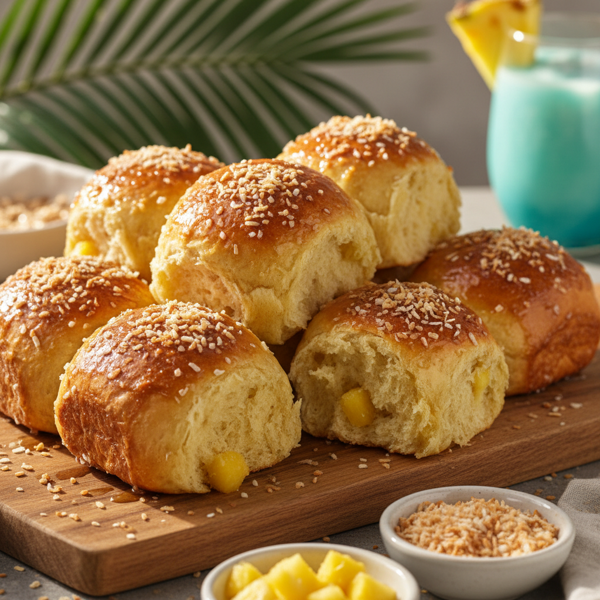
Transform your meals with these irresistibly soft Tropical Coconut Pineapple Dinner Rolls! Inspired by the beloved Hawaiian rolls, these fluffy, sweet rolls are enhanced with the delightful flavors of fresh pineapple juice and rich coconut extract, guaranteeing compliments at every gathering. Perfect for potlucks, barbecues, or family dinners, each bite melts in your mouth, bringing sunny island vibes to your table. Using McCormick brand coconut extract is essential to achieve the perfect flavor profile. For the fluffy texture everyone raves about, ensure your ingredients are at room temperature and your kitchen is warm. Your family will be begging for these rolls on repeat!
15
Servings
140
Calories
12
Ingredients
Ingredients
Pineapple juice
1 cup (100% juice)
Egg
1 large (beaten)
Milk
1/3 cup (at room temperature)
Butter
4 tablespoons (cut into small pieces)
McCormick coconut extract
1-2 teaspoons (for flavor)
Ground ginger
1/2 teaspoon (add directly)
Salt
1 teaspoon (add directly)
Sugar
1/3 cup (add directly)
Potato flakes
1/2 cup (add directly)
Flour
3 1/2 cups (add directly)
Active dry yeast
2 1/4 teaspoons (use to activate)
Butter
for brushing (melted for topping)
Instructions
1
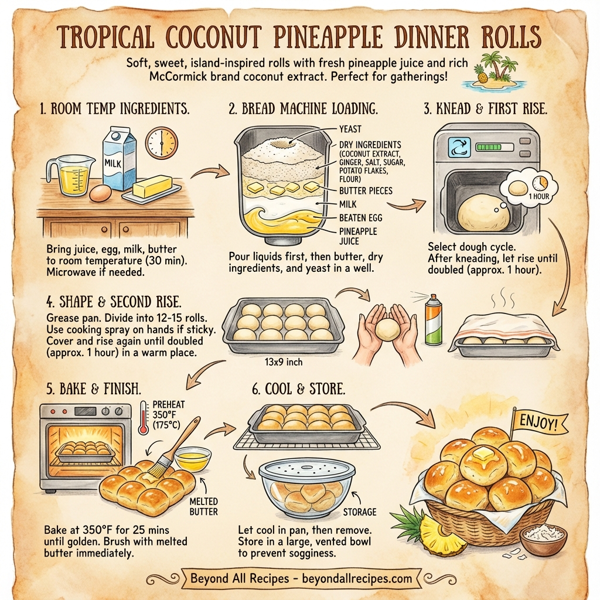
Start by bringing all cold ingredients (pineapple juice, egg, milk, butter) to room temperature by letting them sit out for about 30 minutes. You can speed this up using a microwave if needed.
2
Pour the pineapple juice into the bread machine.
3
Add the beaten egg to the bread machine.
4
Incorporate the milk into the mixture in the bread machine.
5
Cut the butter into small pieces (no more than 1 tablespoon each) and distribute them in the bread machine.
6
Add the McCormick coconut extract, ground ginger, salt, sugar, potato flakes, and flour to the bread machine in that exact order.
7
Make a small well in the flour and pour the active dry yeast into the well, ensuring it doesn’t touch the salt or liquid ingredients too soon.
8
Select the dough cycle on your bread machine and start it to knead the dough.
9
Once the dough has finished kneading, allow it to rise in the bread machine until it has doubled in size, which should take about 1 hour.
10
Grease a 13x9 inch baking pan thoroughly.
11
Carefully divide the dough into 12-15 equal portions and shape each piece into a roll, placing them next to each other in the prepared baking pan to ensure soft sides.
12
Avoid adding additional flour if the dough feels sticky; instead, grease your hands with cooking spray to make handling easier. Remember, the stickiness leads to fluffier rolls.
13
Cover the rolls with a towel and allow them to rise again until doubled in size, approximately 1 hour, in a warm place.
14
Preheat your oven to 350°F (175°C).
15
Once the rolls have risen, bake in the preheated oven for about 25 minutes or until the tops are a golden brown.
16
As soon as you remove the rolls from the oven, brush the tops with melted butter to add flavor and moisture.
17
Let the rolls cool in the pan until they are safe to handle, then carefully remove them from the pan.
18
If you aren't enjoying the rolls immediately, transfer them to a large, covered bowl, ensuring the lid is vented to prevent sogginess while still allowing enough airflow to avoid crustiness as they cool.
Nutrition Information
4.4g
Fat
22g
Carbs
3.6g
Protein
0.4g
Fiber
5.7g
Sugar
Frequently Asked Questions
Frequently Asked Questions
What are Tropical Coconut Pineapple Dinner Rolls?
These are soft, fluffy dinner rolls inspired by Hawaiian rolls, featuring the tropical flavors of pineapple juice and coconut extract.
What is the secret to making these rolls fluffy?
The secret to fluffy rolls is ensuring all ingredients are at room temperature and keeping the kitchen warm during the rising process.
How many rolls does this recipe make?
This recipe typically yields 15 servings, or about 12 to 15 dinner rolls depending on how you divide the dough.
Why is McCormick coconut extract recommended?
Using McCormick brand coconut extract is suggested to achieve a specific, high-quality flavor profile that complements the pineapple juice perfectly.
Can I use cold juice and eggs?
It is best to let pineapple juice, eggs, milk, and butter sit out for 30 minutes to reach room temperature before starting.
What type of pineapple juice should I use?
The recipe calls for 1 cup of 100% pineapple juice for the best natural sweetness and flavor.
Why are potato flakes included in the ingredients?
Potato flakes help the dough retain moisture, resulting in a softer, more tender roll that stays fresh longer.
Is a bread machine required for this recipe?
The recipe is designed for a bread machine dough cycle, which handles the kneading and the first rise automatically.
In what order should I add ingredients to the bread machine?
Add liquids first (juice, egg, milk), then butter, then dry ingredients (extract, spices, salt, sugar, flakes, flour), and finally the yeast in a small well.
How should I add the yeast to the bread machine?
Make a small well in the flour and pour the active dry yeast inside, ensuring it does not touch the salt or liquid ingredients immediately.
How long is the first rise in the bread machine?
The first rise should last until the dough has doubled in size, which usually takes about 1 hour.
What should I do if the dough feels sticky?
Do not add more flour; instead, grease your hands with cooking spray to handle the dough, as stickiness results in a fluffier roll.
How long do the rolls need to rise a second time?
After shaping the rolls in the pan, cover them and let them rise in a warm place for approximately 1 hour or until doubled.
What size pan is best for baking these rolls?
A thoroughly greased 13x9 inch baking pan is ideal for 12 to 15 rolls.
What temperature should the oven be?
Preheat your oven to 350 degrees Fahrenheit or 175 degrees Celsius.
How long do these rolls take to bake?
Bake the rolls for about 25 minutes or until the tops reach a golden brown color.
Why should I brush the rolls with melted butter?
Brushing with melted butter immediately after baking adds extra flavor and helps lock in moisture.
How should I store the rolls after they cool?
Place them in a large, covered bowl with a vented lid to prevent sogginess while maintaining airflow.
How many calories are in one roll?
Each roll contains approximately 140 calories.
Are these rolls high in fat?
Each roll contains about 4.4 grams of fat.
Do these rolls contain fiber?
Yes, each roll provides approximately 0.4 grams of dietary fiber.
How much sugar is in each roll?
There are 5.7 grams of sugar per serving.
Can I make these rolls for a potluck?
Yes, these rolls are perfect for potlucks, barbecues, or family dinners due to their soft texture and sweet flavor.
What kind of yeast does this recipe use?
The recipe specifies 2 and 1/4 teaspoons of active dry yeast.
How much flour is needed?
The recipe requires 3 and 1/2 cups of flour.
Can I use a microwave to warm ingredients?
Yes, you can use a microwave to quickly bring cold ingredients to room temperature if you are short on time.
Why is ground ginger used in the dough?
Ground ginger adds a subtle hint of spice that enhances the tropical pineapple and coconut notes.
How should I divide the dough?
Divide the dough into 12 to 15 equal portions and place them next to each other in the pan to create soft sides.
Is this recipe suitable for beginners?
Yes, especially when using a bread machine, as it simplifies the kneading and rising process.
Are these rolls similar to those found in Hawaii?
Yes, they are inspired by the beloved sweet rolls common in Hawaiian cuisine but enhanced with coconut.