Traditional Thai Red Curry Paste
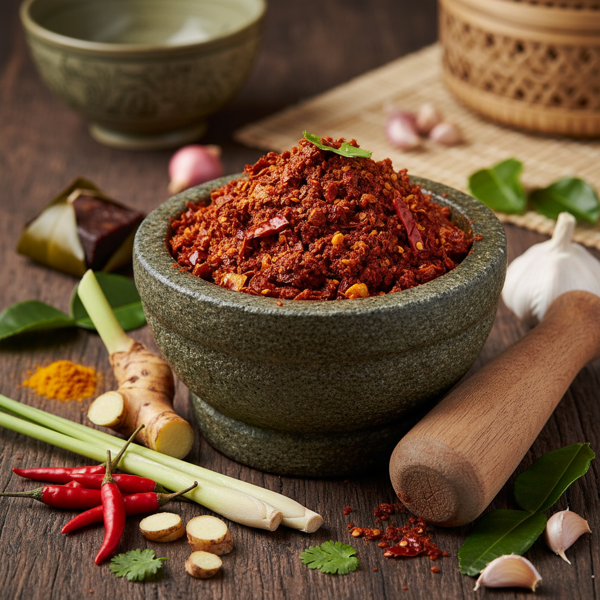
This Traditional Thai Red Curry Paste is a staple in authentic Thai cuisine. This recipe was learned at a renowned Thai cooking school in Australia, linked to a notable Thai restaurant praised for its authentic flavors. This paste forms the foundation of many Thai dishes and infuses them with a rich, aromatic blend of herbs and spices. It is intended to be deeply flavorful, capturing the essence of Thai culinary traditions. A versatile base for meats and vegetables, this concentrate will delight your taste buds. Utilize 1/2 cup of the paste, combined with 1 1/2 cups of coconut cream, 2 tablespoons of palm sugar, and 3 tablespoons of fish sauce to create a splendid sauce for 500g (1 lb) of meat. The paste can be stored in an airtight jar in the refrigerator for up to three weeks or divided into portions, frozen, and kept for later use. Remember, maintaining ingredient authenticity is key to achieving the desired Thai taste of this recipe.
3
Servings
60
Calories
13
Ingredients
Ingredients
dried red chilies
15 (deseeded, soaked in hot water)
small red onions
2 (quartered)
garlic cloves
12 (roughly chopped)
lemongrass stalks
2 (crushed, white part chopped finely)
galangal
1 tablespoon (peeled and chopped)
coriander roots
2 tablespoons (scraped, washed, and chopped)
lime zest
1 tablespoon (finely shredded)
white peppercorns
2 teaspoons (unground)
coriander seeds
2 teaspoons (roasted)
cumin seeds
1 teaspoon (roasted)
mace
1/2 teaspoon (roasted)
salt
2 teaspoons (unground)
shrimp paste
2 teaspoons (roasted in foil)
Instructions
1
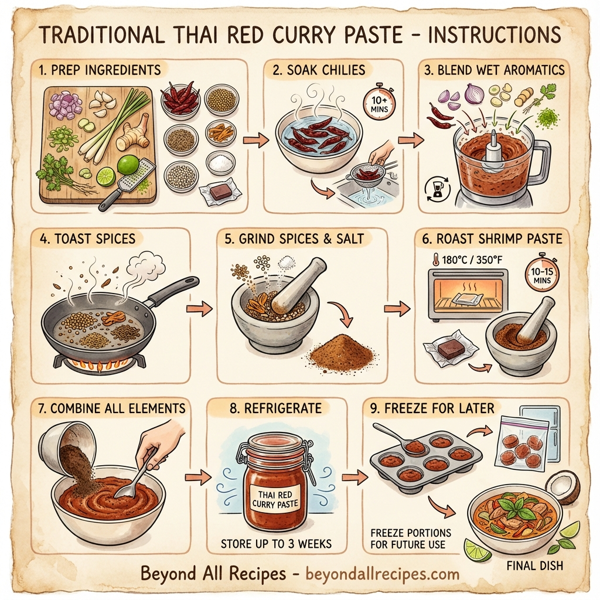
Prepare each ingredient as directed in the ingredient list, ensuring they are fresh and properly measured.
2
Pour boiling water over the deseeded dried red chilies and let them soak for at least 10 minutes. Once rehydrated, drain and discard the soaking water.
3
In a food processor, blend the softened chilies, red onions, garlic cloves, lemongrass, galangal, coriander roots, and lime zest until you achieve a smooth puree.
4
Separately, roast coriander seeds, cumin seeds, and mace in a dry pan over medium heat until fragrant and lightly toasted.
5
Using a mortar and pestle or a small food processor, grind the toasted spices with white peppercorns and salt until finely ground.
6
Roast the shrimp paste by wrapping it in foil and placing it in a preheated oven at 180°C (350°F) for 10-15 minutes. Then, add it to the ground spices and grind again until fully combined.
7
Incorporate the spice-shrimp paste mixture into the vegetable puree, ensuring all elements are thoroughly mixed and homogeneous.
8
Transfer the curry paste into a tightly sealed glass jar and store it in the refrigerator for up to three weeks.
9
Alternatively, portion the paste into 1/4 or 1/2 cup servings, freeze them in a muffin tin, and store the canisters in a zip-lock bag in the freezer for future use.
Nutrition Information
2g
Fat
9.3g
Carbs
1.3g
Protein
2.3g
Fiber
1267mg
Sodium
Frequently Asked Questions
Frequently Asked Questions
What is Traditional Thai Red Curry Paste?
It is a staple foundation in authentic Thai cuisine, featuring a rich, aromatic blend of herbs and spices.
Where did this specific recipe originate?
This recipe was learned at a renowned Thai cooking school in Australia, which is linked to a notable Thai restaurant.
How should I prepare the dried red chilies?
The chilies should be deseeded and soaked in boiling water for at least 10 minutes before draining.
What is the first step in combining the ingredients?
Blend the softened chilies, red onions, garlic, lemongrass, galangal, coriander roots, and lime zest in a food processor until smooth.
Which spices require roasting in a dry pan?
Coriander seeds, cumin seeds, and mace should be roasted over medium heat until fragrant.
How do I prepare the shrimp paste for this recipe?
Wrap the shrimp paste in foil and roast it in a preheated oven at 180°C (350°F) for 10 to 15 minutes.
How long can I store the curry paste in the refrigerator?
The paste can be kept in a tightly sealed glass jar in the refrigerator for up to three weeks.
Can this Thai red curry paste be frozen?
Yes, you can portion the paste into servings, freeze them in a muffin tin, and store them in a zip-lock bag.
What is the recommended amount of paste for a curry using 500g of meat?
You should use 1/2 cup of the curry paste.
What additional ingredients are needed to make a sauce with the paste?
Combine the paste with 1 1/2 cups of coconut cream, 2 tablespoons of palm sugar, and 3 tablespoons of fish sauce.
How many calories are in a serving of this paste?
Each serving contains 60 calories.
What is the fat content per serving?
The fat content is 2g per serving.
How many carbohydrates are in each serving?
There are 9.3g of carbohydrates per serving.
What is the protein content of the paste?
The paste contains 1.3g of protein per serving.
How much fiber does this recipe provide?
Each serving provides 2.3g of fiber.
What is the sodium content per serving?
The sodium content is 1267mg per serving.
How many ingredients are required for this recipe?
The recipe requires 13 specific ingredients.
How should the lemongrass be prepared?
The lemongrass stalks should be crushed, and the white part should be chopped finely.
What part of the coriander is used in the paste?
The recipe calls for 2 tablespoons of scraped, washed, and chopped coriander roots.
How should the galangal be processed?
The galangal should be peeled and chopped before being added to the mix.
What type of peppercorns should be used?
Use 2 teaspoons of unground white peppercorns.
Is lime zest included in the ingredients?
Yes, the recipe uses 1 tablespoon of finely shredded lime zest.
How many garlic cloves are needed?
The recipe calls for 12 roughly chopped garlic cloves.
What type of onions are recommended?
The recipe specifies 2 small red onions, quartered.
How is the final homogeneous mixture achieved?
By incorporating the spice-shrimp paste mixture into the vegetable puree and mixing thoroughly.
Is a mortar and pestle used in this recipe?
Yes, a mortar and pestle or a small food processor is used to grind the roasted spices.
What is the preparation for the mace?
Use 1/2 teaspoon of roasted mace.
How much salt is used in the recipe?
The recipe uses 2 teaspoons of unground salt.
How many servings does the base recipe make?
The recipe is calculated for 3 servings.
What is the key to achieving the desired authentic Thai taste?
Maintaining ingredient authenticity is the key to achieving the proper flavor profile.