Traditional Swedish Knäckebröd
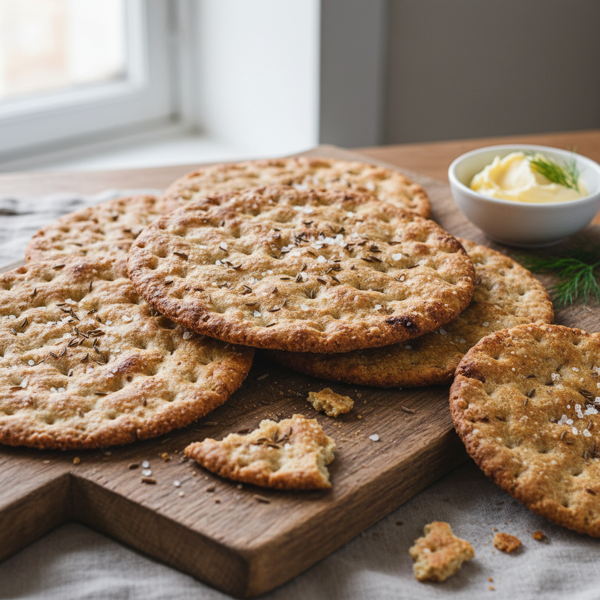
Experience a taste of Sweden with this Traditional Swedish Knäckebröd, a beloved regional bread that embodies the essence of Swedish culinary traditions. Perfect for festive occasions like Midsummer and Christmas, this crispbread pairs beautifully with herring, cheese, and rich spreads. Infused with aromatic fennel, caraway, or anise, it boasts a delightful crunch that complements various toppings. The iconic hole at the center is not only decorative but functional, allowing for easy cooling on a stick. This recipe guides you through creating 16 handcrafted crispbreads that are sure to impress at any gathering, whether enjoyed with hearty dishes or simply with butter and jam. The unique texture and flavor of the crispbread can elevate your dining experience, making it a must-try for anyone looking to explore Scandinavian cuisine.
N/A
Servings
N/A
Calories
6
Ingredients
Ingredients
yeast
1 1/2 teaspoons (dissolved in lukewarm water)
lukewarm water
2 cups
salt
1/2 tablespoon
fennel, crushed
1 tablespoon (or 1 tablespoon of anise seed)
coarse rye flour
3 1/2 cups
wheat flour
1 1/2-2 cups
Instructions
1
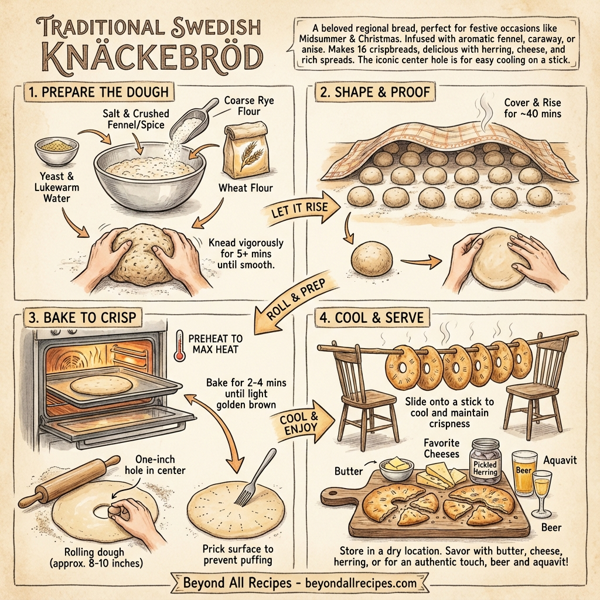
In a mixing bowl, dissolve the yeast in lukewarm water. If you're using dry yeast, be sure to follow specific instructions on the package for activation.
2
Add the salt and crushed fennel (or your choice of spice) to the yeast mixture and stir until combined.
3
Gradually add the coarse rye flour and a sufficient amount of wheat flour, mixing until a firm dough forms.
4
Transfer the dough to a floured surface and knead it vigorously for at least five minutes until smooth and elastic.
5
Divide the kneaded dough into 16 equal parts and shape each piece into a ball.
6
Place the balls on a floured surface, cover with a clean cloth, and let them rise for about 40 minutes in a warm environment.
7
Preheat your oven to its highest setting (maximum heat) to ensure a perfect bake.
8
Take one dough ball and roll it out on a floured surface into a thin circle, approximately 8-10 inches in diameter, using plenty of rye flour to prevent sticking.
9
Create a one-inch hole in the center of the circle using a small round cutter or your fingers.
10
Using a fork, prick the surface of the dough all over to prevent it from puffing during baking. In Sweden, specialized rolling pins can be used for this purpose.
11
Place the rolled dough on a dry baking tray and bake in the hot oven for about 2-4 minutes, or until the crispbread turns a light golden brown without burning.
12
Once baked, slide the bread onto a stick (like a broomstick) through the central hole to cool and maintain its crisp texture.
13
Store the crispbreads in a dry location, and savor them with butter, your favorite cheeses, pickled herring, or for an authentic touch, enjoy with beer and aquavit.
Nutrition Information
Frequently Asked Questions
Frequently Asked Questions
What is Traditional Swedish Knäckebröd?
It is a beloved regional crispbread from Sweden that embodies traditional culinary practices, known for its thin, crunchy texture.
When is Knäckebröd traditionally served?
It is perfect for festive occasions such as Midsummer and Christmas, but it is also enjoyed as a year-round staple.
What are the primary flavors in this crispbread?
The bread is typically infused with aromatic spices like fennel, caraway, or anise.
What does the central hole in the bread serve?
The iconic hole is both decorative and functional, allowing the bread to be slid onto a stick for easy cooling.
How many crispbreads does this recipe make?
This recipe is designed to produce 16 handcrafted crispbreads.
What ingredients are needed for the dough?
The main ingredients include yeast, lukewarm water, salt, crushed fennel (or anise), coarse rye flour, and wheat flour.
Can I use dry yeast for this recipe?
Yes, if using dry yeast, follow the specific activation instructions provided on the package.
How long should the dough rise?
After shaping the dough into balls, they should rise for about 40 minutes in a warm environment.
What is the required oven temperature?
The oven should be preheated to its highest setting, or maximum heat, for a perfect bake.
How thin should I roll the dough?
Each dough ball should be rolled into a thin circle approximately 8-10 inches in diameter.
Why do I need to prick the dough with a fork?
Pricking the surface prevents the dough from puffing up while baking, ensuring it remains flat and crisp.
How long does it take to bake?
It bakes very quickly, usually taking only 2 to 4 minutes until it turns light golden brown.
How do I cool the finished bread?
Once baked, slide the bread onto a stick through the central hole to maintain its crisp texture during cooling.
What is the best way to store Knäckebröd?
Store the crispbreads in a dry location to prevent them from becoming soft.
What are some recommended toppings?
It pairs beautifully with butter, various cheeses, pickled herring, or even sweet spreads like jam.
Is this recipe suitable for Scandinavian-themed parties?
Absolutely, its unique texture and authentic flavor make it an excellent choice for exploring Scandinavian cuisine.
What kind of flour gives it its unique texture?
The use of coarse rye flour is essential for achieving the traditional texture and flavor profile.
How long should I knead the dough?
The dough should be kneaded vigorously for at least five minutes until it is smooth and elastic.
Can I use spices other than fennel?
Yes, anise seed or caraway are popular traditional alternatives to fennel.
What beverages pair well with Swedish crispbread?
For an authentic experience, try serving it with beer and aquavit.
What size should the central hole be?
A one-inch hole in the center is recommended, which can be made with a small cutter or your fingers.
Is a special rolling pin required?
While specialized Swedish rolling pins exist for pricking the dough, a standard fork works perfectly well.
Does the dough require a lot of flour when rolling?
Yes, you should use plenty of rye flour on the surface to prevent the thin dough from sticking.
Is the bread supposed to be soft or hard?
It is a 'crispbread,' meaning it should be hard and crunchy throughout.
Is this recipe vegetarian?
Yes, the ingredients for the bread itself are vegetarian-friendly.
Can I make this bread ahead of time?
Yes, because it is dried and crisp, it has a long shelf life when stored correctly in a dry place.
What color should the bread be when finished?
It should be a light golden brown; be careful not to burn it due to the high oven heat.
How much fennel should I use?
The recipe calls for 1 tablespoon of crushed fennel or anise seed.
What is the total amount of flour used?
The recipe uses 3 1/2 cups of coarse rye flour and 1 1/2 to 2 cups of wheat flour.
Is the water used for yeast hot?
No, the water should be lukewarm to avoid killing the yeast while still allowing it to activate.