Traditional Steamed Idli
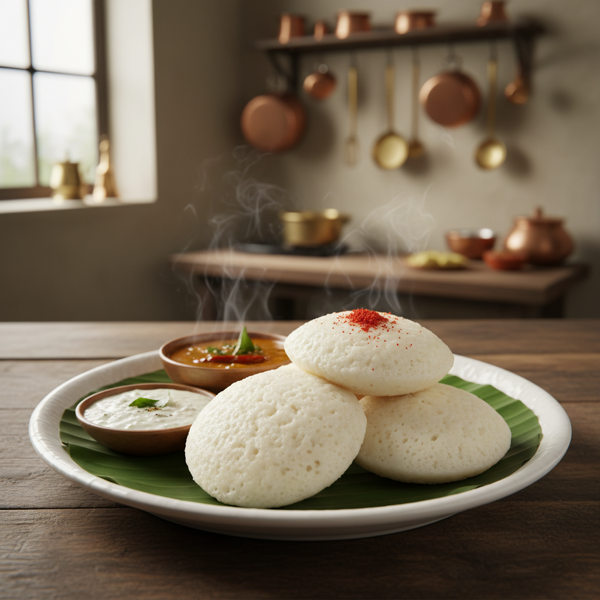
Steamed Idli is a beloved South Indian delicacy that brings back the warmth of childhood memories. These fluffy rice cakes are not only delicious but also nutritious, making them a perfect breakfast or snack option. Made from a fermented batter of rice and urad dal, they are light and airy, typically served with coconut chutney and sambar. Idlis are a great way to start your day, providing carbohydrates and protein in every bite. This recipe yields 15 idlis, and the quantity can vary based on the size of your moulds.
15
Servings
N/A
Calories
5
Ingredients
Ingredients
Raw Rice
250 g (Soaked for 4-5 hours)
Split White Gram (Urad Dal)
110 g (Soaked for 4-5 hours)
Cooked Rice
2-3 tablespoons (Used for grinding)
Salt
To taste (Added before steaming)
Oil
For greasing moulds (Used to grease idli moulds)
Instructions
1
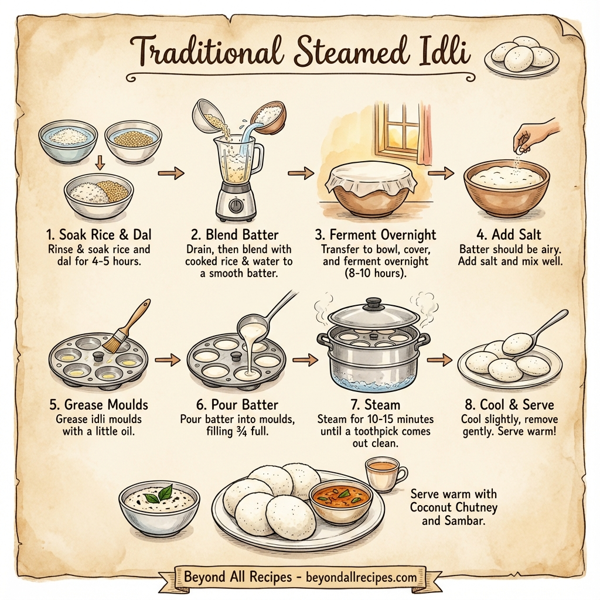
Rinse the raw rice and urad dal thoroughly, then soak them in plenty of water for 4-5 hours.
2
Drain the soaked rice and dal, and transfer them to a blender. Add the cooked rice and blend to a smooth batter, adding a little water as needed to achieve a thick yet pourable consistency.
3
Transfer the batter to a large bowl, cover it, and let it ferment overnight at room temperature. In warmer climates, fermentation may take around 8-10 hours, while in cooler climates, it may take a bit longer.
4
Once the batter has fermented, add salt to taste and mix well to combine. The batter should have increased in volume and be slightly airy.
5
Grease the idli moulds with a little oil to prevent sticking.
6
Pour the batter into the greased moulds, filling each cavity about three-quarters full.
7
Prepare a steamer by bringing water to a boil. Place the filled idli moulds in the steamer and cover it with a lid.
8
Steam the idlis for 10-15 minutes or until a toothpick inserted into the center comes out clean.
9
Remove the moulds from the steamer and let them cool for a few minutes. Gently remove the idlis with a spoon or knife. Serve warm with coconut chutney and sambar.
Nutrition Information
Frequently Asked Questions
Frequently Asked Questions
What is Traditional Steamed Idli?
Traditional Steamed Idli is a beloved South Indian delicacy consisting of fluffy, light, and airy rice cakes made from a fermented batter of rice and urad dal.
What are the main ingredients for Traditional Steamed Idli?
The main ingredients include 250g of raw rice, 110g of split white gram (urad dal), 2-3 tablespoons of cooked rice, salt to taste, and oil for greasing.
How long should the raw rice and urad dal be soaked?
Both the raw rice and the urad dal should be rinsed thoroughly and soaked in plenty of water for 4-5 hours.
Why is cooked rice added to the batter?
Cooked rice is added during the blending process to help achieve a smooth batter consistency and contributes to the soft texture of the idlis.
How long does the fermentation process take?
The batter should ferment overnight, typically taking 8-10 hours in warmer climates, though it may take longer in cooler climates.
How many idlis does this recipe yield?
This recipe yields approximately 15 idlis, though the quantity may vary depending on the size of your idli moulds.
Is idli a gluten-free dish?
Yes, idlis are naturally gluten-free as they are made from rice and lentils.
Is this idli recipe suitable for vegetarians?
Yes, this is a vegetarian recipe.
What is the recommended steaming time for idlis?
Idlis should be steamed for 10-15 minutes or until a toothpick inserted into the center comes out clean.
What is the ideal consistency for the idli batter?
The batter should be smooth and have a thick yet pourable consistency.
When should salt be added to the idli batter?
Salt should be added to the batter after it has fermented and just before you are ready to steam the idlis.
How do you prevent idlis from sticking to the moulds?
To prevent sticking, you should grease the idli moulds with a small amount of oil before pouring in the batter.
What should be served with traditional idlis?
Idlis are typically served warm with coconut chutney and sambar.
How do you know if the idli batter has fermented correctly?
Properly fermented batter will have increased in volume and will appear slightly airy.
How much batter should be poured into each mould?
Each cavity of the idli mould should be filled about three-quarters full to allow space for the idlis to rise.
What tools are needed to make the idli batter?
A blender is needed to grind the soaked rice, dal, and cooked rice into a smooth batter.
Does the climate affect the fermentation of idli batter?
Yes, fermentation is faster in warmer climates (8-10 hours) and slower in cooler climates.
What is the first step in making idlis?
The first step is to rinse the raw rice and urad dal thoroughly and soak them for several hours.
How should idlis be removed from the moulds?
After removing the moulds from the steamer, let them cool for a few minutes before gently removing the idlis with a spoon or knife.
What nutritional benefits do idlis provide?
Idlis are a nutritious option providing carbohydrates and protein, and they are generally light and easy to digest.
What category of food does this recipe fall under?
This recipe is categorized under Breads.
Can idlis be eaten as a snack?
Yes, idlis make a perfect healthy breakfast or a nutritious snack option.
What type of dal is used in this recipe?
The recipe uses 110g of Split White Gram, also known as Urad Dal.
How much water should be added during grinding?
Add a little water as needed during blending to reach a thick yet pourable consistency.
Are there any specific tags for this recipe?
Tags include idli, steamed rice cakes, South Indian recipe, healthy breakfast, breads, fermented food, vegetarian, and gluten-free.
What is the origin of idli?
Idli is a traditional South Indian delicacy.
Can you use parboiled rice instead of raw rice?
While this specific recipe calls for raw rice, many variations use a mix, but for this traditional version, use 250g of raw rice.
What is the purpose of the steamer?
The steamer is used to cook the batter using steam, which keeps the idlis moist and fluffy without the need for frying.
How much salt is needed?
Salt should be added to taste.
What should the water be doing before you place the moulds in the steamer?
The water in the steamer should be brought to a boil before placing the filled idli moulds inside.