Traditional Norwegian Lefse Delight

Discover the heartwarming tradition of making Lefse, a beloved Norwegian flatbread that enhances any meal, especially during festive occasions. This recipe is inspired by cherished memories in Aunt Gwen's kitchen, where authentic family heirlooms enhance the experience. Though traditional tools are wonderful, this recipe proves you can make perfect lefse using standard kitchen equipment. When served warm with butter, or as a delightful treat with cinnamon and sugar, Lefse becomes a cherished staple. My family enjoys theirs with Lutefisk on Christmas Eve; while I'm not a fan of Lutefisk, I wholeheartedly adore Lefse! Join me in crafting this cultural delicacy, and let the warmth of tradition fill your kitchen.
N/A
Servings
N/A
Calories
6
Ingredients
Ingredients
Russet potatoes
2 lbs (Peeled and cut into chunks)
Salt
To taste (For boiling potatoes)
Butter
3 tablespoons (Real butter, melted)
Evaporated milk
2 tablespoons (Used in the potato mixture)
All-purpose flour
1 cup (For mixing with potato dough)
Sugar
1 1/2 teaspoons (For sweetness in the dough)
Instructions
1
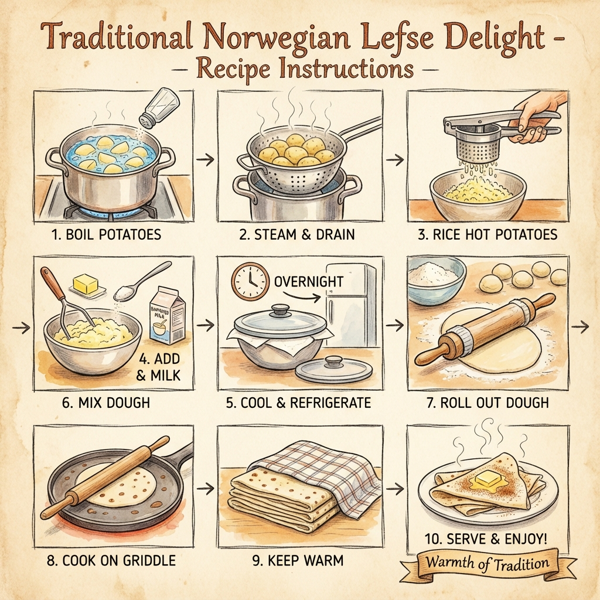
Begin by peeling and cutting the russet potatoes into chunks. Boil the potatoes in a large pot of well-salted water until they are tender and easily pierced with a fork. Remember, the water should be saltier than you would normally use, as it will enhance the flavor of the potatoes.
2
Once the potatoes are soft, drain them thoroughly and return them to the pot. Allow them to steam for a few minutes to evaporate any remaining water.
3
Measuring out about 4 cups of the hot potatoes (packed well), rice them using a potato ricer. This step ensures a smooth, lump-free texture. You may have leftover potatoes that can be used in other dishes.
4
Transfer the riced potatoes to a plastic bowl with a tight-sealing lid. Add 3 tablespoons of real butter and 2 tablespoons of evaporated milk, then mash with a hand masher. Avoid using an electric mixer to maintain the desired texture.
5
Let the potato mixture cool at room temperature. Once cooled, cover the bowl with several layers of paper towels, seal it with the lid, and refrigerate overnight. This resting time improves the dough's workability.
6
The next day, remove the potato mixture from the refrigerator. Mix in 1 cup of all-purpose flour and 1 ½ teaspoons of sugar until a cohesive dough forms. Divide the dough into small balls, approximately the size of a golf ball.
7
On a floured surface, roll each ball out to thin, flat circles using a grooved rolling pin, preferably wrapped in a clean sock to prevent sticking.
8
To cook the lefse, carefully roll the raw dough onto a lefse stick or a long, flat spatula. Unroll it onto a hot griddle heated to 450°F (232°C). Cook the first side until bubbles form and it is lightly browned or freckled. Flip and cook the other side until lightly browned but not crisp.
9
Once cooked, use the stick to transfer the lefse to a clean towel. Cover them with another towel to keep them warm and pliable.
10
Serve warm with butter, or store in a well-sealed container lined with paper towels in the refrigerator. Lefse can also be frozen with wax paper between each flatbread for future enjoyment.
Nutrition Information
Frequently Asked Questions
Frequently Asked Questions
What is Lefse?
Lefse is a beloved traditional Norwegian flatbread often served during festive occasions and holidays.
What type of potatoes are best for this recipe?
Russet potatoes are the preferred choice for making traditional Norwegian Lefse.
Why should the potato boiling water be extra salty?
Saltier water is used because it deeply enhances the flavor of the potatoes during the boiling process.
What is the purpose of ricing the potatoes?
Ricing ensures the potatoes have a smooth, lump-free texture which is essential for a consistent dough.
Can I use an electric mixer for the potatoes?
No, you should avoid an electric mixer and use a hand masher instead to maintain the correct dough texture.
How much riced potato is required?
You will need approximately 4 cups of well-packed riced potatoes for this recipe.
What type of butter is recommended?
The recipe calls for 3 tablespoons of real butter for the best flavor and texture.
Why is evaporated milk used in the mixture?
Evaporated milk adds a specific richness and consistency to the potato base before it is chilled.
Why does the potato mixture need to be refrigerated overnight?
Refrigerating the mixture overnight improves the workability of the dough and allows the flavors to meld.
How do I prevent moisture buildup while the potatoes chill?
Cover the bowl with several layers of paper towels before sealing the lid to absorb any excess moisture.
When should I add the flour to the potatoes?
Mix in the all-purpose flour the next day after the potato mixture has been fully chilled.
Is there sugar in Lefse dough?
Yes, 1 1/2 teaspoons of sugar are added to the dough for a hint of sweetness.
What size should I make the dough balls?
The dough should be divided into small balls approximately the size of a golf ball.
What is the best way to roll out the Lefse?
Roll each ball into a thin, flat circle on a floured surface using a grooved rolling pin.
Why use a sock on the rolling pin?
Wrapping a clean sock around the rolling pin helps prevent the dough from sticking to the pin while rolling.
What temperature should the griddle be?
The griddle should be preheated to 450 degrees Fahrenheit (232 degrees Celsius).
How do I transfer the thin dough to the griddle?
Carefully roll the raw dough onto a specialized lefse stick or use a long, flat spatula to unroll it onto the griddle.
How do I know when to flip the Lefse?
Flip the lefse when bubbles begin to form and the bottom side is lightly browned or freckled.
Should the Lefse be crispy?
No, you should cook it until lightly browned but ensure it remains soft and not crisp.
How do I keep the Lefse soft after cooking?
Immediately transfer cooked lefse to a clean towel and cover it with another towel to keep it warm and pliable.
What are the traditional serving suggestions?
Lefse is commonly served warm with butter, or as a treat with cinnamon and sugar.
Can I freeze homemade Lefse?
Yes, it can be frozen with layers of wax paper between each flatbread to prevent sticking.
How should I store Lefse in the refrigerator?
Store it in a well-sealed container lined with paper towels to maintain freshness.
What is Lutefisk?
Lutefisk is a traditional Norwegian dried whitefish dish often served alongside Lefse during Christmas Eve dinner.
Do I need special Norwegian tools to make this?
While traditional tools are helpful, you can achieve great results using standard kitchen equipment like a spatula and griddle.
How many ingredients are in this recipe?
This recipe consists of 6 main ingredients: Russet potatoes, salt, butter, evaporated milk, flour, and sugar.
Can I use leftover boiled potatoes?
It is best to rice the potatoes while they are hot for the smoothest texture, so freshly boiled is recommended.
Is Lefse a dessert or a side dish?
It is versatile and can be served as a side dish for savory meals or as a sweet snack.
What happens if I skip the cooling step?
Skipping the cooling step will make the dough too sticky and difficult to roll into thin circles.
Why are Russet potatoes used specifically?
Russets have a high starch content which provides the fluffy, dry texture necessary for successful Lefse dough.