Traditional Mexican Chili Pepper Sauce
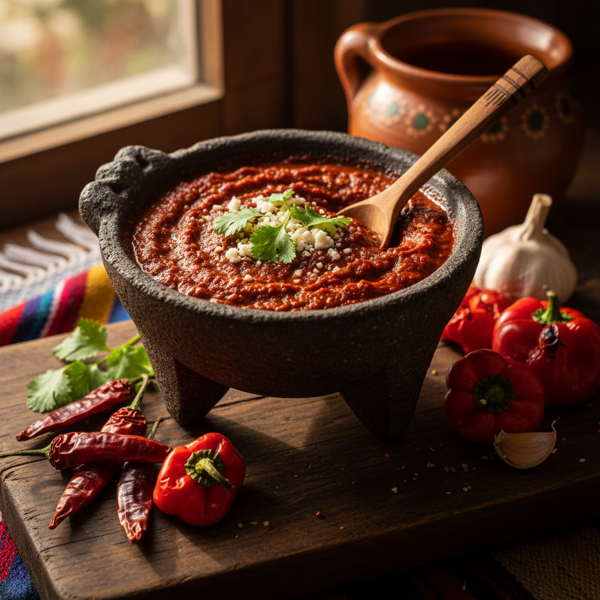
This recipe is inspired by the traditional and authentic methods of preparing Mexican red sauce, known for its rich and spicy flavors. Using a blend of dried ancho and guajillo chilies, this sauce is perfect to elevate your Mexican dishes. Ancho chilies, often mistakenly referred to as Pasilla chilies in some regions, offer a mild heat and a deep, smoky flavor. This sauce is a versatile addition to tacos, enchiladas, or as a marinade for meats. It's important to handle chili peppers with care, using gloves or washing hands thoroughly afterward.
9
Servings
N/A
Calories
8
Ingredients
Ingredients
dried ancho chilies
3 (slit, seeds and veins removed)
guajillo chilies
2 (optional, use if ancho chilies are used)
water
as needed (for boiling and soaking chilies)
large garlic clove
1 (peeled)
whole cloves
2 (crushed)
black peppercorns
2 (crushed)
salt
1/2 teaspoon (more to taste)
olive oil
1 tablespoon (for simmering)
Instructions
1
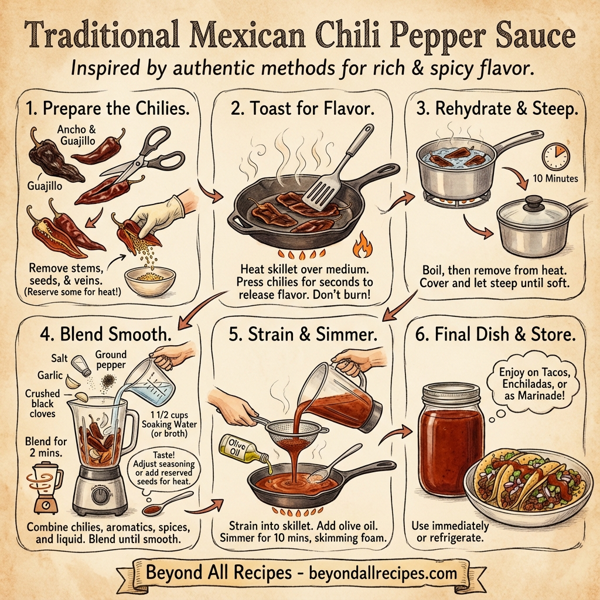
Use kitchen shears to cut a slit down one side of each chile. Open the chile, remove the stem and seeds, and discard the veins, reserving some seeds and veins if additional heat is desired.
2
Heat a large skillet over medium. Flatten the chilies and press with a metal spatula for a few seconds to release flavors, ensuring they don't burn.
3
Transfer chilies to a saucepan and cover with water. Bring to a boil, then remove from heat and let steep for 10 minutes until chilies are softened.
4
Remove chilies, reserving soaking water. Place chilies in a blender with garlic, salt, ground black pepper, and crushed cloves. Add 1 1/2 cups of soaking water (or fresh water/broth if soaking liquid is bitter). Blend for 2 minutes until smooth.
5
Taste the sauce and adjust seasoning. For more heat, blend in reserved seeds or veins.
6
Strain sauce through a sieve into a skillet. Add olive oil and simmer for 10 minutes, skimming off any foam.
7
Use immediately or transfer to a glass jar for refrigeration.
Nutrition Information
Frequently Asked Questions
Frequently Asked Questions
What is Traditional Mexican Chili Pepper Sauce?
It is an authentic red sauce made from dried ancho and guajillo chilies, known for its deep, smoky flavor and versatility in Mexican cuisine.
Which types of chilies are required for this recipe?
The recipe calls for three dried ancho chilies and two guajillo chilies.
What flavor profile do Ancho chilies provide?
Ancho chilies offer a mild heat and a deep, smoky flavor.
Are Ancho and Pasilla chilies the same thing?
No, they are different, though ancho chilies are often mistakenly referred to as pasilla chilies in some regions.
How should I prepare the dried chilies?
Use kitchen shears to cut a slit down the side, then remove the stem and seeds and discard the veins.
Can I make the sauce spicier?
Yes, you can reserve some of the seeds and veins and blend them into the sauce for additional heat.
Why do I need to toast the chilies in a skillet?
Toasting the flattened chilies for a few seconds helps release their natural flavors.
How long should I toast each chili?
You should press them with a metal spatula for just a few seconds, ensuring they do not burn.
What is the process for softening the chilies?
Transfer the toasted chilies to a saucepan, cover with water, bring to a boil, and then remove from heat to steep.
How long do the chilies need to steep?
They should steep for about 10 minutes until they are fully softened.
Should I use the chili soaking water for blending?
You can use 1 1/2 cups of the soaking water, but only if it does not taste bitter.
What should I use if the soaking water is bitter?
If the soaking liquid is bitter, replace it with fresh water or broth for the blending process.
What aromatics are added to the blender?
One large peeled garlic clove is added to the blender with the chilies.
Which spices are used in the sauce?
The recipe uses salt, two crushed whole cloves, and two crushed black peppercorns.
How long should I blend the sauce?
Blend the ingredients for approximately 2 minutes until the mixture is completely smooth.
Is it necessary to strain the sauce?
Yes, you should strain the sauce through a sieve into a skillet to ensure a refined texture.
What is the purpose of adding olive oil to the skillet?
One tablespoon of olive oil is used to simmer the sauce, which enhances the final flavor and consistency.
How long should the sauce simmer?
The sauce should simmer for 10 minutes after being strained into the skillet.
What should I do if foam appears while simmering?
You should skim off any foam that forms on the surface of the sauce during the simmering process.
How should I store the finished chili sauce?
The sauce can be used immediately or transferred to a glass jar for refrigeration.
What are some common uses for this sauce?
It is perfect for tacos, enchiladas, or as a flavorful marinade for various meats.
Is it dangerous to handle the chili peppers?
Chili peppers can cause irritation, so it is important to use gloves or wash your hands thoroughly after handling them.
How many servings does this recipe yield?
This recipe makes approximately 9 servings.
Can I use ground pepper instead of peppercorns?
The recipe specifies crushed black peppercorns, but you can use ground pepper if needed, adjusting to taste.
How much salt is used in the sauce?
The recipe starts with 1/2 teaspoon of salt, but you can add more to taste.
What tool is best for removing seeds from chilies?
Kitchen shears are recommended for cutting the chilies open easily.
Should the garlic be cooked before blending?
No, the garlic clove is added to the blender peeled but raw.
Can I use broth instead of water for the liquid?
Yes, broth is a recommended alternative if you prefer more depth or if the soaking water is bitter.
Is this sauce considered a red sauce?
Yes, it is a traditional Mexican red sauce.
Is this recipe considered authentic?
Yes, it is inspired by traditional and authentic methods of Mexican sauce preparation.