Traditional Korean Dolsot Bibimbap
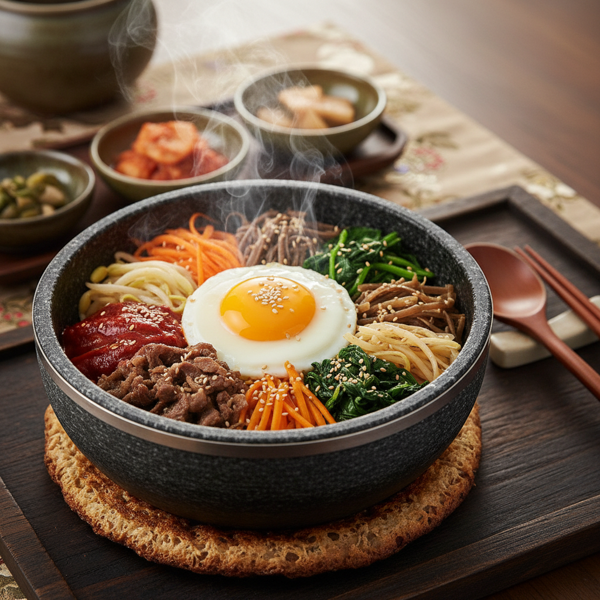
Experience the joyful explosion of flavors and textures with our Traditional Korean Dolsot Bibimbap. This vibrant rice bowl is layered with a medley of sautéed vegetables, pickled cucumber and bean sprouts, and a rich gochujang chile sauce, all crowned with perfectly cooked eggs. Traditionally served in a hot stone bowl, Dolsot Bibimbap not only warms your belly but also your heart, making it a comforting and nourishing dish perfect for any meal. Gather around the table, mix the ingredients, and enjoy the delightful combination of tastes and nutrients in this popular Korean comfort food.
N/A
Servings
500
Calories
17
Ingredients
Ingredients
cider vinegar
1 cup
sugar
2 tablespoons
salt
1.5 teaspoons
cucumber
1 (peeled, quartered lengthwise, seeded, and sliced thin on bias)
bean sprouts
4 ounces
gochujang
1/4 cup
water
5 tablespoons ([object Object],[object Object])
toasted sesame oil
3 tablespoons ([object Object],[object Object])
short-grain white rice
2 1/2 cups
scallions
3 (minced)
soy sauce
3 tablespoons
garlic cloves
3 (minced)
vegetable oil
4 teaspoons ([object Object],[object Object],[object Object],[object Object])
carrots
3 (peeled and shredded (about 2 cups))
shiitake mushrooms
8 ounces (stemmed and caps sliced thin)
curly-leaf spinach
10 ounces (stemmed and chopped coarse)
large eggs
4
Instructions
1
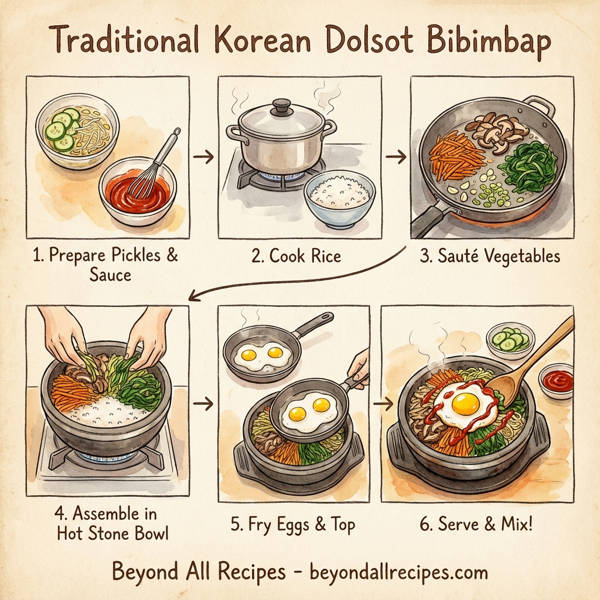
Prepare the pickles: In a medium bowl, whisk together the cider vinegar, sugar, and salt. Add the sliced cucumber and bean sprouts, tossing to combine. Press gently on the vegetables to submerge them in the liquid. Cover and refrigerate for at least 30 minutes, or up to 24 hours for more flavor.
2
Make the chile sauce: In a small bowl, whisk together the gochujang, water, sesame oil, and sugar until smooth. Set aside.
3
Cook the rice: In a medium saucepan, combine the short-grain white rice, water, and salt. Bring the mixture to a boil over high heat. Once boiling, cover, reduce the heat to low, and let it simmer for 7 minutes. Afterward, remove from heat and keep covered for another 15 minutes until tender.
4
Sauté the vegetables: In a large Dutch oven, combine water, minced scallions, soy sauce, minced garlic, and sugar. Heat 1 teaspoon of vegetable oil over high heat until shimmering. Add the shredded carrots and cook with 1/3 cup of the scallion mixture for 1 to 2 minutes until softened. Transfer the carrots to a bowl with a slotted spoon.
5
Add another teaspoon of oil to the pot and heat again. Add the sliced shiitake mushrooms and cook with another 1/3 cup of the scallion mixture for 3 to 4 minutes, until tender. Remove and set aside.
6
Add the remaining oil to the pot and heat until shimmering. Add the chopped spinach along with the last 1/3 cup of scallion mixture. Stir until the spinach wilts, about 1 to 2 minutes, then remove it as well.
7
Assemble the bibimbap: In the same pot, heat 2 tablespoons of vegetable oil and 1 tablespoon of toasted sesame oil over high heat. Add the cooked rice and flatten it into an even layer. Cook without stirring for 2 minutes or until a crispy crust forms at the bottom.
8
Meanwhile, prepare the eggs: In a nonstick skillet, heat the remaining 2 teaspoons of vegetable oil over low heat for 5 minutes. Crack the eggs into a bowl and then gently pour them into the skillet. Cover and cook for 2 to 3 minutes, depending on your desired yolk firmness.
9
Layer the sautéed vegetables over the rice in the pot, creating separate sections for the carrots, mushrooms, and spinach. Top the vegetables with the cooked eggs.
10
Drizzle with the prepared chile sauce and serve hot. To enjoy, use a wooden spoon to gently mix the rice, vegetables, and eggs, incorporating any crispy bits from the bottom. Serve immediately, passing the pickles and extra chile sauce on the side.
Nutrition Information
17.5g
Fat
75g
Carbs
20g
Protein
Frequently Asked Questions
Frequently Asked Questions
What is Traditional Korean Dolsot Bibimbap?
Dolsot Bibimbap is a vibrant Korean rice bowl layered with sautéed vegetables, pickled cucumber, bean sprouts, and a gochujang chile sauce, typically topped with eggs.
What does 'Dolsot' mean in this context?
'Dolsot' refers to a hot stone bowl which is traditionally used to serve the dish, though this recipe utilizes a Dutch oven to achieve a similar crispy rice crust.
How many calories are in a serving of this Bibimbap?
This recipe contains approximately 500 calories per serving.
Is this Dolsot Bibimbap recipe vegetarian?
Yes, this recipe is vegetarian as it focuses on vegetables, rice, and eggs, without any meat ingredients.
What are the primary ingredients for the chile sauce?
The sauce is made by whisking together gochujang, water, toasted sesame oil, and sugar until smooth.
What type of rice is used for this recipe?
The recipe calls for 2 1/2 cups of short-grain white rice.
How do you create the crispy rice layer at the bottom?
The crispy crust is formed by heating vegetable and sesame oil in a pot, adding the cooked rice, and cooking without stirring for 2 minutes over high heat.
How long should I pickle the cucumber and bean sprouts?
You should refrigerate them for at least 30 minutes, though they can stay for up to 24 hours for more flavor.
What is the nutritional breakdown of protein and fat?
Each serving contains 20g of protein and 17.5g of fat.
How do I prepare the scallion mixture for sautéing?
Combine water, minced scallions, soy sauce, minced garlic, and sugar in a large Dutch oven before using it to cook the vegetables.
How are the eggs prepared for the bibimbap?
The eggs are cooked in a nonstick skillet over low heat, covered, for 2 to 3 minutes until the yolks reach your desired firmness.
What kind of mushrooms are recommended?
The recipe uses 8 ounces of shiitake mushrooms, stemmed and with the caps sliced thin.
How much gochujang is needed for the sauce?
You will need 1/4 cup of gochujang for the chile sauce.
What is the total carbohydrate content of this dish?
There are 75g of carbohydrates in this recipe.
How do I cook the short-grain white rice?
Bring the rice, water, and salt to a boil, then cover and simmer on low for 7 minutes. Let it sit covered for another 15 minutes.
What type of vinegar is used for the pickled vegetables?
The recipe specifies 1 cup of cider vinegar for the pickling liquid.
How are the carrots prepared?
The carrots should be peeled and shredded, resulting in about 2 cups, before being sautéed with the scallion mixture.
What is the role of sesame oil in this recipe?
Toasted sesame oil is used in the chile sauce for flavor and in the pot to help crisp the rice.
How many eggs does this recipe require?
This recipe requires 4 large eggs.
How should I serve the bibimbap?
Layer the vegetables in sections over the rice, top with eggs, drizzle with sauce, and mix everything together with a wooden spoon before eating.
What type of spinach is used?
The recipe calls for 10 ounces of curly-leaf spinach, stemmed and chopped coarse.
Can I add extra spice to the dish?
Yes, you can pass extra chile sauce on the side for those who want more heat.
How many garlic cloves are in the recipe?
The recipe uses 3 minced garlic cloves.
How long does it take to sauté the shiitake mushrooms?
The sliced shiitake mushrooms should be cooked with the scallion mixture for 3 to 4 minutes until tender.
How many carrots are needed?
The recipe calls for 3 carrots.
What is the purpose of pressing on the pickling vegetables?
Pressing on the vegetables helps submerge them in the pickling liquid to ensure they absorb the vinegar mixture properly.
How much vegetable oil is used in total?
The recipe uses roughly 4 teaspoons for sautéing vegetables and 2 tablespoons for frying the rice, plus 2 teaspoons for the eggs.
How do you handle the cucumber before pickling?
The cucumber should be peeled, quartered lengthwise, seeded, and sliced thin on a bias.
What is the total count of ingredients used?
There are 17 unique ingredients listed in this recipe.
What makes this a 'comfort food' according to the description?
It is considered comfort food because it is a warming, nourishing dish that provides a delightful combination of tastes and nutrients.