Traditional Indian Chappatis
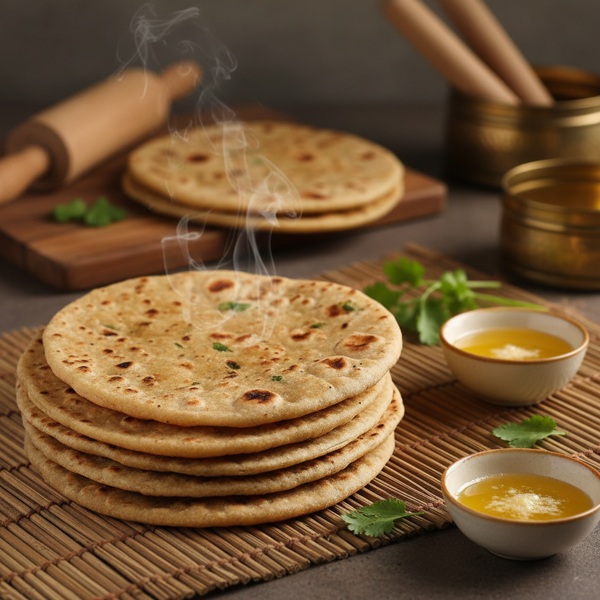
Chappatis, also known as Roti, are soft, unleavened Indian flatbreads that are a staple in South Asian cuisine. Their simplicity and versatility make them perfect for pairing with a variety of dishes, especially flavorful curries. This recipe offers a no-fuss, straightforward technique to create these delightful breads, perfect for any meal. While measurements are provided, feel free to adjust them based on your preference and cooking conditions. Serve hot with your favorite curry for a truly satisfying experience.
N/A
Servings
N/A
Calories
7
Ingredients
Ingredients
All-purpose flour
6 cups (Sifted)
Water
2 cups (Room temperature)
Milk
1/2 cup (Room temperature)
Salt
1 tablespoon (Fine)
Oil
1/4 cup (Vegetable or olive oil)
Melted butter
To taste (For brushing)
Flour for rolling out
As needed (All-purpose)
Instructions
1
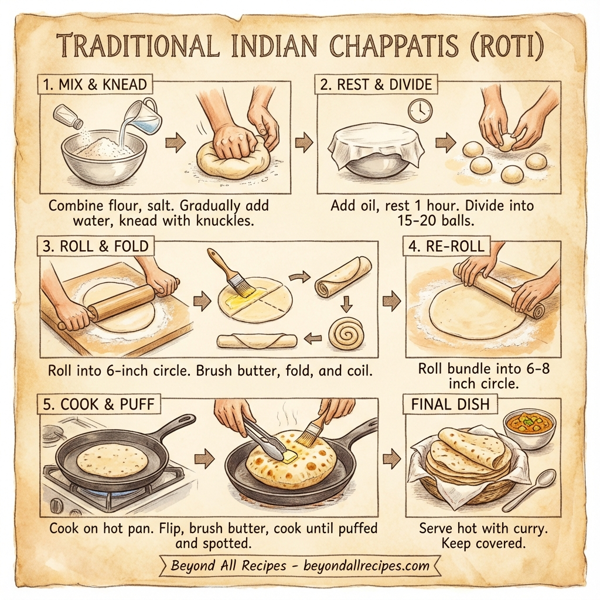
In a large mixing bowl, combine the all-purpose flour and salt.
2
Gradually add water, one cup at a time, while kneading the dough until it reaches a pliable consistency.
3
To knead, form your hand into a fist and roll your knuckles into the dough, folding the edges in to incorporate all the flour.
4
Once the dough forms a ball, poke several holes into it to allow air to escape.
5
Drizzle a little oil into the dough and knead it again to incorporate.
6
Add the remaining oil; the dough should appear glossy and slightly oily.
7
Cover the bowl with a clean cloth and let the dough rest for at least one hour to allow it to soften.
8
After resting, lightly dust the dough with flour to prevent sticking.
9
Divide the dough into 15 to 20 evenly sized balls, depending on your preferred chappati size.
10
Flour a clean surface or board and roll each ball into a 6-inch circle, ensuring it remains evenly thick.
11
Brush the rolled chappati with melted butter.
12
To shape, fold the chappati into thirds, resembling a letter, then form a tube shape.
13
Take one end of the tube and fold it towards the center, pressing gently; repeat with the other end.
14
Dust a plate with flour and place each formed dough bundle onto it.
15
Roll each bundled portion into a 6 to 8-inch diameter circle, flouring the surface as necessary.
16
Preheat a flat cast iron skillet or frying pan on medium heat until hot.
17
Carefully place a rolled chappati onto the heated pan; cook until it begins to become slightly translucent.
18
Flip the chappati over, brush with melted butter, and quickly shuffle it in the pan for even cooking.
19
Flip again after a few seconds, applying more butter if desired; it should puff up into a fluffy pillow.
20
Cook until both sides have small golden brown spots, then remove and place in a serving dish. Keep covered with a clean cloth to retain warmth.
21
Clean the pan with paper towels between each chappati, adjusting the heat as needed throughout the cooking process.
22
Remember to flip each chappati only once or twice for best results.
Nutrition Information
Frequently Asked Questions
Frequently Asked Questions
What are Chappatis?
Chappatis, also known as Roti, are soft, unleavened Indian flatbreads that are a staple in South Asian cuisine.
What is another name for Chappati mentioned in this recipe?
Chappatis are also commonly referred to as Roti.
How much all-purpose flour is required for this recipe?
The recipe requires 6 cups of sifted all-purpose flour.
Is milk used in the preparation of these Indian Chappatis?
Yes, the recipe uses 1/2 cup of room temperature milk.
How much water should I add to the dough?
You should gradually add 2 cups of room temperature water, one cup at a time.
What type of salt is recommended?
One tablespoon of fine salt is recommended for this recipe.
What kinds of oil can be used for the dough?
You can use either vegetable oil or olive oil.
How should I knead the chappati dough?
Form your hand into a fist and roll your knuckles into the dough, folding the edges in to incorporate all the flour until it reaches a pliable consistency.
Why do I need to poke holes in the dough ball?
Poking several holes into the dough ball allows air to escape before adding the oil.
When should the oil be added to the dough?
Drizzle a little oil after poking holes and kneading, then add the remaining oil until the dough appears glossy.
How long does the dough need to rest?
The dough should rest covered with a clean cloth for at least one hour.
What is the purpose of letting the dough rest?
Resting the dough allows it to soften, making it easier to roll and better in texture.
How many chappatis does this recipe yield?
This recipe yields between 15 to 20 chappatis depending on your preferred size.
What size should I roll the initial dough balls into?
Each ball should first be rolled into a 6-inch circle.
How do you shape the dough to create layers?
Brush with butter, fold into thirds like a letter, form a tube shape, and then fold both ends of the tube toward the center.
What is the final diameter of the chappati before cooking?
The final rolled bundled portion should be a 6 to 8-inch diameter circle.
What is the best pan to use for cooking chappatis?
A flat cast iron skillet or a heavy frying pan is ideal.
What heat setting should be used for the skillet?
The skillet should be preheated and maintained on medium heat.
How do I know when to flip the chappati the first time?
Flip the chappati once it begins to appear slightly translucent on the pan.
Should I apply butter while cooking?
Yes, after the first flip, brush the surface with melted butter for flavor and even cooking.
How many times should a chappati be flipped?
For the best results, you should only flip each chappati once or twice.
What is a sign that the chappati is cooking correctly?
A correctly cooked chappati should puff up into a fluffy pillow during the cooking process.
How do I know when the chappati is finished cooking?
It is done when both sides have developed small golden brown spots.
How should I maintain the pan between cooking each flatbread?
Clean the pan with paper towels between each chappati and adjust the heat as necessary.
How do I keep the chappatis warm before serving?
Place them in a serving dish and keep them covered with a clean cloth to retain warmth.
What are the best dishes to pair with Chappatis?
Chappatis are perfect for pairing with a variety of flavorful curries.
Can I adjust the measurements in this recipe?
Yes, the recipe is flexible and measurements can be adjusted based on preference and cooking conditions.
What texture should the dough have after adding oil?
After adding the oil and kneading, the dough should appear glossy and slightly oily.
Is this a leavened or unleavened bread?
This is an unleavened bread, meaning it does not use yeast or baking powder.
What is the key to preventing the dough from sticking while rolling?
Lightly dust the dough and the rolling surface with all-purpose flour as needed.