Traditional Hungarian Goulash with Onion-Braised Beef
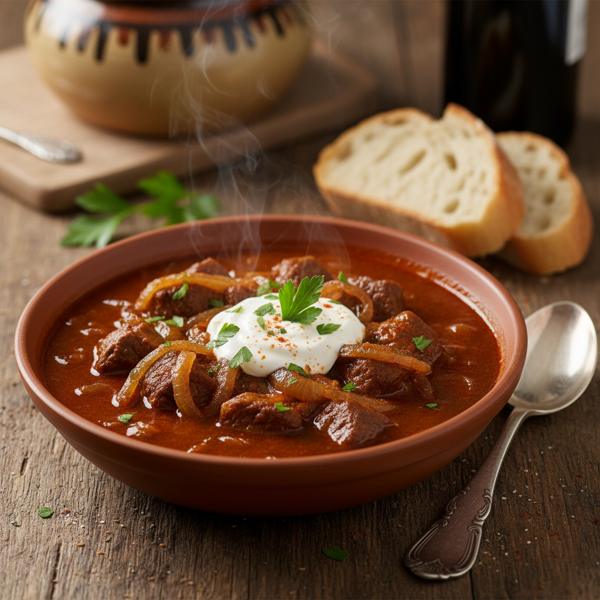
This Traditional Hungarian Goulash recipe is a cherished family heirloom, passed down through generations for over fifteen years. Inspired by the culinary artistry of a Hungarian grandmother, this dish unfolds layers of rich flavor from patiently caramelized onions and tender beef. A slow-cooked symphony infused with aromatic herbs, sweet paprika, and a splash of white wine creates a hearty stew that warms the heart and satisfies the soul. Although it may take some time to prepare, the end result is well worth it. Perfect when served over a bed of egg noodles and accompanied by lightly dressed beet greens or spinach, this goulash exemplifies authentic Hungarian flavors that will transport you to the heart of Hungary with every mouthful.
N/A
Servings
N/A
Calories
13
Ingredients
Ingredients
olive oil
3 tablespoons (divided)
onions
6 cups (sliced)
water
2 1/2 cups (divided)
flour
1/2 cup
thyme
1/2 teaspoon
marjoram
1/2 teaspoon
beef stew meat
1 1/2 lbs (cubed)
white wine
1/2 cup
bay leaf
1
Hungarian paprika
1 tablespoon (no substitutions)
salt
to taste
pepper
to taste
sour cream
1/2 cup (optional)
Instructions
1
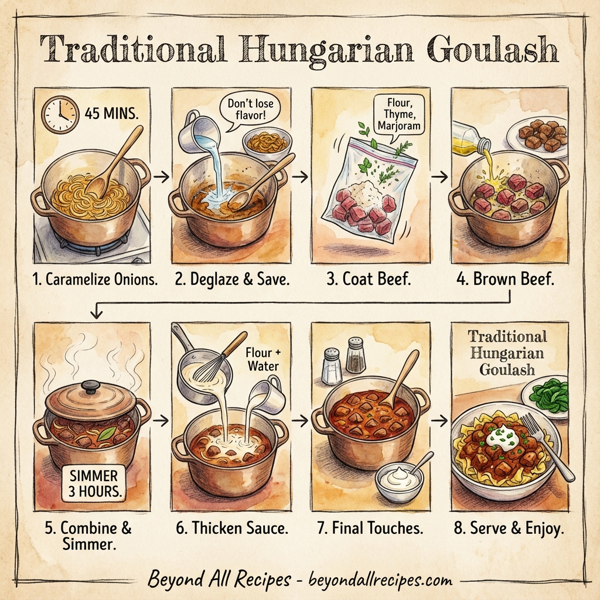
In a large Dutch oven, heat 2 tablespoons of olive oil over medium-low heat.
2
Add the sliced onions and sauté them gently, stirring occasionally, until they are golden brown and caramelized, about 45 minutes. Take your time; this step adds incredible depth to the flavor.
3
Once caramelized, transfer the onions to a bowl. Pour 1/2 cup of water into the Dutch oven, using a wooden spoon to scrape up any flavorful brown bits stuck to the bottom. Pour this liquid over the onions in the bowl, ensuring none of that flavor is lost.
4
In a zip-top plastic bag, combine the flour, thyme, marjoram, and cubed beef. Shake well until the beef is evenly coated with the seasoning mixture.
5
Heat the remaining 1 tablespoon of olive oil in the Dutch oven over medium-high heat. Add the coated beef in batches, browning it on all sides. Remove the browned beef and set it aside, discarding any remaining flour mixture.
6
Once the beef is browned, return it to the Dutch oven. Add the caramelized onions, 2 cups of water, white wine, bay leaf, and Hungarian paprika. Stir to combine all the ingredients thoroughly.
7
Bring the mixture to a gentle simmer. Cover the pot and let it simmer for about 3 hours, stirring occasionally, until the beef is tender and the flavors have melded beautifully.
8
After 3 hours, transfer 2 cups of the goulash sauce to a separate saucepan. Gradually add enough warm water to the reserved flour mixture until it reaches a cream-like consistency. Pour this mixture into the saucepan with the goulash sauce, stirring continuously until the sauce thickens.
9
Pour the thickened sauce back into the Dutch oven with the goulash and let it cook for an additional 5 minutes.
10
Season the goulash with salt and pepper to taste. Serve it over egg noodles or your preferred side dish.
11
If desired, stir in sour cream just before serving to add a rich, creamy finish.
Nutrition Information
Frequently Asked Questions
Frequently Asked Questions
What is Traditional Hungarian Goulash?
Traditional Hungarian Goulash is a hearty beef stew characterized by slow-cooked beef, caramelized onions, and authentic Hungarian paprika.
How long does it take to caramelize the onions for this recipe?
The onions should be sautéed gently for about 45 minutes until they are golden brown and caramelized.
Why is the onion caramelization step so long?
Patiently caramelizing the onions for 45 minutes adds incredible depth and layers of rich flavor to the final dish.
What type of beef should I use for Hungarian Goulash?
The recipe calls for 1.5 lbs of beef stew meat, cut into cubes.
Can I substitute the Hungarian paprika?
The recipe specifically states there are no substitutions for the Hungarian paprika to maintain authentic flavor.
How long does the goulash need to simmer?
The goulash should simmer for approximately 3 hours until the beef is tender and flavors have melded.
What is the history behind this recipe?
This recipe is a cherished family heirloom passed down for over fifteen years, inspired by a Hungarian grandmother's culinary artistry.
What herbs are used to season the beef?
The beef is seasoned with a mixture of flour, thyme, and marjoram.
What should I serve with Hungarian Goulash?
It is best served over a bed of egg noodles and can be accompanied by beet greens or spinach.
Is sour cream required in this recipe?
Sour cream is optional and can be stirred in just before serving for a rich, creamy finish.
What kind of wine is used in the sauce?
The recipe uses 1/2 cup of white wine to add a splash of flavor to the slow-cooked symphony.
How do I thicken the goulash sauce?
Gradually add warm water to the reserved flour mixture until it reaches a cream-like consistency, then stir it into 2 cups of the goulash sauce.
How much water is needed in total?
The recipe requires 2 1/2 cups of water, which is divided between different steps of the cooking process.
Why is the beef coated in flour before browning?
Coating the beef in flour helps with browning and later assists in thickening the stew's sauce.
What should I do with the brown bits at the bottom of the pot?
Scrape them up with 1/2 cup of water using a wooden spoon to ensure all the flavor is incorporated into the dish.
What size of pot is recommended for this recipe?
A large Dutch oven is recommended for sautéing, browning, and simmering the goulash.
How many onions are required?
The recipe calls for 6 cups of sliced onions.
What is the purpose of the bay leaf?
The bay leaf is simmered with the beef and onions to provide aromatic depth to the stew.
Can I brown the beef all at once?
No, the beef should be browned in batches to ensure it sears properly on all sides.
When do I add the salt and pepper?
Season the goulash with salt and pepper to taste at the end of the cooking process.
How much olive oil is used?
A total of 3 tablespoons of olive oil is used, divided between caramelizing onions and browning the beef.
Can I use a different type of paprika?
While other paprikas exist, this recipe emphasizes using authentic Hungarian paprika for the best results.
How much Hungarian paprika is needed?
One tablespoon of Hungarian paprika is required.
What is the heat setting for caramelizing onions?
The onions should be cooked over medium-low heat to prevent burning while they slowly brown.
Do I need to stir the goulash while it simmers?
Yes, you should stir the mixture occasionally over the 3-hour simmering period.
How long do I cook the goulash after adding the thickener?
Once the thickened sauce is added back to the Dutch oven, let it cook for an additional 5 minutes.
What is the recommended serving size?
While not specified in the data, the recipe uses 1.5 lbs of beef and 6 cups of onions, typically serving 4 to 6 people.
Can I use dried herbs?
Yes, the recipe uses 1/2 teaspoon each of thyme and marjoram, which are typically dried in this context.
Is the beef removed after browning?
Yes, the browned beef is set aside while the pot is prepared, then returned to the Dutch oven for the long simmer.
What is the texture of the beef after 3 hours?
After a 3-hour simmer, the beef should be very tender and the flavors fully melded.