Traditional Greek Tsourekia: Festive Easter Bread
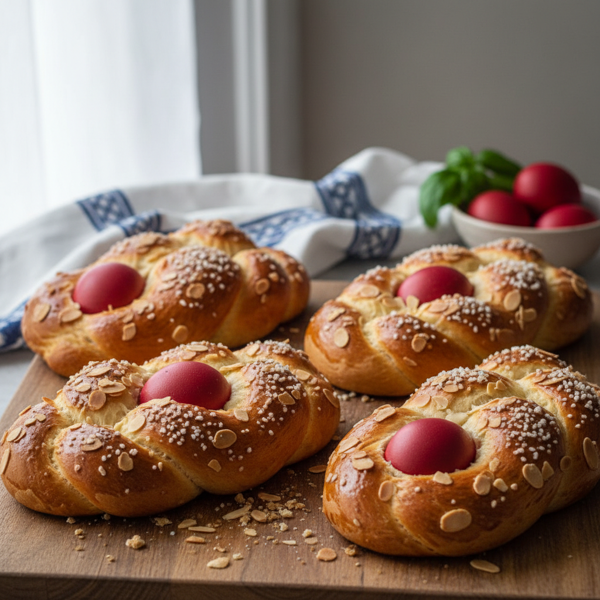
Celebrate Easter with this delightful Greek Tsourekia, a sweet, braided bread that is traditionally prepared for the holiday. Infused with the zesty flavors of orange and a rich buttery texture, this bread is not only a centerpiece for any festive table but also a cherished family recipe handed down through generations. Often adorned with colorful hard-boiled eggs, Tsourekia brings a sense of joy and tradition to your celebrations. Whether enjoyed fresh for breakfast, paired with cheese or jam, or as part of your Easter lunch, this bread is sure to be a favorite among family and friends.
N/A
Servings
N/A
Calories
10
Ingredients
Ingredients
flour
36 ounces (All-purpose flour, sifted)
butter
1 cup (Unsalted butter, softened)
orange rind
2 tablespoons (Grated fresh orange rind)
eggs
6 (Large eggs, beaten)
sugar
1 1/2 cups (Granulated sugar)
milk
1/2 cup (Whole milk, warmed)
yeast
2 tablespoons (Active dry yeast)
lukewarm water
1/2 cup (Water, warmed to about 110°F (43°C))
sesame seeds
to taste (Optional, for garnish)
hard-boiled eggs
as needed (Optional, colored for decoration)
Instructions
1
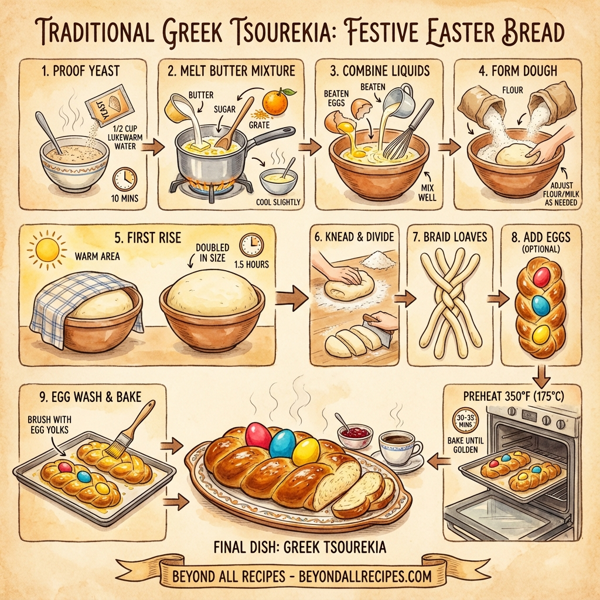
In a small bowl, dissolve the yeast in 1/2 cup of lukewarm water and set aside to proof for about 10 minutes until frothy.
2
In a saucepan, gently heat the milk, sugar, butter, and grated orange rind, stirring until the butter is melted. Allow to cool slightly.
3
In a large mixing bowl, combine the eggs (beaten), cooled milk mixture, and the dissolved yeast. Mix well.
4
Gradually add the flour, mixing until a soft dough forms. Make sure the dough isn't too sticky or too dry; adjust with additional flour or milk as needed.
5
Cover the bowl with a clean towel and place it in a warm area to rise for about 1.5 hours, or until doubled in size.
6
Once risen, punch down the dough and knead it lightly on a floured surface. Divide the dough into equal portions for braiding.
7
Roll each portion into long ropes and braid them together to form loaves.
8
If desired, press colored hard-boiled eggs into the braided dough for decoration.
9
Place the shaped loaves on a baking sheet lined with parchment paper. Brush the tops with beaten egg yolks for a golden finish.
10
Preheat the oven to 350°F (175°C) and bake the loaves for 30-35 minutes, or until golden brown and cooked through.
Nutrition Information
Frequently Asked Questions
Frequently Asked Questions
What is Traditional Greek Tsourekia?
Traditional Greek Tsourekia is a sweet, braided bread that is traditionally prepared for the Easter holiday, known for its rich buttery texture and orange zest flavor.
What are the main flavors in this Easter bread?
The primary flavors include zesty orange rind and a rich, buttery sweetness.
How long does the dough need to rise?
The dough should be placed in a warm area to rise for about 1.5 hours, or until it has doubled in size.
At what temperature should I bake the Tsourekia?
The bread should be baked in a preheated oven at 350°F (175°C).
How many eggs are required for this recipe?
The recipe requires 6 large beaten eggs for the dough, plus additional egg yolks for the glaze and optional hard-boiled eggs for decoration.
What type of flour is recommended?
The recipe calls for 36 ounces of sifted all-purpose flour.
How do I proof the yeast?
Dissolve 2 tablespoons of active dry yeast in 1/2 cup of lukewarm water and let it set for about 10 minutes until it becomes frothy.
What temperature should the lukewarm water be for the yeast?
The water should be warmed to approximately 110°F (43°C).
How do I achieve a golden finish on the bread?
Brush the tops of the shaped loaves with beaten egg yolks before placing them in the oven.
Can I add decorations to the braided bread?
Yes, you can press colored hard-boiled eggs into the braided dough and sprinkle with sesame seeds if desired.
How long does the baking process take?
The loaves should bake for 30-35 minutes until they are golden brown and cooked through.
What should I do if the dough is too sticky?
If the dough is too sticky, you can gradually adjust by adding a small amount of additional flour until a soft dough forms.
What should I do if the dough is too dry?
If the dough is too dry, you can adjust by adding a small amount of additional milk.
How is the bread shaped?
The dough is divided into equal portions, rolled into long ropes, and then braided together to form loaves.
Do I need to sift the flour?
Yes, the recipe specifies using sifted all-purpose flour for the best texture.
What ingredients are heated in the saucepan?
Gently heat the milk, sugar, butter, and grated orange rind until the butter is melted.
Is this a traditional family recipe?
Yes, it is described as a cherished family recipe handed down through generations.
How should Tsourekia be served?
It can be enjoyed fresh for breakfast, paired with cheese or jam, or served as part of an Easter lunch.
What is the purpose of punching down the dough?
Punching down the dough after the first rise releases air bubbles and prepares it for kneading and shaping.
What kind of butter should I use?
The recipe recommends using 1 cup of softened unsalted butter.
How much sugar is in the recipe?
The recipe calls for 1.5 cups of granulated sugar.
Is the orange rind fresh or dried?
The recipe specifies using 2 tablespoons of grated fresh orange rind.
What kind of milk is best for this recipe?
Whole milk is recommended for a richer texture.
Should the milk mixture be hot when adding it to the eggs?
No, you should allow the heated milk and butter mixture to cool slightly before combining it with the beaten eggs and yeast.
What should I line the baking sheet with?
The shaped loaves should be placed on a baking sheet lined with parchment paper.
Is the yeast active dry or instant?
This recipe uses active dry yeast which requires proofing in water.
Can I use sesame seeds as a garnish?
Yes, sesame seeds can be added to taste as an optional garnish.
How much yeast is needed?
The recipe requires 2 tablespoons of active dry yeast.
What are the common tags for this recipe?
Common tags include easter bread, greek bread, tsourekia, sweet bread, and braided bread.
What is the total number of ingredients in this recipe?
There are 10 total ingredients listed for this traditional Greek bread.