Traditional Greek Tsoureki - Easter Sweet Bread
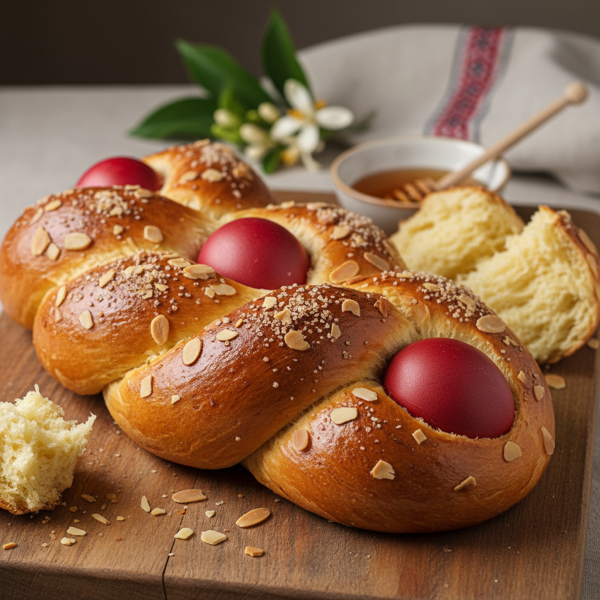
Tsoureki, a cherished Greek Easter bread, embodies the spirit of celebration during the Lenten season. This rich, sweet bread is lovingly braided and often adorned with a beautifully dyed red egg, symbolizing renewal and rebirth. It's not just about aesthetics; the tantalizing aroma of citrus and spices wafting through your kitchen provides an inviting prelude to the feast. Serve it fresh for breakfast with a slice of graviera cheese and a cold glass of milk for an experience that transcends mere sustenance. With a time-honored recipe requiring careful technique, Tsoureki is perfect for gatherings and festive celebrations alike. Enjoy this delightful bread that is as beautiful to behold as it is satisfying to taste.
N/A
Servings
N/A
Calories
14
Ingredients
Ingredients
milk
2 cups (warm until lukewarm)
active dry yeast
2 (1/4-ounce) envelopes (sprinkle over warm milk)
bread flour
8-9 cups (measure as needed for consistency)
sugar
1 3/4 cups (divided, use 1/4 cup for proofing)
almonds, very finely chopped
1 cup (optional)
salt
1 teaspoon (mix with dry ingredients)
orange zest
1 orange (grated)
finely ground anise seed or mahlepi
2 teaspoons or 1 tablespoon (add to dry ingredients)
ground masticha
1 teaspoon (optional, add to dry ingredients)
butter
1/4 cup (melted)
eggs
5 (very well beaten)
egg yolk
1 (for egg wash)
milk
2-3 tablespoons (for egg wash)
slivered almonds
1/2 cup (for sprinkling on top)
Instructions
1
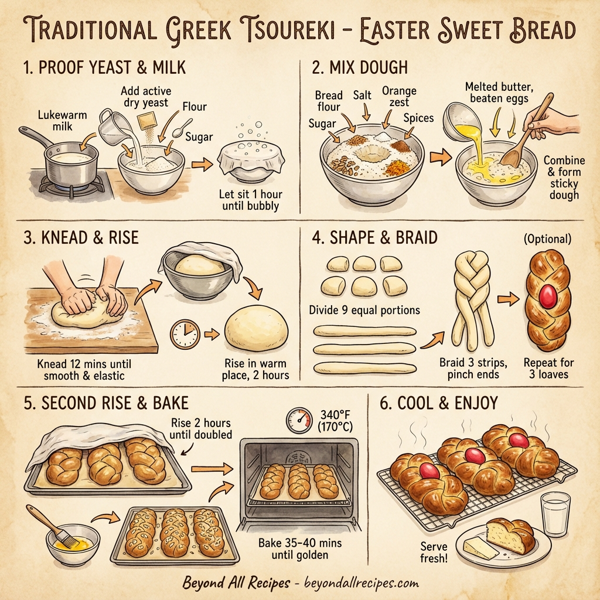
Warm 2 cups of milk in a small saucepan until it's just about lukewarm, then pour it into a large mixing bowl. Sprinkle the active dry yeast over the milk along with 1 cup of flour and 1/4 cup of sugar. Mix gently to combine, cover the bowl with a cloth, and let it sit for about 1 hour to proof until bubbly.
2
In another large bowl, combine 7 cups of bread flour, finely chopped almonds (if using), salt, the remaining sugar, grated orange zest, ground anise or mahlepi, and masticha (if you're including it). Create a well in the center of the dry ingredients and pour in the yeast mixture along with melted butter and the 5 beaten eggs. Mix and gradually pull the flour into the wet ingredients until a sticky dough forms.
3
Turn the dough out onto a floured work surface. Knead it for approximately 12 minutes, adding additional flour as necessary, until the dough is smooth and elastic. It should no longer be sticky to the touch.
4
Transfer the kneaded dough to a greased bowl, cover it with a clean cloth, and let it rise in a warm, draft-free area until it has doubled in size, which should take about 2 hours. Once risen, gently punch down the dough.
5
Divide the dough into 9 equal portions. Roll each piece into strips approximately 10-12 inches long and about 2 inches in diameter. Align 3 strips side by side, pinch one end together, and braid the strips together, pinching the other end to secure the braid.
6
If desired, press a red-dyed egg into the center of the braid or leave it plain. Repeat this process for the second and third loaves.
7
Place the braided loaves onto parchment-lined baking sheets, cover them, and allow them to rise for another 2 hours until they double in size. During this time, preheat your oven to 340°F (170°C), ensuring the rack is positioned in the middle.
8
Combine the egg yolk and the remaining milk in a small bowl and beat well. Brush this mixture generously over the tops of the loaves and sprinkle with slivered almonds.
9
Bake in the preheated oven for approximately 35-40 minutes, or until the loaves are golden brown and sound hollow when tapped on the bottom. Check the breads at 15 minutes and tent with aluminum foil if they are browning too quickly. Once baked, cool the loaves on wire racks.
Nutrition Information
Frequently Asked Questions
Frequently Asked Questions
What is Traditional Greek Tsoureki?
Tsoureki is a rich, sweet, braided Greek Easter bread that symbolizes the spirit of celebration and renewal during the Lenten season.
When is Tsoureki traditionally served?
It is traditionally served during Easter festivities, often as part of a breakfast or holiday feast.
What does the red egg in the bread symbolize?
The red-dyed egg often placed in the center of the braid symbolizes renewal and rebirth.
What are the primary aromatics used in this recipe?
The bread is flavored with orange zest, ground anise seed or mahlepi, and optional ground masticha.
How long does the yeast proofing process take?
The yeast mixture should sit for about 1 hour until it becomes bubbly.
What type of flour is best for Tsoureki?
Bread flour is recommended for this recipe to provide the necessary structure and elasticity.
How many eggs are required for the dough?
The dough requires 5 very well-beaten eggs, plus an additional yolk for the egg wash.
What temperature should the milk be for the yeast?
The milk should be warmed until it is just about lukewarm before adding the yeast.
How long should the dough be kneaded?
The dough should be kneaded for approximately 12 minutes until it is smooth and elastic.
How do I know if the dough has been kneaded enough?
The dough should be smooth, elastic, and no longer sticky to the touch.
How long is the first rising period?
The first rise takes about 2 hours in a warm, draft-free area until the dough doubles in size.
What should I do after the first rise?
Once the dough has doubled in size, you should gently punch it down before dividing it.
How many portions should the dough be divided into?
The dough should be divided into 9 equal portions to create three braided loaves.
How long should the dough strips be for braiding?
Each strip should be rolled to approximately 10-12 inches long and about 2 inches in diameter.
How long is the second rising period?
The braided loaves should rise for another 2 hours until they double in size.
What is the recommended baking temperature?
The oven should be preheated to 340°F (170°C).
Where should the oven rack be positioned?
The oven rack should be positioned in the middle for even baking.
How long does the bread take to bake?
The loaves typically bake for 35-40 minutes.
How do I check if the Tsoureki is done?
The bread is done when it is golden brown and sounds hollow when tapped on the bottom.
What should I do if the bread is browning too quickly?
Check the bread at 15 minutes and tent it with aluminum foil if it is browning too fast.
What ingredients make up the egg wash?
The wash is made by beating one egg yolk with 2-3 tablespoons of milk.
What topping is applied before baking?
Slivered almonds are sprinkled generously over the tops of the egg-washed loaves.
Is mahlepi necessary for this recipe?
Mahlepi provides a traditional flavor, but you can use 2 teaspoons of finely ground anise seed as an alternative.
Can I add nuts inside the dough?
Yes, you can add 1 cup of very finely chopped almonds to the dry ingredients.
What is masticha?
Masticha is an optional aromatic resin used in Greek baking to provide a unique, herbal flavor.
How should Tsoureki be served?
It is delicious served fresh with a slice of graviera cheese and a cold glass of milk.
How much butter is used in the dough?
The recipe calls for 1/4 cup of melted butter.
What kind of sugar is needed?
The recipe uses 1 3/4 cups of sugar, with 1/4 cup reserved specifically for the proofing stage.
How many loaves does this recipe make?
This recipe yields 3 braided loaves.
What should I use to line the baking sheets?
Use parchment paper to line the baking sheets for the best results.