Traditional Greek Semolina Halva with Almonds
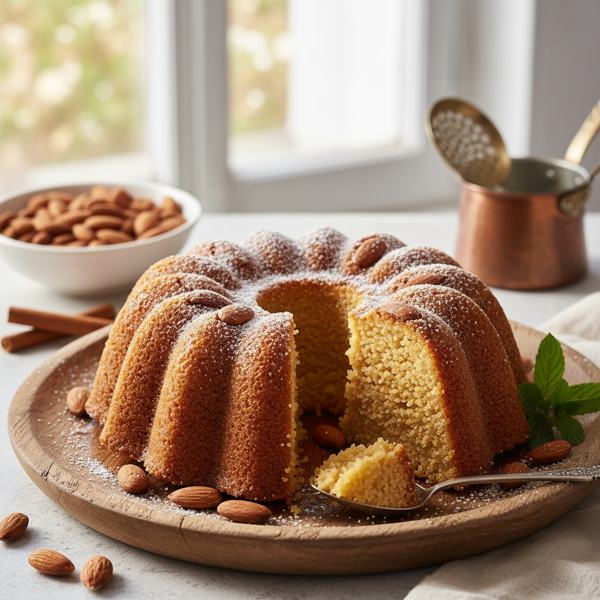
Experience the authentic taste of Greece with this delicious Semolina Halva, a beloved dessert traditionally prepared during fasting periods. This sweet dish features toasted almonds combined with a creamy, thick semolina base, subtly flavored with aromatic masticha resin. Its rich texture and delightful nutty flavor make it a perfect treat for special occasions or a comforting end to any meal. Enjoy it chilled for a refreshing dessert that pays homage to Greek culinary traditions.
6
Servings
333
Calories
7
Ingredients
Ingredients
sliced almonds
1 cup (toasted until golden brown)
semolina
1 cup (uncooked)
water
5 cups (room temperature)
sugar
1 cup (granulated)
masticha
1/2 teaspoon (ground to a powder)
sugar
1 teaspoon (for grinding with masticha)
oil
as needed (for greasing the pudding mould)
Instructions
1
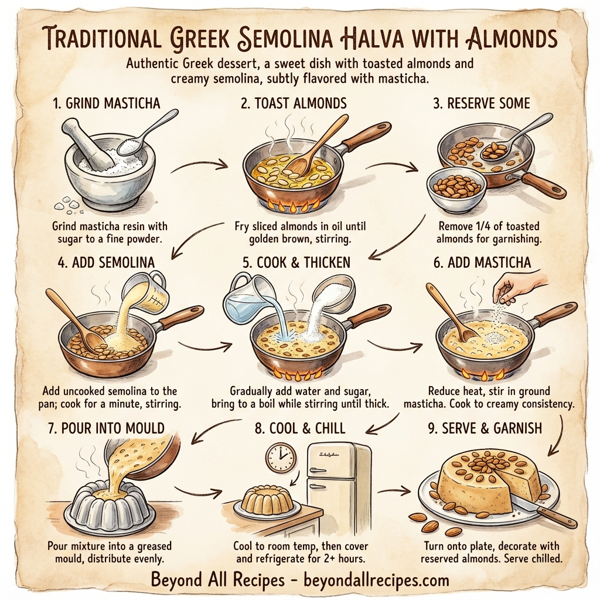
Begin by grinding the masticha resin with the teaspoon of sugar until you achieve a fine powder. This will help release the aromatic oils in the masticha.
2
In a saucepan, heat a small amount of oil over medium heat and add the sliced almonds. Fry until they are golden brown, ensuring to stir frequently to prevent burning.
3
Once the almonds are toasted, remove approximately 1/4 of them and set them aside for garnishing your halva later.
4
To the remaining almonds in the saucepan, add the uncooked semolina. Cook for about one minute, stirring continuously to coat the semolina with the nutty flavors.
5
Gradually pour in the water while stirring continuously. Add the granulated sugar and bring the mixture to a boil over medium-high heat, stirring until it thickens.
6
As the halva thickens and bubbles, reduce the heat to low and stir in the ground masticha. Continue to cook for an additional few minutes until the semolina reaches a creamy, thick consistency.
7
Remove the saucepan from the heat and carefully pour the mixture into a greased pudding mould. Ensure it is evenly distributed.
8
Allow the halva to cool at room temperature, then cover and refrigerate for at least two hours or until fully set and chilled.
9
Once chilled, carefully turn the halva out onto a serving plate. Decorate the top with the reserved toasted almonds before serving.
Nutrition Information
13g
Fat
53g
Carbs
5g
Protein
Frequently Asked Questions
Frequently Asked Questions
What is Traditional Greek Semolina Halva?
Traditional Greek Semolina Halva is a classic, nutty dessert often enjoyed during fasting periods, featuring a creamy semolina base and aromatic masticha resin.
What are the primary ingredients in this recipe?
The main ingredients include sliced almonds, semolina, water, sugar, masticha resin, and oil for the mould.
Is this Greek Halva recipe vegan?
Yes, this recipe is naturally vegan as it uses oil, water, semolina, sugar, and nuts without any animal products.
How many calories are in one serving?
Each serving contains approximately 333 calories.
How many servings does this recipe yield?
This recipe is designed to produce 6 servings.
What is masticha and why is it used?
Masticha is a Mediterranean resin that provides a unique aromatic flavor characteristic of authentic Greek desserts.
Why must the masticha be ground with sugar?
Grinding the masticha resin with a teaspoon of sugar helps it become a fine powder and releases its aromatic oils more effectively.
How should I prepare the almonds for the halva?
Fry the sliced almonds in oil over medium heat until they turn a golden brown color, stirring frequently.
Why should I set aside some of the almonds?
A portion (about 1/4) of the toasted almonds is reserved to be used as a garnish for the finished dessert.
When do I add the semolina to the pan?
Add the uncooked semolina to the saucepan once the remaining almonds are toasted, cooking it for about one minute.
How much water is required for this recipe?
The recipe calls for 5 cups of room temperature water.
At what point is the granulated sugar added?
The sugar is added after pouring the water into the semolina and almond mixture, before bringing it to a boil.
When should I stir in the ground masticha?
The masticha powder should be stirred in after the mixture thickens and begins to bubble, while the heat is on low.
What is the ideal consistency for the halva?
The halva should reach a creamy, thick consistency before being removed from the heat.
Do I need to grease the pudding mould?
Yes, you should grease the pudding mould with oil to ensure the halva can be easily turned out after chilling.
What is the cooling process for the halva?
Let the halva cool at room temperature first, then cover it and refrigerate it for at least two hours.
Is this dessert served warm or cold?
This specific recipe is intended to be served chilled for a refreshing experience.
How do I serve the halva once it has set?
Carefully turn it out onto a serving plate and decorate the top with your reserved toasted almonds.
What is the fat content per serving?
There are 13 grams of fat per serving.
How many carbohydrates are in a serving of this halva?
Each serving contains 53 grams of carbohydrates.
Does this recipe provide any protein?
Yes, each serving provides 5 grams of protein.
Is there any cholesterol in this recipe?
Based on the provided nutritional data, there is no cholesterol in this recipe.
Can I substitute the almonds with other nuts?
While traditional recipes use almonds, you could potentially use walnuts or pine nuts, though it will change the flavor profile.
Why is this dessert popular during fasting periods?
It is popular because it adheres to Lenten dietary rules, containing no dairy, eggs, or butter.
Is this recipe gluten-free?
No, this recipe contains semolina, which is made from wheat and contains gluten.
What kind of sugar is best for this recipe?
The recipe specifies granulated sugar for the main body and for grinding with the masticha.
Should the water be hot or cold when added?
The ingredients list specifies room temperature water.
Why is constant stirring necessary?
Constant stirring ensures the semolina is evenly coated with oil and prevents the mixture from sticking or burning as it thickens.
Does the recipe include any sodium?
Sodium information is not provided, but since no salt is added, the sodium content is likely very low.
Can I add extra flavors like cinnamon?
While this version focuses on masticha, many traditional variations also include a cinnamon stick or cloves during the boiling process.