Traditional German Parker House Rolls
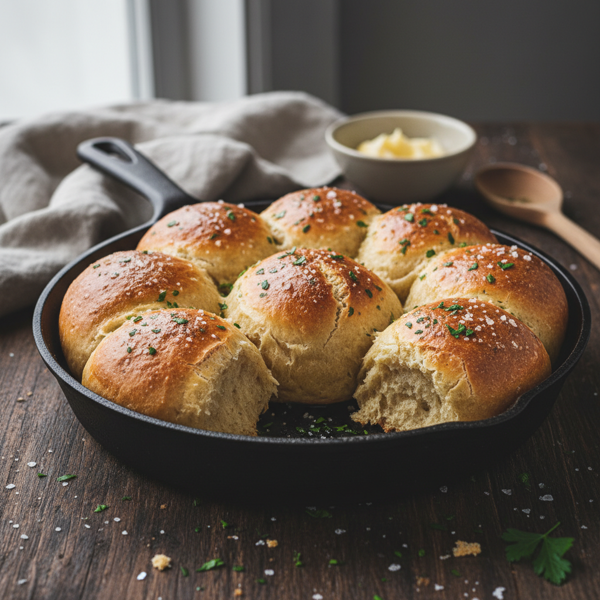
Indulge in the rich, buttery goodness of Traditional German Parker House Rolls, a beloved recipe passed down through generations. Originating from the kitchens of German grandmothers like Matha, these rolls are fluffy and tender with a delightful golden-brown appearance. Perfect for family gatherings or holiday feasts, these rolls are buttery and soft, making them an excellent accompaniment to soups, stews, and roasts. The recipe allows for flexibility, as you can prepare the dough ahead of time, even refrigerating it for an overnight rise. Serve warm with a smear of butter and enjoy the warmth of home-cooked tradition.
N/A
Servings
N/A
Calories
8
Ingredients
Ingredients
whole milk
1 cup (warmed)
dry yeast
4 1/2 teaspoons (active)
butter
1/2 cup (melted)
salt
1/4-1 teaspoon (to taste)
sugar
1/4 cup
eggs
2 (beaten)
all-purpose flour
4 1/2-5 cups (as needed)
more melted butter
as needed (for brushing)
Instructions
1
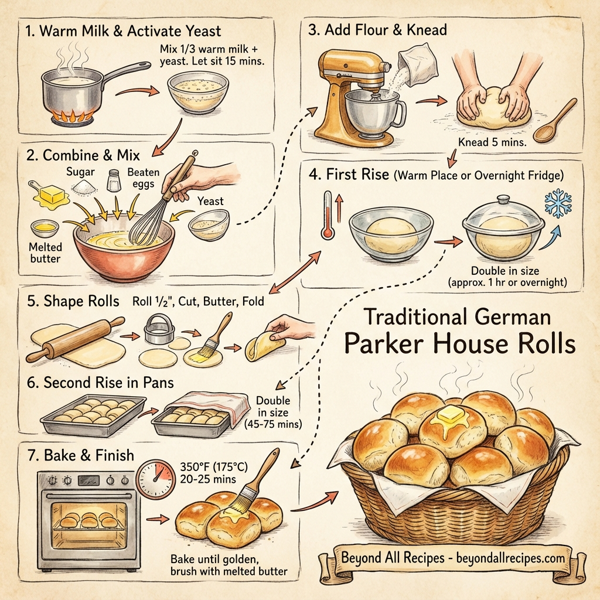
In a small saucepan, gently warm the milk over low heat until slightly warm to the touch. In a separate small bowl, mix 1/3 of the warm milk with the dry yeast and let it sit for about 15 minutes, or until it becomes bubbly and frothy.
2
In a large mixing bowl, combine the remaining warm milk, melted butter, salt, and sugar. Whisk together until the sugar is fully dissolved. Add the beaten eggs and the bubbly yeast mixture into the bowl, mixing until well combined.
3
Gradually add flour, 1/4 cup at a time, to the wet mixture, mixing on high speed with a stand mixer for at least 5 minutes. When the dough becomes too stiff to beat, switch to a wooden spoon or spatula to incorporate the remaining flour until a soft dough forms.
4
Turn the dough out onto a floured surface and knead for about 5 minutes, or until the dough is smooth and elastic. Transfer the kneaded dough into a greased bowl, turning it to coat the top. Cover the bowl with a clean towel and let it rise in a warm place until it has doubled in size, approximately 1 hour. If you prefer to refrigerate the dough, place it in the fridge when it has not yet risen. This allows for a slow fermentation and flavor development overnight. When ready to use, let the dough sit at room temperature for an hour before continuing.
5
Once the dough has risen, punch it down to release the air. Roll it out on a floured surface to a thickness of 1/2 inch. Use a 3-inch round cookie cutter to cut out circles. Brush each circle with melted butter, then fold it in half to create half-moons, pinching the edges lightly to seal.
6
Arrange the half-moon rolls in two greased 13x9-inch pans. Cover them with a towel and allow them to rise again until they double in size, which will take about 45 minutes at room temperature and may take 60-75 minutes if previously refrigerated.
7
Preheat your oven to 350 degrees F (175 degrees C). Bake the rolls for 20-25 minutes or until they are golden brown. When they are done baking, remove them from the oven and brush them generously with freshly melted butter. Be sure to use new melted butter for this step to ensure a rich, buttery flavor.
Nutrition Information
Frequently Asked Questions
Frequently Asked Questions
What are Traditional German Parker House Rolls?
They are fluffy and tender rolls with a golden-brown appearance, based on a recipe passed down through German generations.
What is the texture of these rolls?
These rolls are characterized by their buttery and soft texture, making them a perfect side dish.
How should I warm the milk for the recipe?
Gently warm the milk in a small saucepan over low heat until it is slightly warm to the touch.
How long should the yeast mixture sit?
The yeast and milk mixture should sit for about 15 minutes to become bubbly.
How do I know when the yeast is ready to use?
The yeast is ready when the mixture becomes bubbly and frothy.
Can I use a stand mixer for this recipe?
Yes, use a stand mixer on high speed for at least 5 minutes when first incorporating the flour.
When should I stop using the stand mixer?
Switch to a wooden spoon or spatula once the dough becomes too stiff for the mixer to handle.
How long should I knead the dough by hand?
Knead the dough on a floured surface for about 5 minutes until it is smooth and elastic.
How long is the first rise?
The first rise takes approximately 1 hour in a warm place, or until the dough has doubled in size.
Can I make the dough in advance?
Yes, the dough can be refrigerated for an overnight rise to develop flavor and save time.
When should I put the dough in the fridge if refrigerating overnight?
Place the dough in the refrigerator before it has had a chance to rise.
What should I do with refrigerated dough before rolling it out?
Let the dough sit at room temperature for one hour before you begin rolling and shaping.
How thick should I roll the dough?
Roll the dough out to a thickness of 1/2 inch on a floured surface.
What tool should I use to cut the rolls?
Use a 3-inch round cookie cutter to cut out the dough circles.
How do I shape the Parker House rolls?
Brush a dough circle with melted butter and fold it in half to create a half-moon shape.
Should I seal the edges of the rolls?
Yes, lightly pinch the edges of the half-moon shape to seal them.
What size pans are needed for baking?
You will need two greased 13x9-inch pans to arrange the rolls.
How long is the second rise?
The second rise takes about 45 minutes at room temperature, or up to 75 minutes if the dough was refrigerated.
What temperature should the oven be set to?
Preheat your oven to 350 degrees F (175 degrees C).
How long do the rolls need to bake?
Bake the rolls for 20 to 25 minutes until they are golden brown.
What is the final step after baking?
Remove the rolls from the oven and brush them generously with freshly melted butter.
Why is fresh butter used for the final brush?
Using new melted butter for the final step ensures the richest possible buttery flavor.
What are these rolls best served with?
They are excellent accompaniments to soups, stews, and holiday roasts.
How much flour is required?
The recipe uses between 4 1/2 and 5 cups of all-purpose flour.
Can I adjust the salt content?
Yes, you can use between 1/4 to 1 teaspoon of salt based on your taste preference.
How many eggs are in the recipe?
The recipe requires 2 beaten eggs.
What type of yeast should I use?
Use 4 1/2 teaspoons of active dry yeast.
How much butter goes into the dough?
The dough itself requires 1/2 cup of melted butter.
Is there sugar in these rolls?
Yes, the recipe includes 1/4 cup of sugar for a touch of sweetness.
Who is the inspiration for this recipe?
The recipe is inspired by traditional German grandmothers like Matha.