Traditional Danish Frikadeller
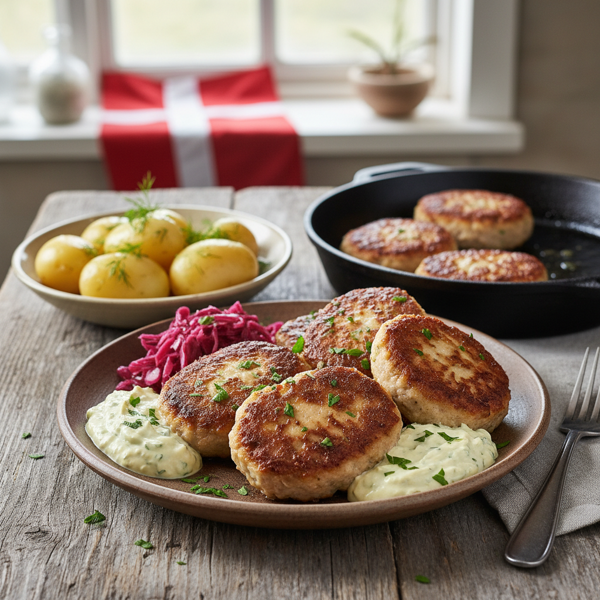
Danish Frikadeller are a cherished comfort food in Denmark, celebrating the rich culinary heritage that has been passed down through generations. Unlike their Swedish counterparts, these savory meatballs incorporate a delightful blend of extra lean ground beef and pork, resulting in a fluffier texture and a rich depth of flavor. This recipe, inspired by my great-grandmother's cooking, captures the essence of family gatherings and traditional Danish cuisine. Often served with creamy gravy and a side of potatoes or fresh salad, these meatballs are perfect for family lunches, dinners, or even as a hearty snack. Transport yourself to the cozy kitchens of Denmark with this flavorful dish that embodies warmth and nostalgia.
N/A
Servings
N/A
Calories
8
Ingredients

Ingredients
Extra lean ground beef
350 g (None)
Lean ground pork
150 g (None)
Egg
1 (Beaten)
Breadcrumbs
8 tablespoons (None)
Onion
1 small (Shredded finely with a cheese grater)
Water
1/2 cup (None)
Salt
1 3/4 teaspoons (None)
Black pepper
2 teaspoons (Ground (add more if desired))
Instructions
1
In a large mixing bowl, combine the extra lean ground beef and ground pork until well mixed.
2
Add the egg, breadcrumbs, finely shredded onion, water, salt, and black pepper to the meat mixture.
3
Using your hands, knead the mixture for about 5 minutes until all ingredients are fully incorporated and the mixture is softened.
4
Shape the meat mixture into meatballs that are the size of your palm for dinner servings or half that size for lunch. This recipe will yield approximately 15 dinner-sized meatballs.
5
Preheat a non-stick pan over medium heat. If necessary, add a small amount of butter to prevent sticking.
6
Place the meatballs in the hot pan, allowing them to brown evenly. Turn the meatballs using a fork once they start to hold their shape and develop a golden crust.
7
Continue to turn the meatballs every 4 minutes, ensuring they do not over-brown. Cook for approximately 15-20 minutes, or until the meatballs are cooked through with no pink remaining inside.
8
Serve the Frikadeller hot alongside potato salad, mashed potatoes, or boiled potatoes drizzled with a creamy white gravy for an authentic Danish experience.
Nutrition Information
Frequently Asked Questions
Frequently Asked Questions
What are Traditional Danish Frikadeller?
Traditional Danish Frikadeller are savory meatballs made from a blend of ground beef and pork, known for their fluffy texture and rich flavor.
How do Frikadeller differ from Swedish meatballs?
Unlike Swedish meatballs, Danish Frikadeller use a specific blend of beef and pork combined with water and kneading to create a much fluffier texture.
What meat ratio is used in this recipe?
This recipe calls for 350g of extra lean ground beef and 150g of lean ground pork.
Why is ground pork included in the recipe?
Ground pork is included to provide a richer depth of flavor and contribute to the signature fluffy texture of the meatball.
How should the onion be prepared?
The onion should be shredded finely using a cheese grater so it incorporates seamlessly into the meat mixture.
What is the purpose of adding water to the mixture?
Water is added to the meat mixture to help soften it and ensure the resulting meatballs are light and fluffy rather than dense.
How long should the meat mixture be kneaded?
The mixture should be kneaded by hand for about 5 minutes until all ingredients are fully incorporated and the mixture is softened.
What size should dinner meatballs be?
For dinner servings, the meat mixture should be shaped into meatballs that are approximately the size of your palm.
How large should lunch-sized Frikadeller be?
Lunch-sized meatballs should be approximately half the size of the dinner-sized version.
How many meatballs does this recipe yield?
This recipe yields approximately 15 dinner-sized meatballs.
What type of pan is best for cooking?
A non-stick pan is recommended for frying the meatballs to prevent sticking and ensure even browning.
Should I use butter when frying?
Yes, a small amount of butter can be added to the preheated pan if necessary to prevent sticking and add flavor.
What heat setting should be used?
The meatballs should be cooked over medium heat to allow them to brown without burning before the center is cooked.
How often should the meatballs be turned?
Once they start to hold their shape and develop a crust, you should continue to turn them every 4 minutes.
What is the total cooking time?
The meatballs take approximately 15-20 minutes to cook through completely.
How can I tell if the Frikadeller are done?
The meatballs are done when they have a golden crust on the outside and no pink remaining on the inside.
What are the best side dishes for Frikadeller?
Traditional sides include potato salad, mashed potatoes, boiled potatoes, or a fresh salad.
What kind of gravy goes with this dish?
A creamy white gravy is the authentic choice for drizzling over the meatballs and potatoes.
Is this recipe suitable for snacks?
Yes, Frikadeller are versatile enough to be served as a hearty snack, a lunch item, or a main dinner course.
What seasonings are used?
The meat is seasoned with 1 3/4 teaspoons of salt and 2 teaspoons of ground black pepper.
Do I need to beat the egg before adding it?
Yes, the recipe specifies that the egg should be beaten before being added to the meat mixture.
What kind of beef is recommended?
Extra lean ground beef is recommended to keep the meatballs from becoming too greasy while maintaining flavor.
Can I use more pepper?
Yes, you can add more than the suggested 2 teaspoons of black pepper if a spicier flavor is desired.
How much breadcrumbs are needed?
The recipe calls for 8 tablespoons of breadcrumbs to bind the mixture.
What tool should I use to turn the meatballs?
A fork is suggested for turning the meatballs once they start to hold their shape.
Is this an authentic recipe?
Yes, this recipe is inspired by traditional Danish great-grandmother's cooking and captures the essence of Danish heritage.
Why is kneading by hand important?
Hand-kneading ensures the fats and proteins are properly emulsified with the water and breadcrumbs for the correct texture.
What is the recommended onion size?
One small onion is sufficient for this recipe.
Can I serve these cold?
While the recipe suggests serving them hot for an authentic experience, Frikadeller are often enjoyed cold on open-faced sandwiches in Denmark.
What makes these 'comfort food'?
Their rich flavor, nostalgic connection to family gatherings, and association with cozy Danish kitchens make them a cherished comfort food.