Traditional Danish Easter Bread (Paaske Kage)
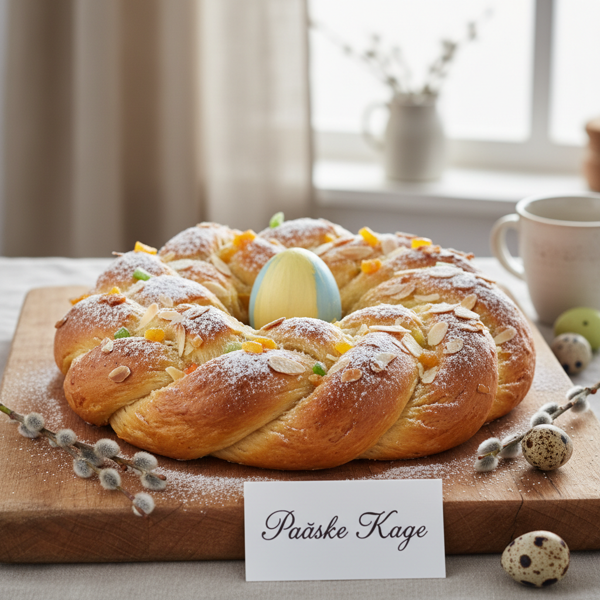
This Traditional Danish Easter Bread, lovingly handed down through generations, is a delightful treat that embodies the spirit of Easter celebrations. Originating from my grandmother Johansen’s kitchen in Denmark, this bread is beautifully light and fluffy, making it perfect for both Easter and Christmas festivities. The aroma of warm cinnamon and sweet raisins fills the kitchen as it bakes, evoking fond memories and creating new ones. Best enjoyed fresh out of the oven while still lukewarm, this bread is not only a treat to the palate but also a visual delight adorned with slivered almonds and coarse sugar. Gather your loved ones and share a slice of tradition with this wonderful recipe!
N/A
Servings
N/A
Calories
14
Ingredients
Ingredients
Yeast
1 envelope (Dissolve in warm milk.)
Room temperature milk
1/2 cup (For activating yeast.)
Granulated sugar
2 tablespoons (To combine with other ingredients.)
Egg
1 large (or 2 small) (Whisked.)
Margarine
125 g (Cut into small pieces.)
Flour
250-300 g (For dough consistency.)
Sugar
100 g (For filling.)
Unsalted butter
100 g (Softened.)
Cinnamon
1-2 teaspoons (For filling.)
Raisins
1/8 cup (Optional for filling.)
Candied lemon and orange fruit
1/8 cup (Chopped for filling.)
Cold coffee or egg
To brush on top (For finishing touch.)
Coarse sugar
2 tablespoons (To sprinkle on top.)
Blanched slivered almonds
1/8 cup (For decoration.)
Instructions
1
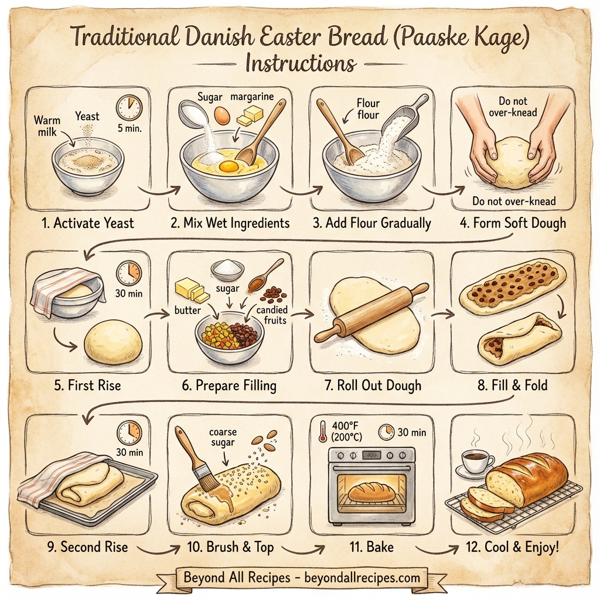
Start by dissolving the yeast in warm milk in a small bowl. Allow it to activate for about 5 minutes until it becomes frothy.
2
In a large mixing bowl, combine the sugar, egg, and small chunks of margarine. Mix well until smooth.
3
Gradually add 3/4 of the flour to the mixture, stirring with a wooden spoon until combined.
4
Switch to using your hands to incorporate the remaining flour into the dough gently. Avoid over-kneading; just combine until a soft dough forms.
5
Lightly dust the top of the dough with flour. Cover the bowl with a clean dish-towel and let it rise at room temperature for approximately 30 minutes, or until doubled in size.
6
While the dough is rising, prepare the filling by combining softened butter, sugar, cinnamon, raisins, and chopped candied fruits in a separate bowl until well mixed.
7
Once the dough has risen, gently roll it out on a floured surface into an oblong shape, taking care not to squish the air out.
8
Spread the filling evenly over the rolled-out dough, leaving a small border at the edges. Fold the ends inward to seal the filling, and then fold the dough into thirds to create layers.
9
Place the folded dough on a baking sheet lined with parchment paper, cover it with a thin dish-towel, and let it rise for another 30 minutes.
10
Preheat your oven to 400°F (200°C). Brush the risen dough with cold coffee or a whipped egg for a golden finish, then sprinkle with coarse sugar and the slivered almonds.
11
Bake in the middle of the oven for about 30 minutes or until the top is golden brown and the bread has risen beautifully.
12
Once baked, remove from the oven and let cool slightly. Best enjoyed warm!
Nutrition Information
Frequently Asked Questions
Frequently Asked Questions
What is Traditional Danish Easter Bread?
Known as Paaske Kage, it is a light and fluffy bread originating from Denmark, traditionally served during Easter and Christmas celebrations.
Who created this specific recipe?
This recipe was lovingly handed down through generations, originally coming from grandmother Johansen’s kitchen in Denmark.
Is Paaske Kage only for Easter?
While named for Easter, this traditional Danish bread is also perfect for Christmas festivities and other special gatherings.
How should I activate the yeast?
Dissolve the yeast in warm milk and allow it to activate for about 5 minutes until it becomes frothy.
What temperature should the milk be?
The recipe calls for room temperature or warm milk to properly activate the yeast.
How much yeast is needed?
The recipe requires one envelope of yeast.
What is the first step in making the dough?
After activating the yeast, combine sugar, egg, and small chunks of margarine in a large mixing bowl until smooth.
How much margarine is used in the dough?
Use 125 grams of margarine cut into small pieces.
What is the best way to add flour to the dough?
Gradually add 3/4 of the flour using a wooden spoon, then switch to using your hands to incorporate the remaining flour gently.
How much flour is required?
The recipe uses between 250 and 300 grams of flour for proper dough consistency.
Should the dough be heavily kneaded?
No, you should avoid over-kneading; just combine the ingredients until a soft dough forms.
How long does the first rise take?
Let the dough rise at room temperature for approximately 30 minutes, or until it has doubled in size.
What are the ingredients for the filling?
The filling consists of softened butter, sugar, cinnamon, raisins, and chopped candied fruits.
How much butter is needed for the filling?
The filling requires 100 grams of softened unsalted butter.
How much cinnamon should be added?
The recipe suggests 1 to 2 teaspoons of cinnamon for the filling.
What kind of candied fruit is used?
The filling uses 1/8 cup of chopped candied lemon and orange fruit.
Are raisins mandatory in the filling?
No, the 1/8 cup of raisins is listed as an optional ingredient for the filling.
How do you shape the dough after the first rise?
Gently roll it out on a floured surface into an oblong shape, taking care not to squish the air out.
How is the filling applied?
Spread the filling evenly over the rolled-out dough, leaving a small border at the edges.
How do you fold the bread?
Fold the ends inward to seal the filling, then fold the dough into thirds to create distinct layers.
How long is the second rise?
Once folded and placed on a baking sheet, let it rise for another 30 minutes under a thin dish-towel.
What is the oven temperature for baking?
Preheat your oven to 400°F (200°C).
What do you brush on the dough before baking?
Brush the dough with cold coffee or a whipped egg to achieve a golden finish.
What are the toppings for the bread?
Sprinkle coarse sugar and blanched slivered almonds on top before putting it in the oven.
How long does the bread bake?
Bake in the middle of the oven for about 30 minutes or until the top is golden brown.
What is the best way to serve this bread?
This bread is best enjoyed fresh out of the oven while it is still lukewarm.
What type of egg is used?
The recipe calls for 1 large egg or 2 small ones.
What is the aroma of the baking bread?
The kitchen will fill with the smell of warm cinnamon and sweet raisins as it bakes.
Is the bread difficult to make?
The bread is simple to prepare by following the two rising stages and careful folding instructions.
What gives the bread its visual appeal?
Its visual beauty comes from being adorned with slivered almonds and coarse sugar.