Traditional Cottage Cheese Perogies with Butter and Bacon

Indulge in the comforting taste of homemade Traditional Cottage Cheese Perogies, inspired by old-fashioned recipes. These delightful dumplings are filled with a creamy cottage cheese and seasoned egg mixture, enveloped in a soft, tender dough. Perfectly boiled and then lightly sautéed in butter or served with crisp bacon and sautéed onions, these perogies make for a hearty lunch or snack. Gather your family and friends to share this nostalgic dish, that brings warmth and satisfaction with every bite!
N/A
Servings
N/A
Calories
11
Ingredients
Ingredients
dry curd cottage cheese
2 cups (none)
egg
1, slightly beaten (beaten)
salt
to taste (none)
flour
2 1/2 cups (none)
salt
1/2 teaspoon (none)
egg
1 (none)
oil
2 teaspoons (none)
warm water
3/4 cup (warm)
butter
for sautéing (melted)
bacon
for topping (cooked and chopped)
onions
for topping (lightly browned in butter)
Instructions
1
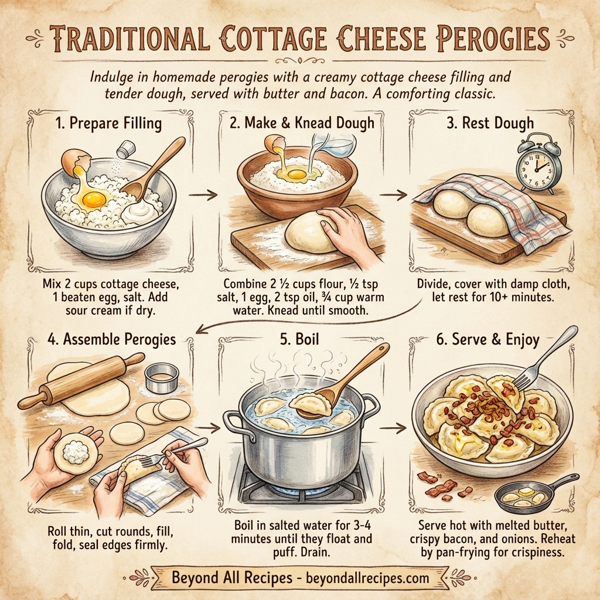
Prepare the Cottage Cheese Filling: In a mixing bowl, combine 2 cups of dry curd cottage cheese with 1 beaten egg. Season with salt to taste. If the cheese is too dry, incorporate an additional egg or a dollop of thick sour cream to achieve a creamy filling.
2
Make the Dough: In a large bowl, combine 2 1/2 cups of flour with 1/2 teaspoon of salt. Create a well in the center and pour in 1 egg, 2 teaspoons of oil, and 3/4 cup of warm water. Mix until the ingredients come together to form a medium-soft dough. Knead the dough on a floured surface until smooth, taking care not to over-knead, as this can toughen the dough.
3
Rest the Dough: Divide the dough into two parts, cover with a damp cloth, and let it rest for at least 10 minutes to allow the gluten to relax.
4
Assemble the Perogies: Roll out one portion of dough on a lightly floured surface until it is quite thin. Use a large biscuit cutter or the rim of a glass to cut out rounds. Place a round in your palm, add a spoonful of the cottage cheese filling in the center, and fold over to form a half-moon shape. Press the edges firmly to seal, ensuring that there is no filling escaping from the sides. Place the finished perogies on a floured surface or a clean tea towel, covering them with another towel to prevent drying.
5
Cook: Bring a large pot of salted water to a rolling boil. Carefully drop in a few perogies at a time, stirring gently with a wooden spoon to prevent sticking. Boil for 3-4 minutes, or until the perogies float to the surface and appear puffed. Remove them with a slotted spoon and drain well.
6
Serve: Place cooked perogies in a deep dish, generously drizzle with melted butter to prevent sticking, and keep them warm until all are cooked. Serve topped with additional melted butter, crispy bacon, and/or sautéed onions for an added layer of flavor.
7
Reheat Options: For any leftovers, perogies can be refrigerated or frozen and reheated to perfection. Pan-frying in butter gives them a delightful crispy exterior, while reheating in a double boiler or oven keeps them soft and plump.
Nutrition Information
Frequently Asked Questions
Frequently Asked Questions
What are Traditional Cottage Cheese Perogies?
They are homemade dumplings filled with a creamy mixture of cottage cheese and egg, wrapped in a soft dough, and traditionally served with butter, bacon, and onions.
What type of cheese is best for the perogie filling?
This recipe specifically calls for dry curd cottage cheese to achieve the correct texture and consistency.
How do I make the perogie filling?
Combine 2 cups of dry curd cottage cheese with one beaten egg and salt to taste. Mix until creamy.
What if my cottage cheese filling is too dry?
If the mixture is too dry, you can incorporate an additional beaten egg or a dollop of thick sour cream to reach the desired creaminess.
What ingredients are needed for the perogie dough?
The dough consists of 2 1/2 cups of flour, 1/2 teaspoon of salt, 1 egg, 2 teaspoons of oil, and 3/4 cup of warm water.
How do I mix the perogie dough?
Combine flour and salt in a bowl, create a well in the center, and add the egg, oil, and warm water. Mix until a medium-soft dough forms.
Do I need to knead the perogie dough?
Yes, knead the dough on a floured surface until smooth, but be careful not to over-knead it or the dough will become tough.
How long should the perogie dough rest?
The dough should rest for at least 10 minutes while covered with a damp cloth to allow the gluten to relax.
How thin should the dough be rolled?
The dough should be rolled out on a lightly floured surface until it is quite thin before cutting.
What can I use to cut the perogie rounds?
You can use a large biscuit cutter or simply the rim of a glass to cut out the dough circles.
How do I assemble the perogies?
Place a spoonful of filling in the center of a dough round, fold it into a half-moon shape, and press the edges firmly to seal.
How do I prevent the perogies from opening during cooking?
Ensure you press the edges firmly during assembly so that no filling can escape from the sides.
How do I keep the dough rounds from drying out while I work?
Cover the finished perogies with a clean tea towel while you finish assembling the rest.
How do I boil the perogies?
Drop a few perogies at a time into a large pot of rolling salted water. Stir gently with a wooden spoon to prevent sticking.
How long do perogies need to boil?
Boil them for 3-4 minutes, or until they float to the surface and appear puffed.
How should I drain the perogies?
Remove the cooked perogies from the water using a slotted spoon and drain them well.
How do I prevent the perogies from sticking together after cooking?
Place them in a deep dish and generously drizzle them with melted butter to keep them separate.
What are traditional toppings for these perogies?
They are best served with melted butter, crispy cooked bacon bits, and lightly browned sautéed onions.
Can I reheat leftover perogies?
Yes, leftovers can be refrigerated or frozen and then reheated to perfection.
What is the best way to get a crispy texture when reheating?
Pan-frying the perogies in butter is the best method to give them a delightful crispy exterior.
How can I reheat perogies while keeping them soft?
Reheating them in a double boiler or in the oven will help keep them soft and plump.
Is this a Polish recipe?
Yes, this is a traditional Polish-style recipe for cottage cheese perogies, often categorized under Polish cuisine.
How many eggs are used in this recipe?
You will need at least two eggs: one for the cottage cheese filling and one for the dough.
What type of water should be used for the dough?
You should use 3/4 cup of warm water to help the dough reach the right consistency.
Is the dough supposed to be hard or soft?
The recipe aims for a medium-soft dough that is tender once cooked.
Can I make these for a snack or a meal?
Perogies are very versatile and can be served as a hearty lunch, dinner, or even a snack.
How do I prepare the onion topping?
Onions should be lightly browned in butter before being used as a topping.
How do I prepare the bacon topping?
The bacon should be cooked until crisp and then chopped into small pieces.
Why do I need to rest the dough?
Resting the dough allows the gluten to relax, making it much easier to roll out thinly without it springing back.
What equipment is necessary?
You will need mixing bowls, a rolling pin, a round cutter (or glass), a large pot for boiling, and a slotted spoon.