Traditional Aviyal - South Indian Vegetable Stew
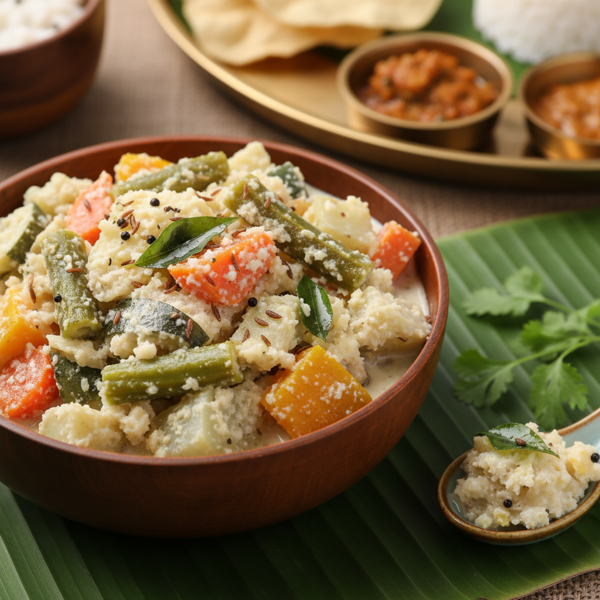
Aviyal is a quintessential South Indian dish that celebrates the harmony of wholesome vegetables and coconut in a creamy, yogurt-based stew. Hailing from the rich culinary tradition of Kerala, this recipe from the Iyer Kitchen cookbook by Arun Ganapathy captures the authentic flavors and textures reminiscent of the bustling kitchens in India. Featuring a vibrant medley of hearty vegetables like green beans, potatoes, carrots, plantains, zucchini, and yam, this dish is both nutritious and comforting. The addition of freshly grated coconut and aromatic spices elevates the dish, making it a perfect accompaniment to steamed rice. Serve it at family gatherings or festive occasions, and delight in the celebration of traditional Indian cuisine.
4
Servings
N/A
Calories
10
Ingredients
Ingredients
Mixed vegetables (e.g., green beans, potatoes, carrots, plantain, zucchini, yam)
4-5 cups (Cut into 2-inch long and 1/2 inch wide pieces)
Vegetable oil or coconut oil
2 tablespoons (For cooking)
Mustard seeds
1/4 teaspoon (For tempering)
Curry leaves
6 leaves (Fresh)
Unsweetened grated frozen coconut
1 cup (Thawed)
Hot green chili pepper
1 small (Whole or chopped (to taste))
Cumin seeds
1 teaspoon (Whole)
Salt
1 teaspoon (To taste)
Yogurt
1 1/4 cups (Plain, whisked)
Turmeric powder
1/2 teaspoon (Ground)
Instructions
1
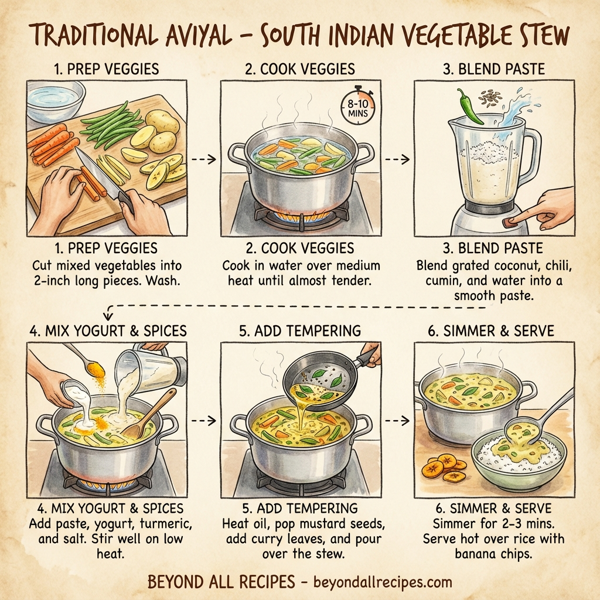
Begin by washing and cutting your chosen mixed vegetables into 2-inch long and 1/2 inch wide pieces.
2
In a pot, add just enough water to submerge the vegetables and cook them over medium heat until they are almost tender but still have a bit of bite, about 8-10 minutes. Be careful not to overcook them.
3
Meanwhile, in a blender or food processor, combine the grated coconut, hot green chili pepper, and cumin seeds with a small splash of water. Blend until you achieve a smooth paste. This creates the flavor base of your Aviyal.
4
Once the vegetables are cooked, reduce the heat to low and add the yogurt, turmeric, and salt to the blended coconut mixture. Stir well to combine.
5
Pour this yogurt-coconut mixture over the vegetables, ensuring they are evenly coated. Keep the heat low to minimize curdling. Note that a slight curdle is acceptable; it won’t affect the flavor.
6
In a small frying pan, heat the vegetable or coconut oil over medium heat. Once hot, add the mustard seeds and allow them to sizzle and pop.
7
Carefully pour the mustard seeds along with the hot oil and curry leaves over the vegetable mixture, stirring gently to incorporate.
8
Let the Aviyal simmer on low heat for an additional 2-3 minutes to meld the flavors.
9
Serve the Aviyal hot over cooked rice, and for an extra crunch, top with spicy banana chips.
Nutrition Information
Frequently Asked Questions
Frequently Asked Questions
What is Traditional Aviyal?
Traditional Aviyal is a South Indian vegetable stew from Kerala made with a medley of vegetables in a creamy, coconut and yogurt-based sauce.
What vegetables are used in this Aviyal recipe?
This recipe uses a mix of green beans, potatoes, carrots, plantains, zucchini, and yam.
How should the vegetables be cut for Aviyal?
Vegetables should be cut into pieces that are approximately 2 inches long and 1/2 inch wide.
How long should the vegetables be cooked?
Cook the vegetables for 8-10 minutes in water until they are almost tender but still have a bit of a bite.
What is in the Aviyal flavor base?
The flavor base consists of a smooth paste made from grated coconut, hot green chili pepper, and cumin seeds.
What kind of coconut is recommended?
The recipe calls for one cup of unsweetened grated frozen coconut, which should be thawed before use.
How do I prepare the yogurt for the stew?
Use 1 1/4 cups of plain yogurt and whisk it before adding it to the coconut mixture.
What spices are used for seasoning?
The dish is seasoned with turmeric powder, salt, cumin seeds, and green chili.
What is the tempering process for this recipe?
Tempering involves heating oil and adding mustard seeds until they pop, then adding curry leaves and pouring the mixture over the stew.
Which oil is best for making Aviyal?
You can use either vegetable oil or coconut oil, though coconut oil is traditional for South Indian cuisine.
How many servings does this recipe provide?
This recipe is designed to serve 4 people.
What should I serve with Aviyal?
Aviyal is traditionally served over hot steamed rice.
Can I add a crunchy topping to Aviyal?
Yes, topping the dish with spicy banana chips is recommended for an extra crunch.
How do I prevent the yogurt from curdling?
Keep the heat on low when adding the yogurt mixture and throughout the final simmering stages.
Is it okay if the sauce curdles slightly?
Yes, a slight curdle is acceptable and will not negatively affect the flavor of the dish.
How much water should I use to cook the vegetables?
Use just enough water to submerge the vegetables in the pot.
What gives Aviyal its yellow color?
The yellow hue comes from the addition of 1/2 teaspoon of turmeric powder.
How many curry leaves are needed?
The recipe calls for 6 fresh curry leaves.
How much coconut paste is required?
The paste is made from 1 cup of grated coconut, 1 teaspoon of cumin, and 1 green chili.
What is the total volume of vegetables needed?
You will need approximately 4 to 5 cups of mixed vegetables.
What is the role of cumin seeds in this dish?
Cumin seeds are blended into the coconut paste to provide an aromatic flavor base.
Is Aviyal a healthy dish?
Yes, it is considered a nutritious dish as it features a wide variety of hearty vegetables and healthy fats from coconut.
Should I use whole or chopped green chilies?
The chili can be used whole or chopped depending on your heat preference when blending the paste.
How long should the dish simmer after adding tempering?
Let the Aviyal simmer on low heat for an additional 2-3 minutes to meld the flavors together.
What cookbook is this recipe from?
This recipe is from the Iyer Kitchen cookbook by Arun Ganapathy.
How much salt should I add?
The recipe suggests 1 teaspoon of salt, or you can adjust to taste.
Can I use zucchini in Aviyal?
Yes, zucchini is listed as one of the recommended vegetables for this medley.
What type of mustard seeds are used?
The recipe specifies 1/4 teaspoon of mustard seeds for the tempering stage.
Is the coconut used in this recipe sweetened?
No, you must use unsweetened coconut to maintain the authentic savory flavor.
Can I use different vegetables than the ones listed?
Yes, while specific vegetables are suggested, Aviyal is a flexible dish that can accommodate various mixed vegetables.