Toasted Sesame Seaweed Seasoning
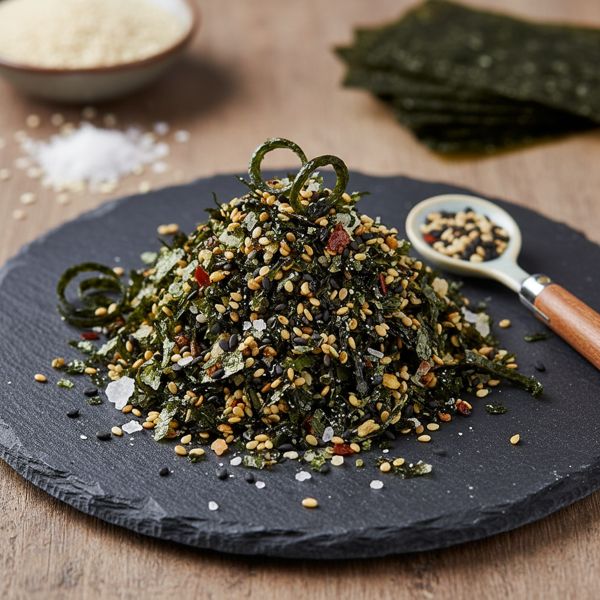
Toasted Sesame Seaweed Seasoning, known as Gomasio in Japanese cuisine, is a flavorful and nutritious condiment that adds a delightful nutty taste to various dishes. Often used in place of salt, this versatile seasoning combines the rich flavor of toasted brown sesame seeds with a hint of umami from kombu seaweed. It’s perfect for sprinkling on salads, sautéed greens, scrambled eggs, or even stirred into warm brown rice hot cereal for a delicious breakfast. Not only is it easy to make at home, but it also provides a healthy alternative to traditional salt, packed with essential nutrients and healthy fats. Enjoy this delightful condiment that enhances your daily meals while complementing a wide range of flavors!
2
Servings
600
Calories
3
Ingredients
Ingredients
Brown sesame seeds
2 cups (Unroasted)
Sea salt
1 tablespoon (Fine or coarse)
Kombu seaweed
1 strip (Approximately 6-inch by 1 1/2-inch piece)
Instructions
1
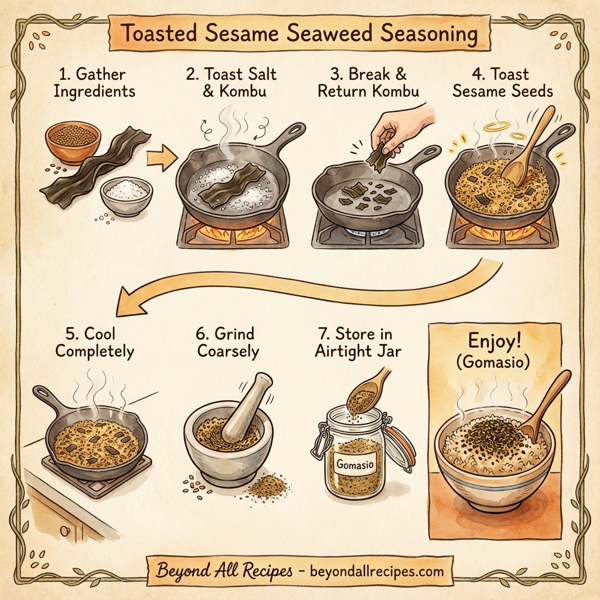
1. To start, if you want to save money, purchase brown sesame seeds from an Asian market or bulk bins at your local grocery store. Kombu seaweed is optional, but I highly recommend it for added flavor.
2
2. Heat a clean, dry 10-inch cast iron skillet over medium heat. Lightly toast the sea salt and the kombu strip, stirring occasionally. Continue to toast until the salt takes on a subtle greyish hue, which should take about 2-3 minutes.
3
3. If you’re using kombu, remove the strip and allow it to cool slightly. Once cooled, break the kombu into small pieces and return them to the skillet.
4
4. Add the brown sesame seeds to the skillet. Toast them for about 6-8 minutes, stirring constantly until they turn light golden brown in color. Keep a close eye on the seeds to prevent burning, and reduce heat if necessary.
5
5. Once toasted, remove the skillet from the heat and let the seed mixture cool completely.
6
6. Grind the cooled sesame seed mixture in batches to achieve a texture similar to coarse cornmeal. Aim to have about 75% of the seeds ground, with some remaining whole or partially ground for texture.
7
7. Transfer the finished Gomasio to an airtight container. It can be stored in a cool, dry place but should not be refrigerated. Consume within one month for the best flavor.
Nutrition Information
52.5g
Fat
20g
Carbs
20g
Protein
1200mg
Sodium
Frequently Asked Questions
Frequently Asked Questions
What is Toasted Sesame Seaweed Seasoning?
Also known as Gomasio, it is a Japanese condiment made from toasted sesame seeds and salt, often featuring kombu seaweed for extra umami flavor.
What are the main ingredients for Gomasio?
The recipe requires 2 cups of brown sesame seeds, 1 tablespoon of sea salt, and one 6-inch by 1.5-inch strip of kombu seaweed.
Can I use white sesame seeds instead of brown?
While the recipe calls for brown sesame seeds for their rich flavor, you can use white sesame seeds, though the taste profile will be lighter.
What is the purpose of adding kombu seaweed?
Kombu is added to provide a hint of umami and additional nutrients, making the seasoning more complex and flavorful.
Is the kombu seaweed mandatory?
No, the kombu is optional, but it is highly recommended to enhance the savory depth of the seasoning.
What kind of pan should I use for toasting?
A clean, dry 10-inch cast iron skillet is recommended for even heating and toasting.
How long do I toast the salt and kombu?
The salt and kombu strip should be toasted over medium heat for approximately 2-3 minutes.
How do I know the salt is toasted properly?
The salt is ready when it takes on a subtle greyish hue.
What do I do with the kombu after toasting it?
Remove the kombu from the skillet, let it cool, break it into small pieces, and then return it to the pan with the seeds.
How long does it take to toast the sesame seeds?
The seeds should be toasted for about 6-8 minutes, stirring constantly until they turn light golden brown.
How do I prevent the sesame seeds from burning?
You must stir them constantly and keep a close eye on the color, reducing the heat if they seem to be browning too quickly.
Do I need to grind the seeds while they are hot?
No, you should remove the skillet from the heat and allow the seed mixture to cool completely before grinding.
What texture should the Gomasio have?
The seasoning should have a texture similar to coarse cornmeal.
Should I grind every single seed?
No, aim to have about 75% of the seeds ground, leaving some whole or partially ground for a varied texture.
How should I store the finished seasoning?
Transfer the Gomasio to an airtight container and store it in a cool, dry place.
Should I refrigerate Gomasio?
No, this seasoning should not be refrigerated; it stays best in a cool, dry environment.
How long is the shelf life of homemade Gomasio?
For the best flavor, you should consume the seasoning within one month.
Is this seasoning suitable for vegans?
Yes, the recipe is 100% vegan-friendly.
Is Toasted Sesame Seaweed Seasoning gluten-free?
Yes, all the listed ingredients are naturally gluten-free.
What can I serve this seasoning with?
It is excellent on salads, sauteed greens, scrambled eggs, or stirred into warm brown rice cereal.
Can Gomasio be used as a salt substitute?
Yes, it is a flavorful and healthy alternative to traditional salt, providing extra nutrients and healthy fats.
How many servings does this recipe make?
The recipe is calculated for approximately 2 servings based on the provided nutritional data.
How much protein is in this seasoning?
Each serving contains approximately 20g of protein.
How many calories are in a serving?
There are 600 calories per serving as defined in the recipe data.
What is the fat content of this recipe?
The seasoning contains 52.5g of fat per serving, primarily from healthy sesame seed oils.
How much sodium is in Gomasio?
The recipe contains 1200mg of sodium per serving.
Where can I find brown sesame seeds?
You can typically find them at Asian markets or in the bulk bins of your local grocery store.
Can I use coarse sea salt?
Yes, the recipe allows for either fine or coarse sea salt as both will be toasted and ground.
Why should I grind the seeds in batches?
Grinding in batches allows for better control over the texture to ensure you reach the 75% ground goal without over-processing.
Is it cheaper to make this at home?
Yes, purchasing seeds from bulk bins or Asian markets is a cost-effective way to produce this seasoning compared to pre-packaged versions.