Toasted Buckwheat with Bow Tie Pasta
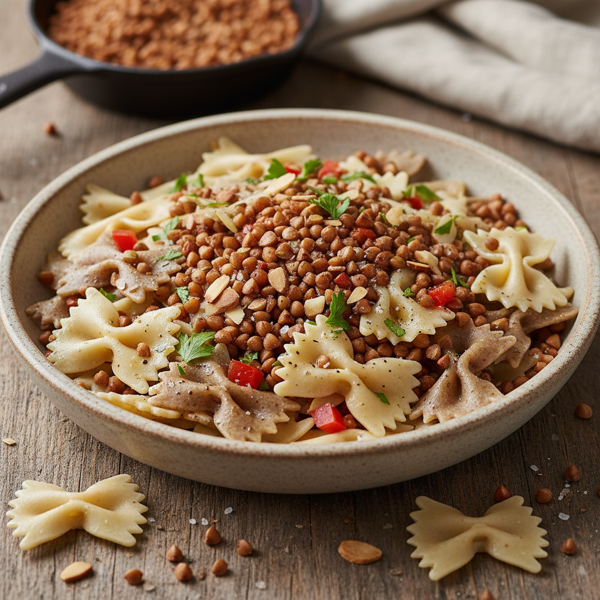
Indulge in the delightful flavors of this Toasted Buckwheat with Bow Tie Pasta, an enchanting dish that combines nutty, toasted kasha with perfectly cooked pasta. This comforting recipe features aromatic sautéed onions and is enriched with savory chicken broth, creating a warm and satisfying meal that's perfect for gatherings. Whether served as a main course or side dish, this hearty and nutritious recipe is sure to please both family and friends. Elevate your dining experience with a dish that's as wholesome as it is delicious!
8
Servings
275
Calories
8
Ingredients
Ingredients
Dried kasha, coarse grain
1 (cup)
Egg
1 (beaten)
Onion
1 (chopped)
Oil
2 (tablespoons)
Chicken broth
2 (cups)
Salt
to taste
Pepper
to taste
Bow tie pasta
1 (package, cooked)
Instructions
1
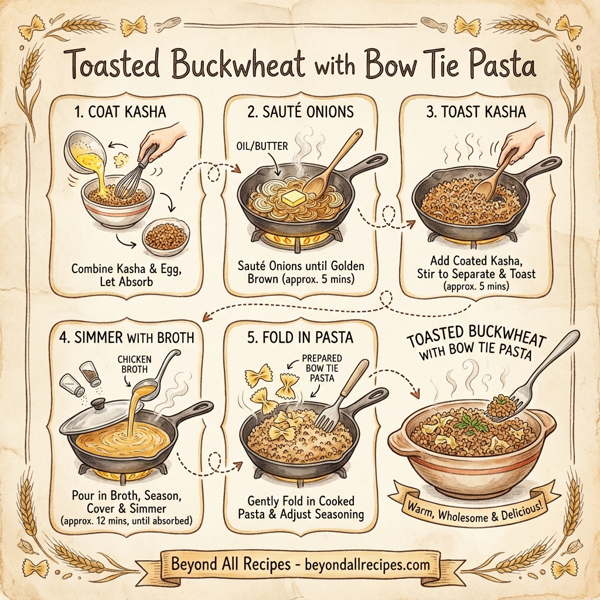
In a small bowl, combine the kapsha with the beaten egg, ensuring all grains are coated evenly. Set this mixture aside to allow the egg to absorb into the kasha.
2
In a skillet over medium heat, add the oil and sauté the chopped onions until golden brown and fragrant, about 5 minutes.
3
Add the coated kasha to the skillet, stirring continuously to separate the grains and lightly toast them for an additional 5 minutes, or until they become golden and aromatic.
4
Pour in the chicken broth, and season with salt and pepper to taste. Bring the mixture to a boil, then reduce the heat to low. Cover the skillet and simmer for approximately 12 minutes, or until the broth has been fully absorbed and the kasha is tender.
5
Once cooked, gently fold in the prepared bow tie pasta, mixing well to combine. Taste and adjust seasoning with more salt and pepper if desired before serving.
Nutrition Information
5
Fat
45
Carbs
11.25
Protein
Frequently Asked Questions
Frequently Asked Questions
What is kasha and how is it used in this recipe?
Kasha refers to toasted buckwheat groats. In this recipe, it provides a nutty flavor and hearty texture when combined with bow tie pasta.
Why is an egg used with the buckwheat?
The kasha is coated in a beaten egg before cooking to ensure the grains stay separate and fluffy rather than becoming mushy.
What type of pasta is best for this dish?
Bow tie pasta, also known as farfalle, is the traditional choice for this dish, which is commonly known as Kasha Varnishkes.
How many servings does this recipe yield?
This recipe is designed to serve 8 people.
What is the calorie count per serving?
Each serving contains approximately 275 calories.
Can I make this recipe vegetarian?
Yes, simply replace the chicken broth with vegetable broth to make it a vegetarian-friendly meal.
How long should I sauté the onions?
Sauté the chopped onions for about 5 minutes or until they are golden brown and fragrant.
How long does the kasha need to simmer?
The kasha should simmer in the chicken broth for approximately 12 minutes until the liquid is fully absorbed.
Is buckwheat gluten-free?
While buckwheat itself is gluten-free, this recipe uses bow tie pasta which typically contains wheat. Use gluten-free pasta to make the entire dish gluten-free.
What is the protein content per serving?
Each serving provides about 11.25 grams of protein.
What type of kasha should I buy?
This recipe specifically calls for coarse grain dried kasha for the best texture.
Can I use a different type of oil?
Yes, you can use any neutral oil or even butter for added richness when sautéing the onions.
How much fat is in one serving?
There are 5 grams of fat per serving in this recipe.
Is this dish considered a main course or a side dish?
It is versatile and can be served as a hearty main course or a satisfying side dish.
Should the pasta be cooked before adding it to the kasha?
Yes, the instructions specify using one package of cooked bow tie pasta.
What is the carbohydrate count per serving?
There are 45 grams of carbohydrates per serving.
Can I add mushrooms to this recipe?
Yes, adding sautéed mushrooms is a popular variation that complements the nutty flavor of the buckwheat.
How do I toast the kasha?
The egg-coated kasha is toasted in the skillet with the sautéed onions for about 5 minutes until aromatic.
What are the primary flavors in this dish?
The dish features savory, nutty, and aromatic flavors from the toasted buckwheat, sautéed onions, and chicken broth.
Is this recipe part of any specific cultural cuisine?
Yes, it is a traditional dish in Jewish cuisine, often referred to as Kasha Varnishkes.
Can I freeze leftovers?
Yes, this dish freezes well. Store it in an airtight container for up to 3 months.
How should I reheat this dish?
Reheat in a skillet with a splash of broth or water to keep it moist, or use a microwave.
How many ingredients are required for this recipe?
There are 8 main ingredients: kasha, egg, onion, oil, chicken broth, salt, pepper, and bow tie pasta.
Can I make this recipe vegan?
To make it vegan, omit the egg (though texture will change), use oil instead of butter, and substitute vegetable broth for chicken broth.
What is the preparation for the onion?
The recipe calls for one whole onion, chopped.
How much kasha is needed?
The recipe requires 1 cup of dried coarse grain kasha.
Does the recipe include seasoning instructions?
Yes, salt and pepper are added to taste both during the simmering process and before serving.
What is the role of chicken broth in the recipe?
The chicken broth acts as the cooking liquid that the kasha absorbs, adding savory depth to the grain.
Can I use fine grain kasha instead of coarse?
Coarse grain is recommended to prevent the dish from becoming mushy, as fine grain breaks down more easily.
Is this a good dish for meal prep?
Yes, because it is hearty and holds its texture well when stored, it is an excellent option for meal prepping throughout the week.