Tangy Virginia Grilled Chicken
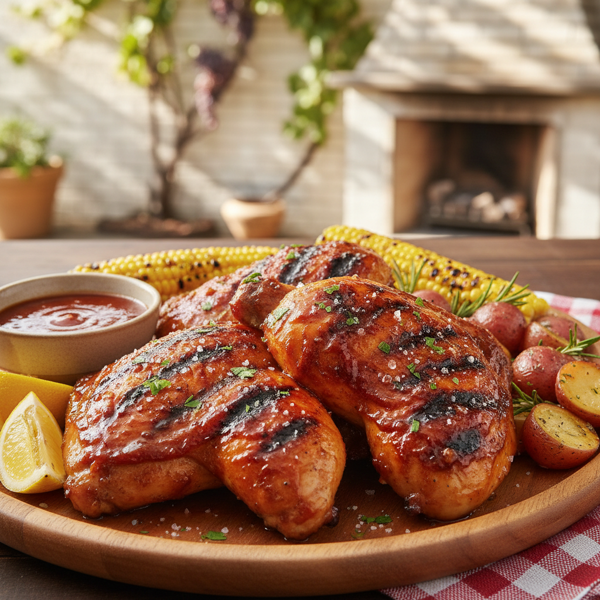
Experience the essence of summer in Virginia with this Tangy Virginia Grilled Chicken recipe. This flavorful dish is a beloved staple at local fundraisers, where the delightful aroma of barbecue fills the air. Perfect for church gatherings, scout events, or simply a weekend picnic, this chicken can be enjoyed hot off the grill or served cold. The marinade, made from a blend of oils, vinegar, and spices, infuses the chicken with a savory tang that keeps everyone coming back for seconds. Whether you're cooking for a crowd or just for your family, this recipe is guaranteed to please and become a cherished part of your grilling tradition.
10
Servings
220
Calories
8
Ingredients
Ingredients
Oil
1 cup (None)
Vinegar
1 1/4 cups (None)
Black Pepper
1 teaspoon (Ground)
Salt
2 teaspoons (None)
Garlic Salt
1 teaspoon (None)
Lemon Juice
1 tablespoon (Freshly squeezed)
Poultry Seasoning
2 tablespoons (None)
Chicken (legs or halves)
5-10 halves or 12-20 drumsticks (Cleaned)
Instructions
1
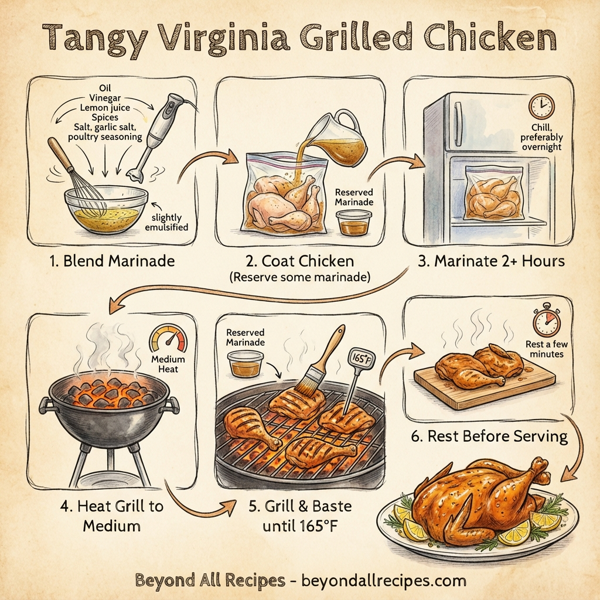
In a mixing bowl, combine the oil, vinegar, black pepper, salt, garlic salt, lemon juice, and poultry seasoning. Use a hand blender or whisk to blend until well combined and slightly emulsified.
2
Place your chicken (either halves or drumsticks) in a large resealable plastic bag or a shallow dish. Pour approximately two-thirds of the marinade over the chicken, ensuring all pieces are coated. Reserve the remaining marinade in the refrigerator for basting later.
3
Seal the bag or cover the dish, and refrigerate for at least 2 hours, preferably overnight, to allow the flavors to develop.
4
Prepare your grill, heating it to a medium temperature. If using a grilling pit, ensure the coals are evenly distributed for slow and even cooking.
5
Remove the chicken from the marinade and discard the used marinade. Grill the chicken pieces, turning occasionally and basting often with the reserved marinade, until the internal temperature reaches 165°F (about 30-40 minutes depending on the size of the pieces).
6
Once done, let the chicken rest for a few minutes before serving. Enjoy hot or cold, making it an ideal dish for picnics and potlucks!
Nutrition Information
15g
Fat
1g
Carbs
15g
Protein
Frequently Asked Questions
Frequently Asked Questions
What is Tangy Virginia Grilled Chicken?
Tangy Virginia Grilled Chicken is a traditional local favorite often served at Virginia fundraisers, church gatherings, and scout events. It features a savory, vinegar-based marinade that gives it a signature tang.
Can I serve this chicken cold?
Yes, this chicken is versatile and can be enjoyed either hot off the grill or served cold, making it perfect for picnics and potlucks.
How long should I marinate the chicken?
You should marinate the chicken for at least 2 hours, but for the best flavor development, letting it sit in the refrigerator overnight is preferred.
What are the main ingredients in the marinade?
The marinade consists of oil, vinegar, black pepper, salt, garlic salt, lemon juice, and poultry seasoning.
Should I save any of the marinade for later?
Yes, you should reserve approximately one-third of the fresh marinade in the refrigerator to use for basting the chicken while it grills.
What temperature should the chicken reach to be safe?
The chicken is safe to eat once the internal temperature reaches 165°F (74°C).
How many servings does this recipe yield?
This recipe is designed to serve 10 people.
What type of chicken cuts work best?
The recipe traditionally uses chicken halves or drumsticks, ranging from 5-10 halves or 12-20 drumsticks.
Is this a low-carbohydrate recipe?
Yes, this recipe is very low in carbohydrates, containing only about 1 gram per serving.
How many calories are in one serving?
There are approximately 220 calories per serving of this grilled chicken.
What is the fat content per serving?
Each serving contains approximately 15 grams of fat.
What makes the marinade emulsify?
Using a hand blender or whisking the oil and vinegar together with the spices helps them blend and slightly emulsify.
Can I use a grilling pit for this recipe?
Yes, if using a grilling pit, ensure the coals are evenly distributed for slow and even cooking.
How long does the grilling process take?
The chicken typically takes about 30-40 minutes to grill, depending on the size of the pieces.
Do I need to rest the chicken after cooking?
Yes, letting the chicken rest for a few minutes after it comes off the grill helps keep it juicy.
What kind of vinegar should I use?
While the recipe specifies 'vinegar,' white vinegar or apple cider vinegar are common choices for this style of Virginia barbecue.
How much poultry seasoning is required?
The recipe calls for 2 tablespoons of poultry seasoning.
Is the lemon juice fresh or bottled?
The recipe recommends 1 tablespoon of freshly squeezed lemon juice.
Can I use this marinade for other meats?
While designed for chicken, this tangy vinegar-based marinade can also work well with pork or turkey.
How do I ensure the chicken doesn't dry out?
Basting the chicken often with the reserved marinade and keeping the grill at a medium temperature helps maintain moisture.
What is the protein content?
Each serving provides approximately 15 grams of protein.
What is the best way to store leftovers?
Store leftover chicken in an airtight container in the refrigerator for 3 to 4 days.
Should the chicken be cleaned before marinating?
Yes, the recipe suggests using cleaned chicken pieces (halves or drumsticks).
Can I use chicken breasts instead?
Yes, though you may need to adjust the cooking time as breasts tend to cook faster than dark meat or bone-in pieces.
Is there any sugar in this recipe?
No, this recipe contains no added sugar, making it suitable for those monitoring sugar intake.
How much oil is used in the marinade?
The recipe requires 1 cup of oil for the marinade base.
What kind of grill setup is needed?
A standard grill heated to medium temperature is ideal. The goal is steady, even heat.
Can I double this recipe for a crowd?
Absolutely, this recipe is a favorite for large fundraisers and can be easily scaled up.
Why is it called 'Virginia' grilled chicken?
It is a regional style of barbecue found in Virginia, known for its vinegar and poultry seasoning flavor profile.
Should I discard the marinade the chicken soaked in?
Yes, always discard the marinade that was in contact with raw chicken. Only use the reserved, fresh marinade for basting.