Tangy Memphis Mustard Slaw Explosion
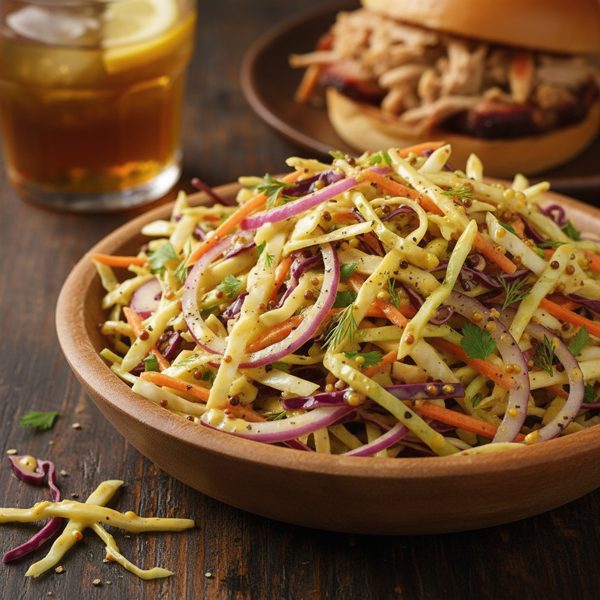
Dive into the robust flavors of this Tangy Memphis Mustard Slaw Explosion, inspired by the renowned BBQ tradition of Memphis. This coleslaw combines the zesty kick of Dijon mustard with the sweetness of sugar and the sharp tang of vinegar, perfectly balancing heat and flavor with a splash of hot sauce. It's a vibrant mix of finely chopped green cabbage and freshly grated carrot, creating a crunchy texture that's sure to elevate any barbecue feast. Perfect as a side dish or a topping for pulled pork sandwiches, this coleslaw not only complements but enhances any grilled meal. Don't miss out on bringing this tangy, spicy delight to your next cookout!
N/A
Servings
100
Calories
9
Ingredients
Ingredients
Dijon mustard
3 tablespoons (None)
Sugar
3 tablespoons (None)
Distilled white vinegar
3 tablespoons (None)
Vegetable oil
3 tablespoons (None)
Hot sauce (e.g., Texas Pete)
1 tablespoon (None)
Coarse salt (kosher or sea)
to taste (None)
Fresh ground black pepper
to taste (None)
Green cabbage
1/2 large (Cored and cut into 1-inch pieces (for about 4 cups finely chopped))
Medium carrot
1 (Peeled)
Instructions
1
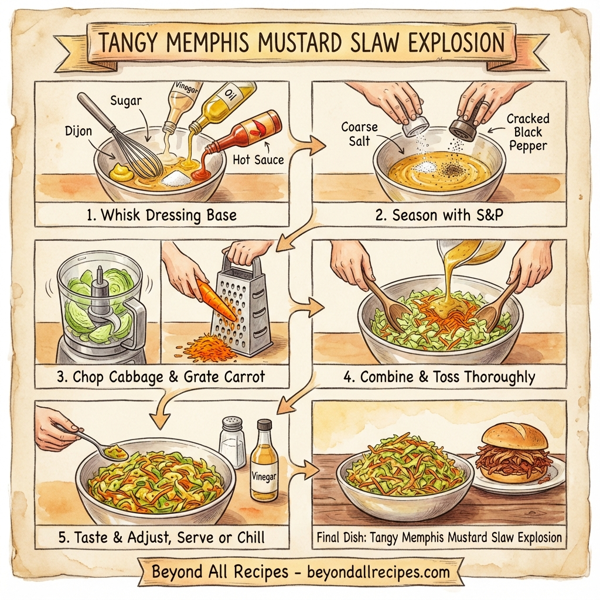
In a non-reactive mixing bowl, combine the Dijon mustard and sugar. Whisk them together until fully blended.
2
Gradually add the distilled white vinegar, vegetable oil, and hot sauce to the mustard-sugar mixture, continuing to whisk until the dressing is smooth and well combined.
3
Season the dressing with coarse salt and freshly ground black pepper to taste; ensure the flavors are bold and vibrant.
4
Using a food processor fitted with a metal chopping blade, finely chop the cabbage in short bursts for a chopped slaw texture. Do this in batches to prevent overcrowding the processor.
5
Finely grate the medium carrot using a box grater or the shredding disk of the food processor.
6
In a large mixing bowl, combine the finely chopped cabbage and grated carrot with the prepared dressing. Toss everything together until the vegetables are evenly coated.
7
Taste the slaw and adjust the seasoning if needed, adding more salt or vinegar to achieve your preferred flavor.
8
For best results, serve the slaw within a few hours for maximum freshness. However, it can be stored in the refrigerator, covered, for up to two days.
Nutrition Information
7.5g
Fat
8.75g
Carbs
1g
Protein
2.5g
Fiber
5g
Sugar
Frequently Asked Questions
Frequently Asked Questions
What is Tangy Memphis Mustard Slaw Explosion?
It is a robustly flavored coleslaw inspired by the BBQ tradition of Memphis, featuring a dressing made with Dijon mustard, sugar, and vinegar.
What are the primary flavors in this slaw?
The slaw combines the zesty kick of Dijon mustard, the sweetness of sugar, the sharp tang of vinegar, and a spicy splash of hot sauce.
How many ingredients do I need for this recipe?
The recipe requires 9 ingredients including Dijon mustard, sugar, white vinegar, vegetable oil, hot sauce, salt, pepper, green cabbage, and carrot.
What type of mustard is used in this recipe?
This Memphis-style slaw specifically calls for 3 tablespoons of Dijon mustard.
Is this coleslaw spicy?
Yes, it has a balanced heat thanks to the addition of one tablespoon of hot sauce, such as Texas Pete.
How should I prepare the green cabbage?
The cabbage should be cored, cut into 1-inch pieces, and then finely chopped in a food processor using short bursts.
Can I use a food processor for this recipe?
Yes, a food processor is recommended for finely chopping the cabbage and can also be used with a shredding disk for the carrot.
What type of vinegar works best for the dressing?
The recipe calls for distilled white vinegar to provide a sharp, clean tang.
Is this recipe suitable for vegetarians?
Yes, Tangy Memphis Mustard Slaw Explosion is a vegetarian-friendly side dish.
What are the best serving suggestions for this slaw?
It is perfect as a side dish for barbecue or as a crunchy topping for pulled pork sandwiches.
How do I make the dressing smooth?
Whisk the mustard and sugar first, then gradually add the vinegar, oil, and hot sauce while continuing to whisk until fully blended.
How long can I store the leftovers?
The slaw can be stored in the refrigerator, covered, for up to two days.
When is the best time to serve the slaw after making it?
For maximum freshness and crunch, it is best to serve the slaw within a few hours of preparation.
What should I do if my food processor is too full?
Chop the cabbage in batches to prevent overcrowding, which ensures a consistent chopped texture.
How many calories are in one serving?
There are approximately 100 calories per serving of this mustard slaw.
What is the fat content of this recipe?
The recipe contains approximately 7.5g of fat per serving.
How much sugar is in each serving?
Each serving contains 5g of sugar.
Does this slaw provide any dietary fiber?
Yes, each serving provides 2.5g of fiber.
What is the carbohydrate count for this dish?
The recipe contains 8.75g of carbohydrates per serving.
Is there any protein in this coleslaw?
Yes, there is a small amount of protein, approximately 1g per serving.
How should I prepare the carrot?
The medium carrot should be peeled and then finely grated using a box grater or a food processor shredding disk.
Can I adjust the seasonings after mixing?
Yes, you should taste the slaw and adjust the salt or vinegar to reach your preferred flavor balance before serving.
What kind of salt is recommended?
The recipe suggests using coarse salt, such as kosher or sea salt.
What gives the slaw its crunchy texture?
The combination of finely chopped fresh green cabbage and grated carrot provides a signature crunch.
What type of oil is used in the dressing?
The recipe calls for 3 tablespoons of vegetable oil.
Why is this called Memphis-style slaw?
It is inspired by Memphis BBQ traditions, which often utilize mustard-based sauces and dressings rather than strictly mayo-based ones.
Can I double the recipe for a large cookout?
Yes, the recipe is easily scalable for larger groups; just ensure you mix the dressing thoroughly and chop the vegetables in batches.
Is this slaw suitable for grilled meals?
Yes, it is designed to complement and enhance any grilled meal or barbecue feast.
Should I use a non-reactive bowl for mixing?
Yes, the instructions recommend using a non-reactive mixing bowl for blending the mustard and vinegar dressing.
Does the recipe contain any cholesterol?
Based on the provided nutritional information, the cholesterol content is not listed, typically implying it is negligible or zero in this vegetable-based dish.