Tangy Asian Fusion Salad Dressing
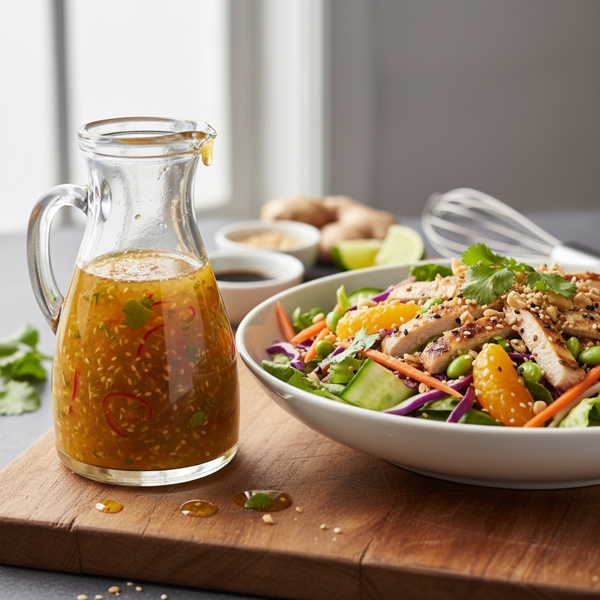
This Tangy Asian Fusion Salad Dressing offers a harmonious blend of bold flavors, inspired by the rich culinary traditions of Asia. Perfectly crafted for those who love a zesty twist, the dressing incorporates fragrant sesame oil, freshly minced garlic, and ginger, combined with low sodium chicken broth and tangy rice vinegar. The inclusion of soy sauce and just the right touch of sweetness balances the flavors, making it ideal not only for drizzling over crisp salad greens but also as a marinade for your favorite meats and seafood. Thanks to the inspiration from SusieQusie and Graham Kerr, this dressing is not only low-fat but also bursting with distinctive Asian flavors that will enhance any dish. Enjoy it chilled for the best experience!
N/A
Servings
30
Calories
9
Ingredients
Ingredients
sesame oil
1 tablespoon (none)
garlic clove
1 (crushed and finely minced)
fresh ginger
3 slices (quarter size, very finely minced)
low sodium chicken broth
2 tablespoons (none)
rice wine vinegar
3 tablespoons (none)
light soy sauce
1 tablespoon (none)
sugar or Splenda Granular
1 tablespoon (none)
salt
1/4 teaspoon (none)
cornstarch
1 teaspoon (none)
Instructions
1
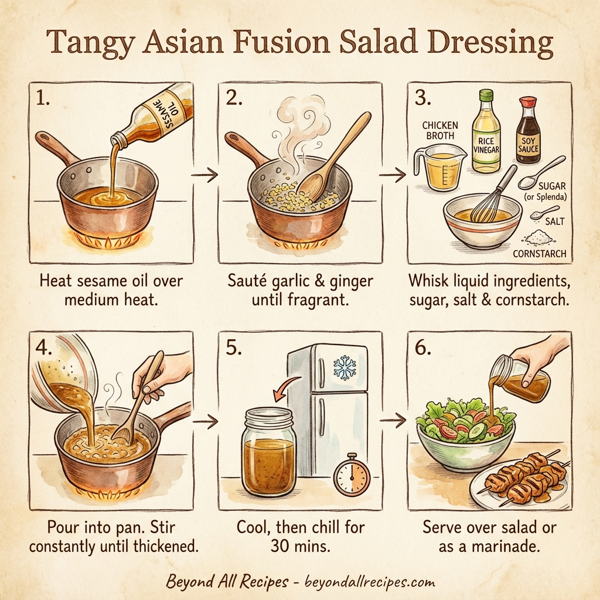
In a small saucepan, heat the sesame oil over medium heat until hot.
2
Add the crushed and finely minced garlic and minced ginger to the pan. Sauté for about 1 minute or until fragrant, being careful not to burn the garlic.
3
In a separate small bowl, whisk together the low sodium chicken broth, rice vinegar, light soy sauce, sugar (or Splenda), salt, and cornstarch until fully combined.
4
Pour the mixture from the bowl into the saucepan. Stir continuously until the dressing thickens slightly, about 2-3 minutes.
5
Remove the dressing from heat and allow it to cool for a few minutes before transferring it to the refrigerator. Chill for at least 30 minutes before serving to let the flavors meld.
6
Serve the dressing over fresh salad greens, steamed oriental vegetables, or use it as a marinade for chicken, beef, or seafood in a variety of Asian-inspired dishes.
Nutrition Information
1.25g
Fat
4g
Carbs
0.5g
Protein
Frequently Asked Questions
Frequently Asked Questions
What is Tangy Asian Fusion Salad Dressing?
It is a flavorful dressing made with sesame oil, garlic, ginger, chicken broth, and rice vinegar, inspired by Asian culinary traditions.
Is this recipe considered low-fat?
Yes, this dressing is specifically designed to be a low-fat option, containing only 1.25g of fat per serving.
How many calories are in a serving of this dressing?
Each serving of the Tangy Asian Fusion Salad Dressing contains approximately 30 calories.
Can I use this dressing as a marinade?
Yes, it is ideal as a marinade for chicken, beef, or seafood in a variety of Asian-inspired dishes.
What are the prominent flavors in this recipe?
The dressing features bold, tangy flavors with aromatic notes of sesame, garlic, and fresh ginger.
How long should I chill the dressing before serving?
You should chill the dressing in the refrigerator for at least 30 minutes to let the flavors meld properly.
What type of oil is used in this recipe?
The recipe calls for one tablespoon of sesame oil to provide a fragrant and authentic base.
Can I substitute sugar with a sweetener?
Yes, the recipe allows for the use of either sugar or Splenda Granular to achieve the desired sweetness.
What kind of vinegar is needed for this dressing?
The recipe specifically requires rice wine vinegar to provide its signature tangy profile.
Why is cornstarch included in the ingredients?
Cornstarch is used as a thickening agent, which helps the dressing achieve the right consistency when heated.
Should I use fresh or dried ginger?
The recipe calls for fresh ginger, specifically three quarter-sized slices that are very finely minced.
Is this dressing suitable for seafood?
Yes, it works excellently as both a dressing and a marinade for seafood dishes.
How should the garlic be prepared?
The garlic clove should be crushed and then finely minced before being sautéed in the sesame oil.
What makes this dressing an Asian Fusion recipe?
It combines traditional Asian staples like soy sauce and sesame oil with chicken broth for a unique fusion flavor profile.
Can I use regular soy sauce instead of light soy sauce?
The recipe specifies light soy sauce to maintain the intended flavor balance and keep the sodium content lower.
Who inspired this specific salad dressing recipe?
The recipe was inspired by the contributions of SusieQusie and the culinary style of Graham Kerr.
How long do I sauté the garlic and ginger?
You should sauté them for about 1 minute or until they become fragrant, being careful not to burn them.
Does this dressing contain salt?
Yes, the recipe includes 1/4 teaspoon of salt to help balance the other ingredients.
Can this dressing be served with vegetables?
Yes, it is highly recommended for use over fresh salad greens or steamed oriental vegetables.
How much protein is in each serving?
There is approximately 0.5g of protein per serving in this dressing.
What is the carbohydrate count for this recipe?
Each serving contains approximately 4g of carbohydrates.
Does the dressing require cooking?
Yes, the dressing is prepared in a saucepan where it is heated and stirred until it thickens slightly.
Can I use a different type of broth?
The recipe calls for low sodium chicken broth, but you may substitute it with vegetable broth if preferred.
What is the total fat content in the dressing?
The dressing contains 1.25g of fat per serving.
What is the primary role of sesame oil in this recipe?
Sesame oil provides a rich, nutty aroma and serves as the base for sautéing the aromatics.
Should the dressing be served warm?
For the best flavor experience, the dressing should be served chilled after its initial preparation.
How many ingredients are needed for this recipe?
The recipe requires a total of 9 ingredients to create the full flavor profile.
Is this a Graham Kerr inspired recipe?
Yes, Graham Kerr is credited as an inspiration for this healthy and flavorful salad dressing.
What type of greens are best for this dressing?
Crisp salad greens or oriental-style greens are the best pairings for this tangy dressing.
Is this dressing suitable for beef dishes?
Yes, it works very well as a marinade or sauce for beef in various Asian-inspired culinary applications.