Taiwanese Braised Beef Noodle Soup
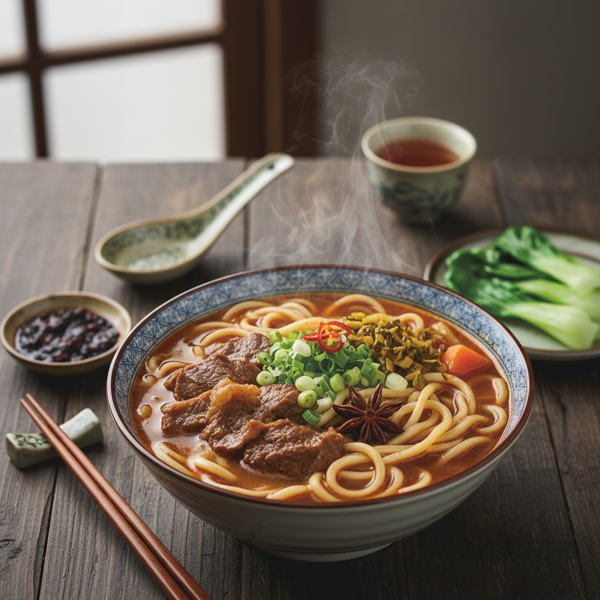
Savor the rich and hearty flavors of Taiwanese Braised Beef Noodle Soup, known as Hong Shao Niu Rou Mian. This comforting dish features tender, braised beef shanks simmered in a fragrant broth infused with spices, garlic, and ripe tomatoes, creating a deeply satisfying meal. Served over delicate thin egg noodles and vibrant baby bok choy, it's garnished with pickled Chinese greens for a perfect balance of flavors. Ideal for gatherings or a comforting family dinner, this recipe yields enough to serve a crowd, making it a wonderful dish to share.
N/A
Servings
N/A
Calories
16
Ingredients
Ingredients
Beef shanks
8 lbs (cut crosswise into 2-inch thick bone-in pieces)
Chinese rice wine
1/4 cup
Whole black peppercorns
3 tablespoons
Garlic cloves
14 (crushed)
Plum tomatoes
8 (quartered)
Whole star anise pods
8
Yellow onions
4 (quartered)
Dried arbol chiles
2
Ginger
1 piece (4 inches) (chopped)
Chinese black vinegar
3 tablespoons
Dark soy sauce
to taste
Kosher salt
to taste
Sugar
to taste
Baby bok choy
12
Thin egg noodles
1 1/2 lbs
Pickled Chinese greens
(chopped for garnish)
Instructions
1
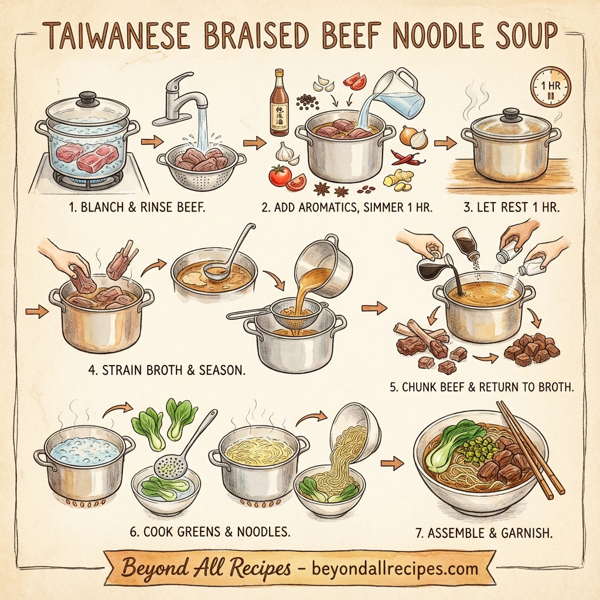
Start by placing the beef shanks in a large pot. Cover them with cold water and bring it to a rolling boil. Once boiling, drain the beef under cold running water to remove impurities.
2
Transfer the cleaned beef shanks to a separate clean pot. Add the Chinese rice wine, black peppercorns, crushed garlic, quartered plum tomatoes, star anise, quartered onions, dried arbol chiles, and chopped ginger.
3
Pour in enough water to ensure it covers the ingredients by about 1/2 inch. Bring the mixture to a boil, then reduce the heat to medium-low and simmer for 1 hour.
4
After an hour, remove the pot from the heat and let it sit, covered, for 1 hour. This resting period allows the flavors to meld beautifully.
5
Once rested, carefully remove the beef from the broth and place it on a cutting board. Skim off any fat from the surface of the broth, strain it, and discard the solids.
6
Reintroduce the strained broth to the pot, adding the Chinese black vinegar. Season the broth with dark soy sauce, kosher salt, and sugar to taste.
7
Pull the beef from the bones, cutting it into large chunks, and add it back to the broth.
8
In a separate pot, bring salted water to a boil. Add the baby bok choy and cook until just tender, about 2 minutes. Use a slotted spoon to transfer the bok choy to serving bowls.
9
In the same water, boil the thin egg noodles until softened, then drain and divide them among the bowls as well.
10
Ladle the hot broth and beef over each bowl of noodles. Garnish with chopped pickled Chinese greens for a tangy finish. Serve immediately and enjoy!
Nutrition Information
Frequently Asked Questions
Frequently Asked Questions
What is Taiwanese Braised Beef Noodle Soup?
Taiwanese Braised Beef Noodle Soup, or Hong Shao Niu Rou Mian, is a hearty dish consisting of tender beef shanks simmered in a spiced broth with tomatoes, garlic, and onions, served over egg noodles.
What cut of beef is best for this recipe?
The recipe calls for 8 lbs of beef shanks, cut crosswise into 2-inch thick bone-in pieces, which provide a rich flavor and tender texture.
Why must the beef be blanched before cooking?
Blanching the beef in boiling water and then rinsing it under cold water helps remove impurities, ensuring a cleaner and clearer broth.
How many garlic cloves are used in the broth?
This recipe uses 14 crushed garlic cloves to create a deeply fragrant and aromatic soup base.
What role do tomatoes play in the recipe?
Eight quartered plum tomatoes are added to the broth to provide a subtle acidity and sweetness that balances the savory spices.
Which spices give the broth its signature aroma?
The signature scent comes from a combination of whole black peppercorns, star anise pods, dried arbol chiles, and fresh ginger.
Can I substitute the Chinese rice wine?
If Chinese rice wine is unavailable, dry sherry is often used as a suitable substitute for similar depth of flavor.
How long does the beef need to simmer?
The beef shanks should be simmered on medium-low heat for 1 hour after the initial boil.
Why is there a resting period in the instructions?
After simmering, the pot sits covered for 1 hour to allow the flavors to meld and the beef to further tenderize in the residual heat.
What should I do with the broth solids?
After the resting period, the broth should be strained and the solids (onions, tomatoes, spices) discarded to leave a smooth liquid.
How is the broth seasoned after straining?
The strained broth is seasoned with Chinese black vinegar, dark soy sauce, kosher salt, and sugar to taste.
What provides the dark color to the soup?
The dark, rich color of the broth is primarily achieved through the addition of dark soy sauce.
What kind of vinegar is used?
The recipe specifies 3 tablespoons of Chinese black vinegar, which adds a complex, malty acidity to the finished dish.
How is the beef prepared for serving?
The beef is pulled from the bones and cut into large chunks before being reintroduced to the seasoned broth.
What type of noodles are recommended?
Thin egg noodles are used in this recipe, boiled until softened in salted water.
How do I prepare the baby bok choy?
The baby bok choy should be boiled in salted water for about 2 minutes until just tender before being added to the serving bowls.
What is the recommended garnish?
The soup is traditionally garnished with chopped pickled Chinese greens for a tangy finish.
Is this recipe spicy?
With only two dried arbol chiles for a large batch, the heat level is mild to moderate, providing just a hint of warmth.
How much ginger is required?
A 4-inch piece of ginger, chopped, is used to infuse the broth with its bright, pungent flavor.
Can I use yellow onions?
Yes, the recipe specifically calls for 4 yellow onions, quartered, to add sweetness and depth to the stock.
How do I assemble the final bowl?
Place the cooked noodles and bok choy in a bowl, ladle the hot broth and beef chunks over them, and top with pickled greens.
Should the beef bones be discarded?
Yes, after simmering, the beef is pulled away from the bones and the bones are removed before serving.
What is the total amount of beef used?
The recipe uses 8 lbs of beef shanks, making it ideal for large gatherings or family dinners.
Can I make this soup ahead of time?
Yes, the broth and beef often taste even better the next day as the flavors continue to develop.
What does star anise contribute to the soup?
Star anise provides a sweet, licorice-like undertone that is essential for the authentic Taiwanese beef noodle soup flavor.
Should I skim the fat from the broth?
Yes, after removing the beef and before straining, you should skim off any excess fat from the surface for a cleaner mouthfeel.
How many servings does this recipe yield?
While not specified as a number, with 8 lbs of beef and 1.5 lbs of noodles, it is designed to serve a large crowd.
What kind of salt should I use?
The recipe recommends using kosher salt to season the broth to your preference.
Is sugar necessary in the recipe?
A small amount of sugar is used to balance the salty soy sauce and acidic vinegar/tomatoes.
Can I substitute the pickled Chinese greens?
If you cannot find pickled Chinese greens, you can omit them or use a small amount of chopped kimchi or sauerkraut for a similar fermented tang.