Sweet Unagi Sauce (Tsume)
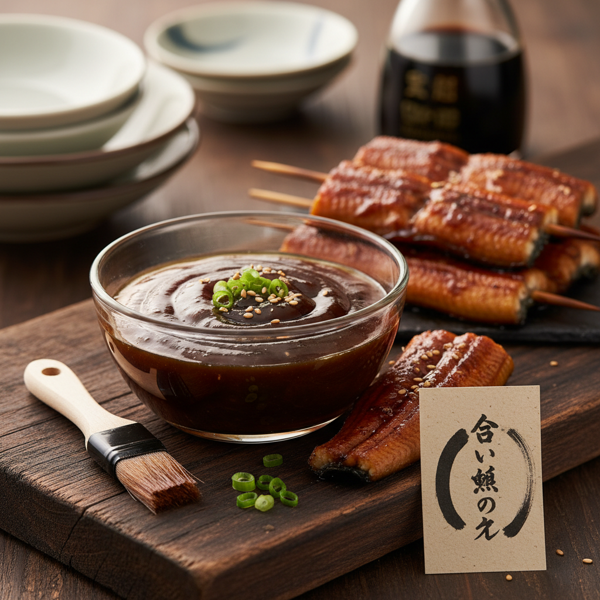
This Sweet Unagi Sauce, also known as Tsume, is a rich, dark, and syrupy glaze that elevates a variety of sushi and seafood dishes. Traditionally crafted from the reduction of anago (conger eel) stock, this simplified version delivers a delicious flavor profile in significantly less time. The perfect balance of dashi, mirin, soy sauce, and sugar creates a sweet umami experience that enhances everything from sushi rolls to grilled fish. Use a small pastry brush or rubber spatula to apply this sauce generously over your culinary creations. Store it conveniently in the refrigerator, and simply heat it up before use to bring back its delightful flavors. Enjoy the ease of making this versatile sauce at home and impress your guests with authentic Japanese flavors.
N/A
Servings
37
Calories
4
Ingredients
Ingredients
dashi
1 cup (prepared cooking stock)
mirin
1/2 cup (Japanese sweet cooking wine)
shoyu
1/2 cup (soy sauce)
sugar
1/4 cup (granulated)
Instructions
1
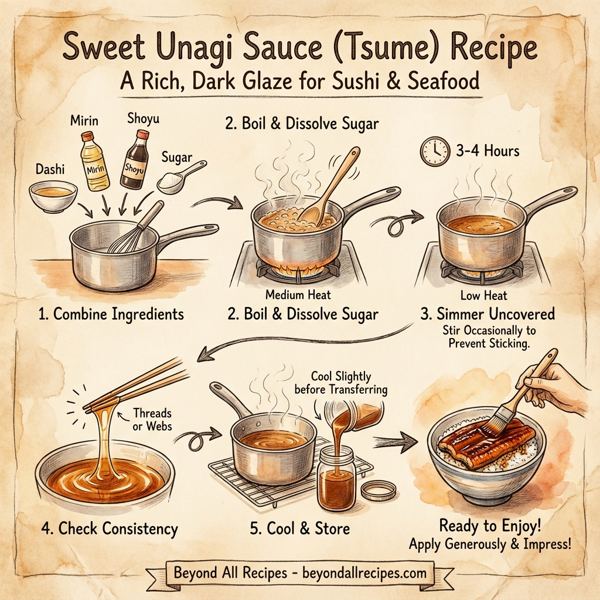
In a medium saucepan, combine the dashi, mirin, shoyu, and sugar.
2
Place the saucepan over medium heat and bring the mixture to a boil, stirring to dissolve the sugar.
3
Once boiling, reduce the heat to low and let the sauce simmer uncovered for about 3 to 4 hours. Stir occasionally to prevent sticking.
4
Continue simmering until the sauce thickens and reaches a consistency where it threads or webs when lifted with chopsticks (hashi).
5
Remove from heat and allow to cool slightly before transferring it to a bottle or jar for storage.
Nutrition Information
0g
Fat
8.8g
Carbs
0.4g
Protein
Frequently Asked Questions
Frequently Asked Questions
What is Sweet Unagi Sauce?
Sweet Unagi Sauce, also known as Tsume, is a rich, dark, and syrupy glaze used to elevate sushi and seafood dishes.
What does Tsume mean?
Tsume is the Japanese name for this specific type of sweet eel sauce reduction.
How is traditional Tsume made?
Traditionally, it is crafted from the reduction of anago (conger eel) stock.
How does this version differ from traditional recipes?
This is a simplified version that delivers a delicious flavor profile in significantly less time compared to traditional eel stock reductions.
What are the main ingredients?
The sauce is made from a combination of dashi, mirin, shoyu (soy sauce), and sugar.
What is dashi?
Dashi is a prepared Japanese cooking stock used as a base for many dishes.
What is mirin?
Mirin is a Japanese sweet cooking wine that adds depth and sweetness to the sauce.
What is shoyu?
Shoyu is the Japanese term for soy sauce.
What type of sugar should I use?
This recipe calls for granulated sugar.
How do I begin the cooking process?
Combine the dashi, mirin, shoyu, and sugar in a medium saucepan and bring to a boil over medium heat.
How long should I simmer the sauce?
The sauce should simmer uncovered for about 3 to 4 hours.
What temperature is used for simmering?
Once the mixture reaches a boil, reduce the heat to low for the remainder of the cooking time.
Should I stir the sauce while it simmers?
Yes, you should stir occasionally to prevent the sauce from sticking to the pan.
How do I know when the sauce is finished?
The sauce is ready when it thickens and reaches a consistency where it threads or webs when lifted with chopsticks.
What are hashi?
Hashi is the Japanese word for chopsticks, which are used to check the sauce's consistency.
How should the sauce be stored?
Allow the sauce to cool slightly before transferring it to a bottle or jar for storage in the refrigerator.
How do I use the sauce after it has been refrigerated?
Simply heat it up before use to bring back its delightful flavors and syrupy consistency.
What is the best way to apply the sauce to food?
Use a small pastry brush or rubber spatula to apply the sauce generously over your dishes.
What types of food pair well with Unagi Sauce?
It is perfect for sushi rolls, grilled fish, and various seafood creations.
How many calories are in a serving?
Each serving contains 37 calories.
Does Unagi sauce contain fat?
No, this recipe contains 0g of fat.
What is the carbohydrate content?
Each serving contains 8.8g of carbohydrates.
How much protein is in the sauce?
There is 0.4g of protein per serving.
How many ingredients are in this recipe?
There are 4 key ingredients: dashi, mirin, shoyu, and sugar.
What flavor profile can I expect?
It offers a sweet umami experience that enhances the natural flavors of seafood.
Can I make this sauce at home?
Yes, this recipe is designed to be a convenient way to achieve authentic Japanese flavors at home.
Should the saucepan be covered during simmering?
No, the sauce should simmer uncovered to allow it to reduce and thicken.
What is the appearance of the finished sauce?
The finished sauce is a rich, dark, and syrupy glaze.
Is this sauce versatile?
Yes, it is considered a versatile sauce that elevates a wide variety of culinary creations.
How do I dissolve the sugar correctly?
Stir the mixture while bringing it to a boil over medium heat to ensure the sugar is fully dissolved.