Sweet Preserved Freezer Corn Niblets

This method ensures your corn niblets remain sweet, crisp, and flavorful even after freezing. By incorporating sugar at the end, we not only capture the fresh essence of mid-summer corn but also preserve its texture and taste for months to come. Whether you're planning a barbecue or just wish to save the bounty of your corn harvest, this recipe is a must-try. Note: Prep time does not include shucking the corn and also be sure to check out my other corn-related recipes for more delicious ideas.
20
Servings
N/A
Calories
4
Ingredients
Ingredients
sweet corn on the cob
20 (shucked and silks removed)
salt
1 (tablespoon)
sugar
0.5 (cup, mixed in at the end of the process)
water
as needed (to cover the corn)
Instructions
1
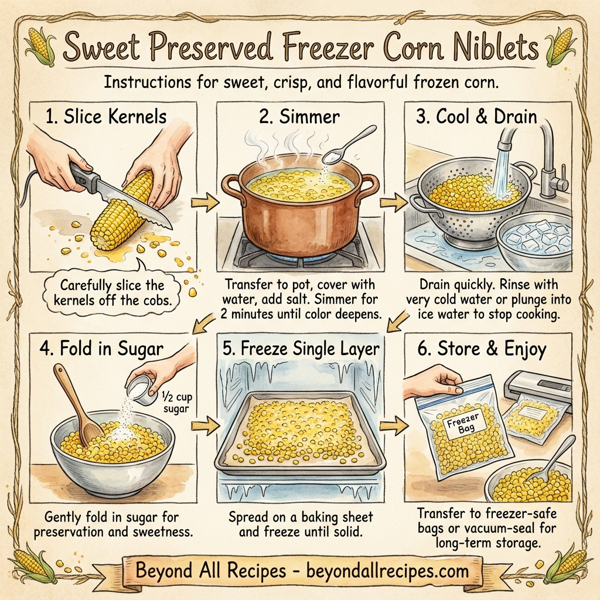
Using an electric or serrated knife, carefully slice the kernels off the corn cobs, ensuring to capture all the juicy goodness.
2
Transfer the freshly removed kernels into a large pot and cover them completely with water. Add in the tablespoon of salt to the water.
3
Bring the water to a vigorous boil, then reduce the heat and allow the kernels to simmer just until they deepen in color, approximately 2 minutes.
4
Quickly drain the kernels using a large strainer and immediately rinse them under very cold running water. Alternatively, plunge the strainer into a bowl filled with ice water to halt the cooking process.
5
Ensure the kernels are well drained by shaking the strainer vigorously to remove excess water.
6
Using a wooden spoon, gently fold in 1/2 cup sugar with the drained kernels, ensuring the sugar is evenly distributed. This not only helps in preserving the corn’s texture but also enhances its sweetness when frozen.
7
Spread the sugar-coated kernels in a single layer onto a large 15 x 10-inch baking sheet and place it in the freezer until the kernels are completely frozen.
8
Once frozen, transfer the kernels into freezer-safe bags or vacuum-seal them for long-term storage.
Nutrition Information
Frequently Asked Questions
Frequently Asked Questions
What is the main benefit of the Sweet Preserved Freezer Corn Niblets recipe?
This method ensures your corn niblets remain sweet, crisp, and flavorful by incorporating sugar at the end of the process to preserve texture and taste.
How many ears of sweet corn are required for this recipe?
You will need 20 ears of sweet corn on the cob, shucked and with silks removed.
What tools are recommended for removing kernels from the cob?
Using an electric or serrated knife is recommended to carefully slice the kernels off and capture all the juices.
How much salt should be added to the boiling water?
One tablespoon of salt should be added to the large pot of water.
How long should the corn kernels simmer?
The kernels should simmer for approximately 2 minutes until they deepen in color.
What is the first step after boiling the corn?
Quickly drain the kernels using a large strainer and immediately rinse them under very cold running water or plunge them into ice water.
Why is it important to shake the strainer vigorously?
Shaking the strainer vigorously ensures the kernels are well drained and free of excess water before the next step.
How much sugar is mixed with the corn?
One-half cup of sugar is gently folded into the drained kernels.
What role does sugar play in this freezing process?
The sugar helps in preserving the corn's texture and enhances its sweetness when frozen.
What size baking sheet is needed for freezing the corn?
A large 15 x 10-inch baking sheet should be used to spread the kernels in a single layer.
How long should the kernels stay on the baking sheet?
They should remain on the baking sheet in the freezer until they are completely frozen.
What are the long-term storage options for the frozen corn?
Once frozen, you can transfer the kernels into freezer-safe bags or vacuum-seal them.
Does the prep time include shucking the corn?
No, the prep time does not include the time needed for shucking the corn.
How many servings does this recipe yield?
This recipe yields approximately 20 servings.
What preparation is needed for the corn on the cob?
The corn should be shucked and all silks should be removed before starting.
What type of spoon should be used to mix the sugar?
A wooden spoon is recommended for gently folding the sugar into the kernels.
How much water is required for the boiling process?
You should use as much water as needed to completely cover the corn kernels in the pot.
Can I vacuum-seal this corn?
Yes, vacuum-sealing is a recommended method for long-term storage after the initial freezing process.
What is the goal of rinsing the corn in very cold water?
Rinsing in cold water or using an ice bath halts the cooking process immediately.
What is the total ingredient count for this recipe?
There are 4 main ingredients: sweet corn, salt, sugar, and water.
Is this recipe good for a summer harvest?
Yes, it is specifically designed to capture the fresh essence of mid-summer corn.
Does the recipe provide nutritional information?
No, nutritional values such as calories, fat, and protein are not specified in this recipe.
What should be done after the kernels are completely frozen on the sheet?
They should be transferred to freezer-safe bags or vacuum-sealed bags.
What tags are associated with this recipe?
Tags include sweet corn, freezer, preserved corn, corn niblets, summer harvest, crisp corn, and frozen vegetables.
When should I bring the water to a boil?
After transferring the kernels and salt to the pot, bring the water to a vigorous boil before reducing to a simmer.
How do you ensure the sugar is evenly distributed?
The sugar should be gently folded in to ensure it is distributed evenly across all kernels.
What is the texture of the corn after freezing?
The method is designed to keep the corn crisp rather than mushy.
Can I use this for corn niblets?
Yes, this recipe is specifically for creating and preserving sweet corn niblets.
Is a specific type of knife required?
While any knife can work, an electric or serrated knife is specifically suggested for the best results.
Should the corn be boiled for a long time?
No, it should only simmer for about 2 minutes to avoid overcooking.