Sweet Pear Pineapple Preserve
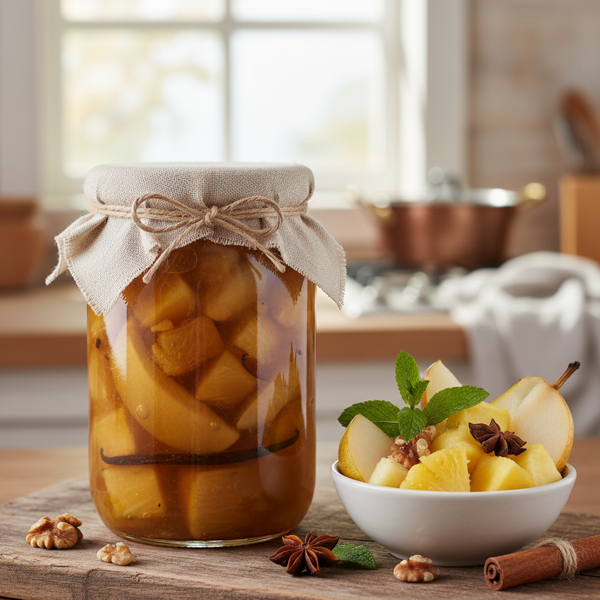
This delightful Sweet Pear Pineapple Preserve captures the essence of ripe pears fused with the tropical sweetness of crushed pineapple. The recipe has been refined to reduce sugar content, ensuring you get the natural flavors of the fruits without overpowering sweetness. Perfect for spreading on toast, dolloping on yogurt, or using as a filling for pastries, this fruity preserve is a versatile addition to your culinary repertoire. Enjoy this bright, sweet treat all year long, knowing you’ve made it with love and care.
7
Servings
N/A
Calories
4
Ingredients
Ingredients
Fresh Pears
3 lbs (Peeled, cored, and finely chopped)
Sugar
2 1/2-5 cups (To taste)
Crushed Pineapple
1 (8 ounce) can (In juice)
Lemon Juice
1 tablespoon (Freshly squeezed)
Instructions
1
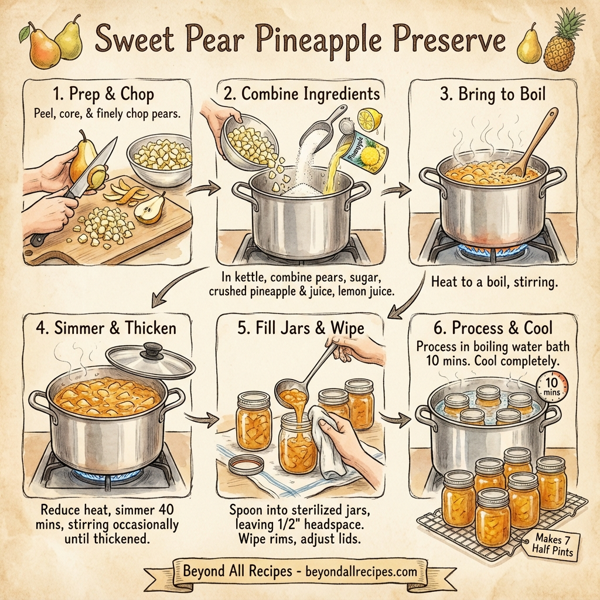
Begin by peeling, coring, and finely chopping the fresh pears.
2
In a 6-quart stainless steel kettle, combine the chopped pears, sugar (adjust according to your sweetness preference), crushed pineapple with juice, and lemon juice.
3
Place the kettle over medium-high heat and bring the mixture to a boil, stirring occasionally to prevent sticking.
4
Once boiling, reduce the heat to low and let it simmer for about 40 minutes, stirring occasionally until the mixture thickens and the pears become soft.
5
Remove from heat and carefully spoon the hot preserve into sterilized half-pint jars, leaving a 1/2 inch headspace at the top.
6
Wipe the rims of the jars with a clean cloth to ensure a proper seal, then adjust the lids securely.
7
Process the jars in a boiling water bath for 10 minutes to ensure they are properly sealed.
8
Allow to cool completely before storing. Makes 7 half pints.
Nutrition Information
Frequently Asked Questions
Frequently Asked Questions
What is Sweet Pear Pineapple Preserve?
It is a fruity preserve made from fresh pears and crushed pineapple, cooked down with sugar and lemon juice to create a versatile spread for toast, yogurt, or pastries.
How many jars does this recipe produce?
This recipe yields approximately 7 half-pint jars.
What kind of pears should I use for this preserve?
You should use 3 lbs of fresh pears that are ripe but firm. Popular choices include Bartlett, Anjou, or Bosc pears.
Do I need to peel the pears?
Yes, for the best texture, the pears should be peeled, cored, and finely chopped before cooking.
Can I use fresh pineapple instead of canned?
Yes, you can use fresh crushed pineapple, but ensure you include the natural juice as the recipe calls for one 8-ounce can of crushed pineapple in juice.
How much sugar should I add?
The recipe allows for a range of 2 1/2 to 5 cups of sugar. You can adjust this based on your preference for sweetness and the ripeness of the fruit.
Why is lemon juice included in the recipe?
Lemon juice adds a bright flavor balance to the sweetness and provides the necessary acidity for safe canning and helping the natural pectin set.
What size kettle is recommended for cooking?
A 6-quart stainless steel kettle is recommended to allow the mixture to boil and thicken properly without overflowing.
How long should the mixture simmer?
After reaching a boil, reduce the heat and simmer for about 40 minutes, stirring occasionally until it thickens.
How do I know when the preserve is done?
The preserve is ready when the mixture has thickened and the pears have become soft and translucent.
What is the recommended headspace for the jars?
You should leave a 1/2 inch headspace at the top of the jars before sealing.
How long should I process the jars in a water bath?
Process the jars in a boiling water bath for 10 minutes to ensure they are properly sealed for shelf stability.
Can I use this as a pastry filling?
Yes, this preserve is thick and flavorful, making it an excellent filling for tarts, hand pies, or thumbprint cookies.
Is this preserve gluten-free?
Yes, the ingredients (pears, sugar, pineapple, and lemon juice) are naturally gluten-free.
How should I store the jars once they have cooled?
Store the sealed jars in a cool, dark, and dry place like a pantry or cupboard.
Do I need to sterilize the jars before filling?
Yes, you should use sterilized half-pint jars to prevent spoilage and ensure a safe canning process.
Why do I need to wipe the jar rims?
Wiping the rims with a clean cloth removes any residue that might prevent the lid from forming an airtight seal during processing.
Can I make this recipe without a water bath?
While you can store unprocessed jars in the refrigerator for immediate use, the water bath process is required for long-term room temperature storage.
Can I use honey instead of sugar?
Honey can be used, but it will significantly alter the flavor profile and may affect the thickness and canning safety of the preserve.
Is this recipe vegan-friendly?
Yes, this recipe contains only plant-based ingredients and is suitable for a vegan diet.
What can I do if the preserve is too thin?
If it is too thin after simmering, you can continue to simmer it for a few more minutes to evaporate more moisture before jar filling.
Does the pineapple juice need to be drained?
No, you should include the juice from the 8-ounce can of crushed pineapple as it provides flavor and liquid for the cooking process.
Can I add spices to this recipe?
Yes, spices like cinnamon, ginger, or cloves can be added during the simmering stage for a warmer flavor profile.
What is the serving size for this preserve?
A standard serving size is typically 1 tablespoon, though it can vary based on use.
Can I use bottled lemon juice?
Yes, bottled lemon juice is often preferred in canning because it has a consistent acidity level.
How long will the sealed jars stay fresh?
Properly sealed and stored jars should remain at peak quality for up to one year.
Can I double this recipe?
You can, but it is generally recommended to cook preserves in smaller batches to ensure even cooking and better thickening.
What should I do if a jar fails to seal?
If the lid doesn't pop down or seal after cooling, store that specific jar in the refrigerator and consume it within a few weeks.
Is this a low-sugar recipe?
The recipe has been refined to allow for lower sugar content (starting at 2.5 cups) compared to traditional preserves, highlighting the fruit's natural sweetness.
How do I core and chop the pears quickly?
Peel them first, cut them into quarters, remove the central core with a small knife or melon baller, and then dice the flesh into fine pieces.