Sweet Cinnamon-Infused Butternut Squash Seed Crunch
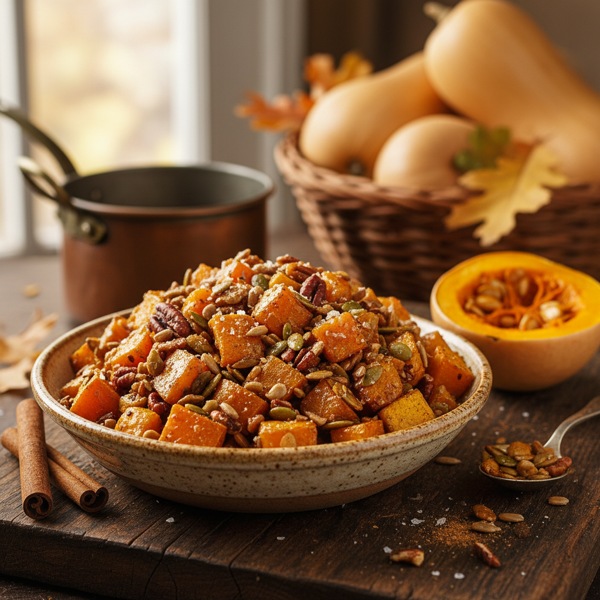
Transform those often-discarded butternut squash seeds into a delightful snack with this Sweet Cinnamon-Infused Butternut Squash Seed Crunch recipe. As the seeds roast, your kitchen will be filled with an inviting aroma of warm cinnamon and a hint of vanilla. This tasty treat is not only crispy and delicious but also boasts a perfect balance of sweetness and nuttiness. While this recipe features butternut squash seeds, feel free to experiment with seeds from other winter squash varieties such as pumpkin, acorn, or hubbard. Just remember that larger seeds might require a bit more roasting time to achieve that perfect crunch. Ideal for snacking, topping salads, or adding to trail mixes, these roasted seeds provide a delightful way to reduce food waste while treating your taste buds!
N/A
Servings
N/A
Calories
5
Ingredients
Ingredients
butternut squash seeds
1 cup (uncooked)
butter
1 tablespoon (salted, melted)
vanilla extract
1/2 teaspoon
ground cinnamon
1/2 teaspoon
sugar
2 teaspoons
Instructions
1
Preheat your oven to 300°F (150°C) to prepare for roasting.
2
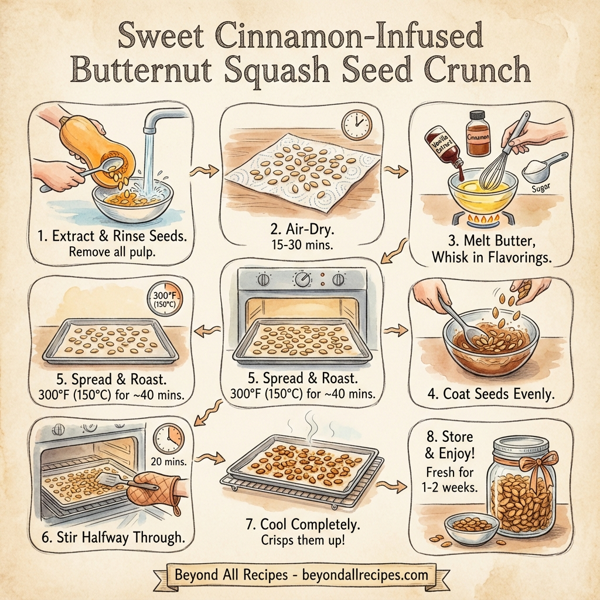
Carefully extract seeds from the butternut squash and rinse them under cool water, making sure to remove all remnants of the squash pulp.
3
After rinsing, spread the seeds out on a paper towel-lined work surface, allowing them to air-dry for about 15 to 30 minutes until the moisture is reduced.
4
In a small bowl, melt the salted butter, then whisk in the vanilla extract, ground cinnamon, and sugar until fully combined.
5
Add the air-dried seeds to the butter mixture, tossing them well to ensure they are evenly coated.
6
Spread the coated seeds in a single layer on a medium-sized baking sheet, ensuring they are not overcrowded.
7
Roast the seeds in the preheated oven for approximately 40 minutes, or until they are golden brown and crispy, stirring halfway through to promote even roasting.
8
Once roasted, remove the baking sheet from the oven and allow the seeds to cool completely on the sheet. This will help them crisp up even more.
9
Once cooled, store the crispy seeds in an airtight container, where they will stay fresh for one to two weeks.
Nutrition Information
Frequently Asked Questions
Frequently Asked Questions
What is Sweet Cinnamon-Infused Butternut Squash Seed Crunch?
It is a crispy snack made by roasting butternut squash seeds with a coating of melted butter, cinnamon, sugar, and vanilla extract.
Can I use seeds from other types of squash?
Yes, you can use seeds from other winter squash varieties like pumpkin, acorn, or hubbard squash, though roasting times may vary.
How do I prepare the seeds for roasting?
Extract the seeds from the squash, rinse them under cool water to remove pulp, and air-dry them for 15 to 30 minutes.
What is the roasting temperature for this recipe?
The oven should be preheated to 300 degrees Fahrenheit or 150 degrees Celsius.
How long do the seeds need to roast?
The seeds should be roasted for approximately 40 minutes until they are golden brown and crispy.
How much butter is required?
The recipe calls for one tablespoon of melted salted butter.
What amount of cinnamon is used in the coating?
You will need 1/2 teaspoon of ground cinnamon for the spice mixture.
How much sugar is added?
The recipe uses two teaspoons of sugar to achieve a sweet crunch.
Why do I need to air-dry the seeds?
Air-drying reduces the moisture on the seeds, which helps them become crispier during the roasting process.
Do I need to stir the seeds while they are in the oven?
Yes, you should stir the seeds halfway through the roasting time to promote even browning.
How should I store the roasted seeds?
Once cooled, store the seeds in an airtight container to maintain their freshness.
How long will the roasted seeds stay fresh?
When stored in an airtight container, the seeds will stay fresh for one to two weeks.
What is the purpose of adding vanilla extract?
Vanilla extract adds a sweet aroma and a hint of depth that complements the cinnamon and butternut seeds.
Can I use unsalted butter instead?
Yes, you can use unsalted butter, but you might want to add a tiny pinch of salt to balance the flavors.
How many seeds does this recipe yield?
The recipe is based on using 1 cup of uncooked butternut squash seeds.
Are these seeds healthy?
Yes, roasted squash seeds are a nutritious, high-fiber snack that provides a healthy alternative to processed treats.
How do I know when the seeds are finished roasting?
They are done when they appear golden brown and have a firm, crispy texture.
Why is it important to cool the seeds on the baking sheet?
Allowing them to cool completely on the sheet helps them crisp up further after being removed from the oven.
Can I use these as a salad topping?
Absolutely, these seeds are excellent for adding a sweet crunch to salads or as a component in trail mixes.
Does this recipe help reduce food waste?
Yes, it is a great way to use parts of the squash that are typically discarded during cooking.
Is this recipe easy to make?
Yes, it is classified as an easy recipe with only five ingredients and straightforward steps.
What happens if I use larger pumpkin seeds?
Larger seeds may require slightly more roasting time than the 40 minutes suggested for butternut squash seeds.
What size baking sheet should I use?
A medium-sized baking sheet is ideal for spreading one cup of seeds in a single layer.
Can I substitute the sugar for honey?
You can, but it may change the roasting time and the final texture of the crunch.
What is the aroma of this recipe like?
The kitchen will be filled with a warm, inviting aroma of cinnamon and sweet vanilla while the seeds roast.
Do I need to peel the seeds?
No, the outer shell of the squash seed becomes thin and crispy when roasted and is perfectly edible.
Can I make this recipe vegan?
Yes, simply substitute the salted butter with a melted vegan butter alternative or coconut oil.
Is it okay to overcrowd the baking sheet?
No, spreading the seeds in a single layer without overcrowding ensures they roast evenly rather than steaming.
What should I do if the seeds are still soft after 40 minutes?
Roast them for a few additional minutes, checking frequently to prevent burning, until they reach the desired crispness.
Can I use ground nutmeg in this recipe?
Yes, you can experiment by adding or substituting other warm fall spices like nutmeg or ginger.