Sweet and Tangy Pickled Beet Eggs
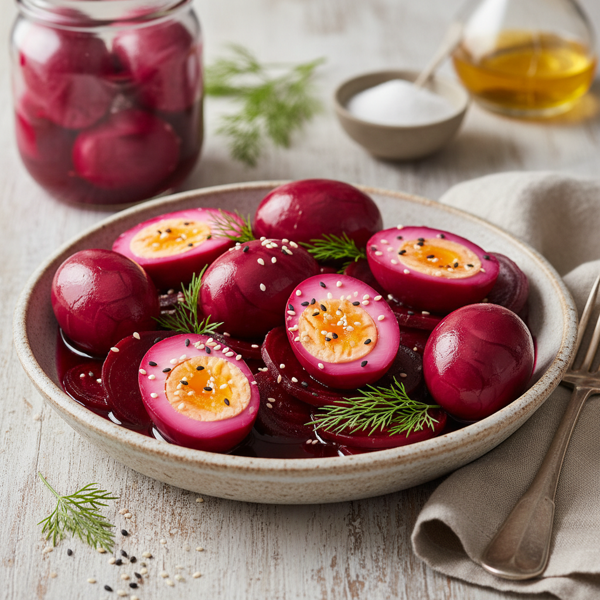
A delightful twist on traditional pickled eggs, these Sweet and Tangy Pickled Beet Eggs are a must for any picnic or potluck! Infused with the rich flavors of pickled red beets, this colorful dish offers a perfect blend of sweetness and acidity. The vibrant pink hue not only looks stunning but also tantalizes the taste buds. Whether you serve them as a protein-rich snack or a unique appetizer, these beet-stained eggs are sure to impress your guests and bring a taste of Pennsylvania to your table.
N/A
Servings
N/A
Calories
6
Ingredients
Ingredients
large eggs
12 (hard boiled and peeled)
sliced pickled red beets
1 (16 ounce) can (undrained)
water
1/4 cup (pure)
cider vinegar
1/2 cup (pure)
brown sugar
1/2 cup (packed)
diced onion
1/2 cup (fresh)
Instructions
1
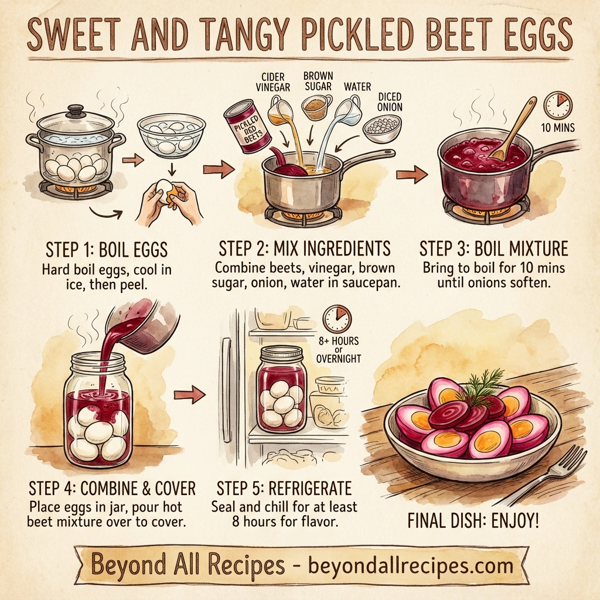
Begin by hard boiling the 12 large eggs. Place them in a pot, cover them with water, and bring to a boil. Once boiling, cover and remove from heat. Let them sit for 10-12 minutes, then transfer to ice water to cool completely before peeling.
2
While the eggs are cooling, prepare the pickling mixture. In a medium saucepan, combine the undrained can of sliced pickled red beets with 1/4 cup of water, 1/2 cup of cider vinegar, 1/2 cup of brown sugar, and the 1/2 cup of diced onion.
3
Bring the beet and vinegar mixture to a boil over medium heat. Allow it to boil for approximately 10 minutes, stirring occasionally, until the sugar has dissolved and the onions have softened.
4
Once the eggs are peeled, place them in a large, non-reactive container or jar. Carefully pour the hot beet mixture over the eggs, ensuring they are fully submerged. If necessary, add additional water to cover the eggs.
5
Seal the container or jar and refrigerate the mixture for at least 8 hours or overnight to allow the flavors to meld and the eggs to take on the beautiful pink color.
Nutrition Information
Frequently Asked Questions
Frequently Asked Questions
What are Sweet and Tangy Pickled Beet Eggs?
They are a traditional Pennsylvania-style appetizer where hard-boiled eggs are marinated in a mixture of pickled red beets, vinegar, sugar, and onions, giving them a vibrant pink color and a sweet-acidic flavor.
How many eggs are needed for this recipe?
The recipe requires 12 large eggs.
What type of beets should I use?
You should use one 16-ounce can of sliced pickled red beets.
Should I drain the can of beets?
No, the beets should be undrained as the liquid is a key part of the pickling mixture.
How long do I need to boil the eggs?
Bring the eggs to a boil, then cover and remove from heat to sit for 10-12 minutes.
What is the best way to peel the eggs?
Transfer the hard-boiled eggs to ice water to cool completely before peeling for the best results.
What kind of vinegar is used in this recipe?
The recipe calls for 1/2 cup of cider vinegar.
Can I use white sugar instead of brown sugar?
The recipe specifies 1/2 cup of packed brown sugar for its rich sweetness, but white sugar can be used as a substitute if needed.
Do I need to include onions in the pickling liquid?
Yes, 1/2 cup of fresh diced onion is used to add flavor and texture to the dish.
How long should the pickling mixture boil?
The beet and vinegar mixture should boil for approximately 10 minutes until the sugar dissolves and the onions soften.
What type of container should be used for the eggs?
Use a large, non-reactive container or a glass jar to prevent any unwanted chemical reactions with the vinegar.
Should the beet mixture be hot when poured over the eggs?
Yes, carefully pour the hot beet mixture directly over the peeled eggs.
What if the beet mixture doesn't fully cover the eggs?
If necessary, you can add additional water to the container to ensure the eggs are fully submerged.
How long do the eggs need to refrigerate?
The eggs need to be refrigerated for at least 8 hours or overnight to properly develop their color and flavor.
Why do the eggs turn pink?
The eggs absorb the natural pigments from the pickled red beet juice during the marinating process.
Is this recipe good for picnics?
Yes, these eggs are a delightful twist on traditional snacks and are specifically recommended for picnics and potlucks.
Where does this recipe style originate?
This dish is a popular staple of Pennsylvania cuisine.
What is the flavor profile of these eggs?
They offer a perfect blend of sweetness from the brown sugar and acidity from the cider vinegar and pickled beets.
Can I use fresh beets instead of canned?
While you can use fresh beets, they would need to be cooked and pickled first to match the flavor profile of the canned pickled red beets used in this recipe.
Are these eggs a good source of protein?
Yes, they are described as a protein-rich snack.
How many ingredients are in this recipe?
The recipe contains 6 main ingredients: eggs, canned beets, water, cider vinegar, brown sugar, and onion.
Do I need to stir the mixture while it boils?
Yes, stir occasionally to ensure the sugar is fully dissolved.
Can I prepare these eggs in advance?
Yes, they are best when made at least one day in advance to allow the flavors to meld.
What makes this dish look stunning?
The vibrant pink hue created by the beet staining makes them a visually impressive appetizer.
Is the onion cooked or raw?
The onion is diced and then boiled with the pickling mixture for 10 minutes to soften it.
Can I use smaller eggs for this recipe?
The recipe specifies 12 large eggs, but smaller eggs could be used if you adjust the quantity to fit the pickling liquid.
Does the recipe include any spices?
The base recipe does not list extra spices, relying on the flavors of the cider vinegar, brown sugar, and pickled beets.
Is the pickling container sealed?
Yes, you should seal the container or jar before placing it in the refrigerator.
How is the serving size calculated?
The recipe yields 12 eggs, typically served as individual snacks or halved as appetizers.
Can I use white vinegar?
The recipe calls for cider vinegar for its specific tangy flavor, though white vinegar could be used as a substitute for a sharper acidity.