Sweet and Tangy Harvard Beets
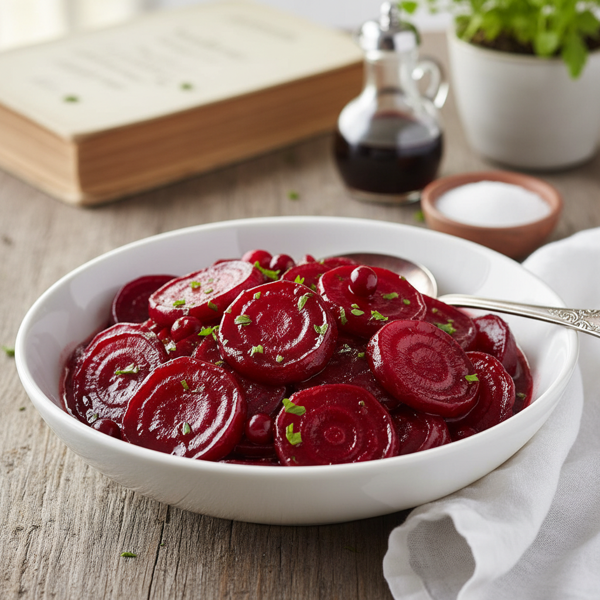
Discover the delightful flavor of Sweet and Tangy Harvard Beets! This simple yet delicious recipe transforms canned beets into a warm, vibrant side dish perfect for any meal. The combination of vinegar, sugar, and beet juice creates a rich sauce that complements the earthy sweetness of the beets. Ideal for family dinners or potlucks, this dish will surely impress your guests without keeping you in the kitchen for long. Easy to make, these Harvard Beets are a classic recipe that everyone will enjoy.
4
Servings
N/A
Calories
8
Ingredients
Ingredients
cornstarch
1 (tablespoon)
sugar
2 (tablespoons)
vinegar
3 (tablespoons (white or cider))
canned beets
1 (15 ounce) (drained (sliced, julienned, or diced))
beet juice
1/2 (cup (from the liquid in the can))
butter
1 (tablespoon)
salt
to taste
pepper
to taste
Instructions
1
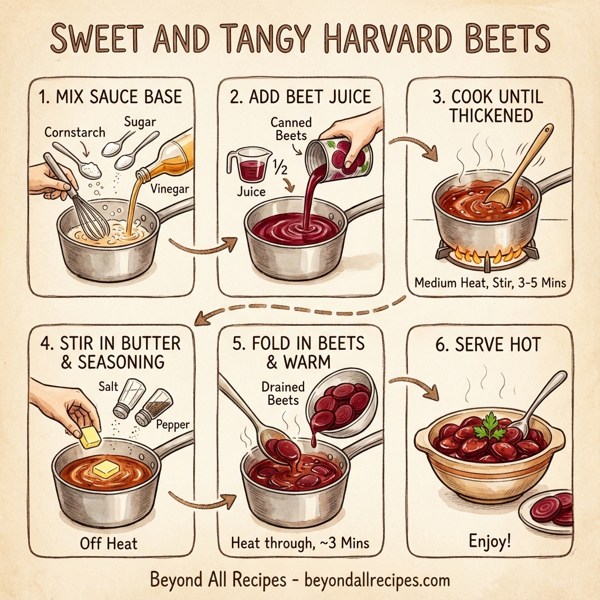
In a small saucepan, mix 1 tablespoon of cornstarch, 2 tablespoons of sugar, and 3 tablespoons of vinegar together until well combined.
2
Drain the can of beets, reserving the liquid. Pour 1/2 cup of the beet juice into the saucepan with the cornstarch mixture.
3
Place the saucepan over medium heat and stir continuously until the mixture thickens and starts to bubble, about 3-5 minutes.
4
Once thickened, remove the pan from heat, and stir in 1 tablespoon of butter, seasoning with salt and pepper to taste.
5
Gently fold in the drained beets, ensuring they are coated with the sauce, and heat until the beets are warmed through, about 3 minutes.
6
Serve hot and enjoy your Sweet and Tangy Harvard Beets!
Nutrition Information
Frequently Asked Questions
Frequently Asked Questions
What are Sweet and Tangy Harvard Beets?
Sweet and Tangy Harvard Beets is a classic vegetable side dish featuring canned beets in a vibrant sauce made from vinegar, sugar, and thickened beet juice.
How many servings does this recipe make?
This recipe is designed to yield 4 servings.
What ingredients do I need for the sauce?
The sauce requires cornstarch, sugar, vinegar, reserved beet juice, and a tablespoon of butter.
Can I use fresh beets instead of canned?
Yes, you can use fresh beets, but you will need to cook them first and ensure you save 1/2 cup of the cooking liquid to act as the beet juice.
What type of vinegar should I use?
You can use either white vinegar or cider vinegar for this recipe.
Is this recipe gluten-free?
Yes, this recipe is naturally gluten-free as it uses cornstarch as a thickener rather than flour.
How long does it take to prepare Harvard Beets?
The dish is very quick to make, taking about 3-5 minutes to thicken the sauce and another 3 minutes to warm the beets through.
Should I drain the beets?
Yes, you should drain the can of beets but be sure to reserve at least 1/2 cup of the liquid for the sauce.
What is the purpose of cornstarch in this recipe?
Cornstarch acts as a thickening agent, giving the sauce its signature glossy and smooth consistency.
Can I use sliced or diced beets?
Absolutely. You can use sliced, julienned, or diced canned beets depending on your preference.
Do I serve Harvard Beets hot or cold?
Harvard Beets are traditionally served hot as a warm side dish.
Can I make this recipe vegan?
To make this recipe vegan, simply substitute the butter with a plant-based margarine or omit it entirely.
What should I do if the sauce is too thick?
If the sauce becomes too thick, you can thin it out by adding a small amount of extra beet juice or water.
How do I store leftovers?
Store any leftovers in an airtight container in the refrigerator for up to 3-5 days.
Can I use a sugar substitute?
Yes, you can use a granulated sugar substitute, though the flavor and sauce consistency may vary slightly.
Why is it called 'Harvard Beets'?
The name is often attributed to the deep red color of the beets, which matches the official color of Harvard University.
Can I double this recipe for a potluck?
Yes, this recipe is very easy to double or triple. Just ensure you use a large enough saucepan to accommodate the extra volume.
What does the butter add to the recipe?
Butter adds a rich, silky finish to the sauce and helps balance the acidity of the vinegar.
Can I add other spices?
While this recipe calls for salt and pepper, some people enjoy adding a pinch of ground cloves or cinnamon for extra warmth.
Is this recipe low-calorie?
Beets are low in calories, but this recipe does include sugar and butter. It is a healthy vegetable side when enjoyed in moderation.
How do I prevent lumps in the sauce?
Mix the cornstarch, sugar, and vinegar thoroughly before adding the beet juice and heat, and stir continuously while cooking.
What main dishes pair well with Harvard Beets?
They pair excellently with roasted meats like pork chops, roast beef, or baked chicken.
Can I freeze Harvard Beets?
Freezing is not recommended because the cornstarch-based sauce may break down and become watery upon thawing.
Can I use honey instead of sugar?
Yes, honey can be used as a sweetener, but it will slightly alter the flavor profile of the traditional recipe.
Are canned beets as healthy as fresh ones?
Canned beets retain most of the nutrients found in fresh beets, making them a convenient and healthy option.
What size can of beets is needed?
The recipe calls for one 15-ounce can of beets.
Is there a difference between using white or cider vinegar?
White vinegar provides a sharper tang, while cider vinegar offers a slightly fruitier, milder acidity.
Can children eat Harvard Beets?
Yes, many children enjoy the sweet and mild flavor of the sauce, making it a great way to introduce them to beets.
Do I need to boil the beets first?
No, because the beets are canned, they are already cooked. You only need to heat them through in the sauce.
What is the texture of the sauce?
The sauce should be smooth, thick enough to coat the back of a spoon, and have a glossy appearance.