Sweet and Tangy Caramelized Shallots
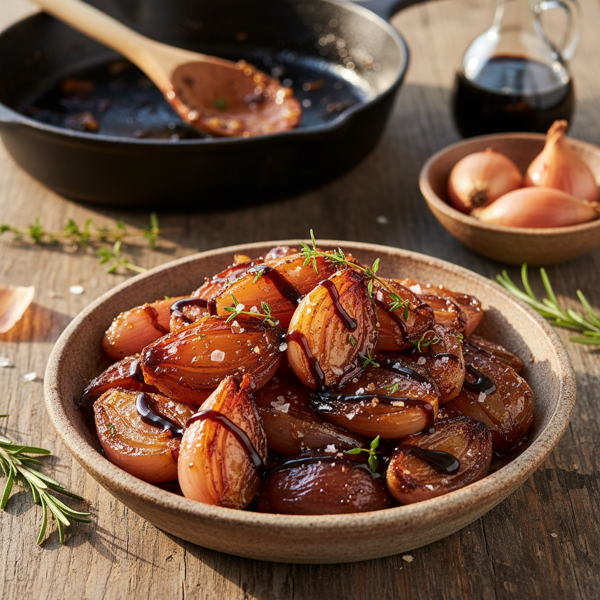
These Sweet and Tangy Caramelized Shallots bring a delightful twist to your meals. Often overshadowed by onions, shallots possess a subtle sweetness that enhances any dish they accompany. In this recipe, we transform simple shallots through caramelization, elevating their flavor with fresh thyme and a splash of balsamic vinegar. The result is a condiment that's perfect for topping veggie burgers, roasted vegetables, or even as a gourmet addition to pasta dishes. This lighter version uses olive oil instead of butter, making it a healthier choice without sacrificing taste.
1
Servings
N/A
Calories
6
Ingredients
Ingredients
Olive oil
2 tablespoons (N/A)
Shallots
2 cups (Finely sliced)
Kosher salt
to taste (N/A)
Black pepper
to taste (Freshly ground)
Fresh thyme
1 1/2 teaspoons (Chopped)
Balsamic vinegar
1-2 tablespoons (N/A)
Instructions
1
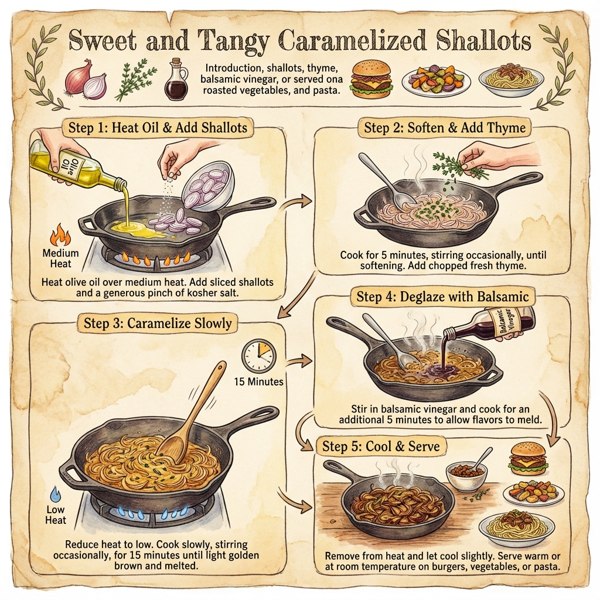
In a large skillet, heat the olive oil over medium heat. Once the oil is shimmering, add the finely sliced shallots along with a generous pinch of kosher salt.
2
Cook the shallots for about 5 minutes, stirring occasionally, until they begin to soften. Add the chopped fresh thyme at this point.
3
Reduce the heat to low and allow the shallots to continue cooking slowly, stirring occasionally, for an additional 15 minutes or until they are a light golden brown and have a melted appearance.
4
Stir in the balsamic vinegar and cook for an additional 5 minutes, allowing the flavors to meld.
5
Remove from heat and let cool slightly. Serve the caramelized shallots warm or at room temperature.
Nutrition Information
Frequently Asked Questions
Frequently Asked Questions
What are Sweet and Tangy Caramelized Shallots?
They are shallots slowly cooked in olive oil until golden and soft, then deglazed with balsamic vinegar and seasoned with fresh thyme.
How do shallots differ from regular onions in this recipe?
Shallots possess a more subtle sweetness and a more delicate flavor profile compared to standard onions, which enhances the dish without overpowering it.
What is the total cooking time for this recipe?
The total cooking time is approximately 25 to 30 minutes, including softening, caramelizing, and finishing with vinegar.
Can I use butter instead of olive oil?
Yes, but this specific recipe uses olive oil to create a lighter, healthier, and vegan-friendly version of caramelized shallots.
Why is balsamic vinegar added to the shallots?
Balsamic vinegar provides a tangy acidity that balances the natural sweetness of the caramelized shallots and adds a rich depth of flavor.
What type of salt is recommended?
The recipe calls for kosher salt, which is added early in the process to help draw out moisture from the shallots.
How should the shallots be prepared before cooking?
The shallots should be finely sliced to ensure even cooking and a consistent texture.
At what heat setting should I cook the shallots?
Start on medium heat to soften them, then reduce to low heat for the slow caramelization process to prevent burning.
When do I add the fresh thyme?
Fresh thyme should be added after the shallots have softened for about 5 minutes, but before the long caramelization step.
What sign indicates the shallots are properly caramelized?
They should appear light golden brown and have a soft, 'melted' appearance.
Can I use dried thyme instead of fresh?
Yes, though fresh thyme is preferred for its vibrant flavor. If using dried, use about one-third of the amount called for in the recipe.
What are some serving suggestions for caramelized shallots?
They are perfect for topping veggie burgers, roasted vegetables, or as a gourmet addition to pasta dishes.
Is this recipe vegan?
Yes, because it uses olive oil rather than butter, this recipe is entirely plant-based and vegan.
Is this recipe gluten-free?
Yes, all the ingredients listed, including balsamic vinegar and shallots, are naturally gluten-free.
How many servings does this recipe provide?
This recipe is scaled for 1 serving, but it can easily be doubled or tripled for larger groups.
Should I serve these hot or cold?
You can serve these caramelized shallots either warm or at room temperature.
What is the purpose of reducing the heat to low?
Low heat allows the natural sugars in the shallots to brown slowly without scorching, resulting in a sweeter and more tender condiment.
Can I substitute balsamic vinegar with another type?
While balsamic is best for the 'tangy' profile, red wine vinegar or apple cider vinegar can be used as alternatives, though the flavor will change.
How much olive oil is needed?
The recipe requires 2 tablespoons of olive oil for 2 cups of sliced shallots.
What kind of black pepper is best?
Freshly ground black pepper is recommended for the best flavor impact.
Can I make these ahead of time?
Yes, caramelized shallots store well and can be reheated or served cold later.
Does this recipe contain any cholesterol?
Based on the ingredients like olive oil and vegetables, this recipe is naturally cholesterol-free.
How much balsamic vinegar should I use?
The recipe suggests 1 to 2 tablespoons, depending on your preference for tanginess.
What if my shallots are browning too fast?
If they brown too quickly, reduce the heat further or add a tiny splash of water to slow down the process.
Why is this considered a healthy choice?
It uses heart-healthy olive oil instead of saturated fats like butter and relies on natural vegetable flavors.
Can I use this as a pizza topping?
Absolutely, caramelized shallots make an excellent gourmet topping for white pizzas or flatbreads.
Do I need to add sugar to caramelize them?
No, shallots have enough natural sugar to caramelize on their own when cooked slowly.
What is the preparation for the shallots?
They should be peeled and then finely sliced before being added to the skillet.
Is this recipe under 30 minutes?
Yes, the recipe fits into the '< 30 Mins' category, making it a quick gourmet addition to a meal.
Can I add garlic to this recipe?
Yes, adding minced garlic during the last few minutes of cooking can add another layer of savory flavor.