Sweet & Tangy Amish Yellow Pickled Eggs
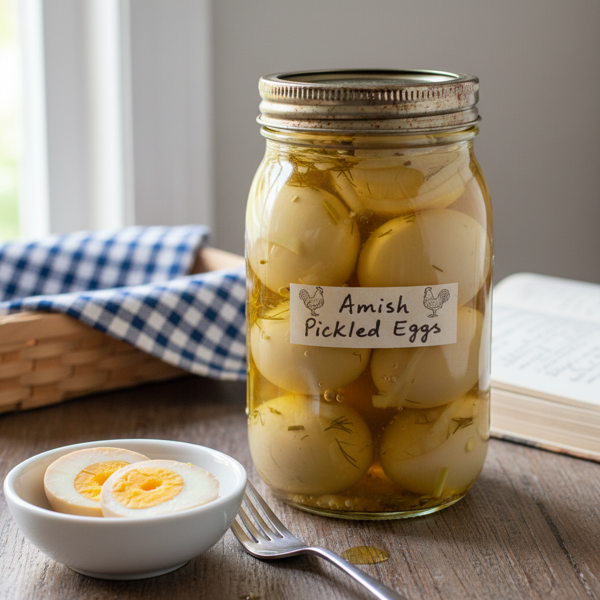
Experience the unique flavors of Pennsylvania Dutch cuisine with these delightful Sweet & Tangy Amish Yellow Pickled Eggs. Perfect as a snack, appetizer, or side dish, this recipe combines hard-boiled eggs with a vibrant yellow brine made from sugar, vinegar, and aromatic spices. The result is a deliciously sweet and slightly tangy treat that not only looks beautiful on your table but is also packed with flavor. After a satisfying wait of four days for the flavors to meld, these pickled eggs will surprise your taste buds and are perfect for sharing with family and friends. Enjoy this classic dish that brings the taste of Amish traditions to your home!
12
Servings
117
Calories
8
Ingredients
Ingredients
hard boiled eggs
12 (peeled)
water
3/4 cup
white sugar
1 cup
pickling salt
2 teaspoons
mustard seeds
1/2 teaspoon
garlic powder
1/4 teaspoon
dried dill weed
1 teaspoon
medium onion
1 (thinly sliced)
Instructions
1
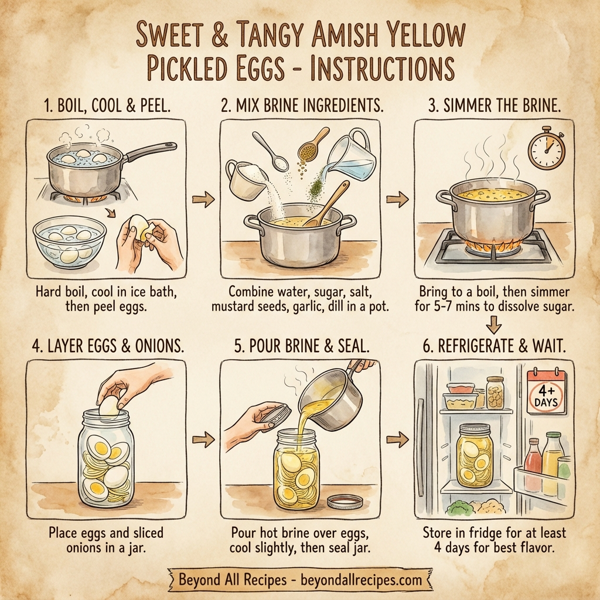
Begin by hard boiling the eggs. Once cooked, cool them in an ice bath before peeling and setting them aside.
2
In a medium pot, combine water, white sugar, pickling salt, mustard seeds, garlic powder, and dried dill weed. Stir to mix the ingredients well.
3
Place the pot over medium-high heat and bring the mixture to a boil. Once boiling, reduce the heat to low and let it simmer for about 5-7 minutes, stirring occasionally to ensure that the sugar and salt dissolve completely.
4
While the brine simmers, prepare a clean glass jar or container to hold the eggs and brine. Place the peeled hard boiled eggs in the jar, layering them with the thinly sliced onion.
5
Once the brine has infused with the flavors, carefully pour it over the eggs in the jar, ensuring the eggs are completely submerged. Allow to cool slightly before sealing the jar with a lid.
6
For best flavor, store the jar in the refrigerator and let the eggs pickle for at least 4 days. The longer they sit, the more robust the flavor becomes.
Nutrition Information
6.7g
Fat
13.3g
Carbs
8.8g
Protein
Frequently Asked Questions
Frequently Asked Questions
What are Sweet & Tangy Amish Yellow Pickled Eggs?
They are a traditional Pennsylvania Dutch snack consisting of hard-boiled eggs preserved in a vibrant yellow brine made of sugar, vinegar, and aromatic spices.
How many eggs are required for this recipe?
The recipe calls for 12 hard-boiled eggs, which should be peeled before pickling.
How long should the eggs pickle before they are ready to eat?
For the best and most robust flavor, you should let the eggs sit in the refrigerator for at least 4 days.
What are the primary flavors of these pickled eggs?
The flavor profile is a unique balance of sweetness from the sugar and tanginess from the vinegar and spices.
What ingredients are used in the brine?
The brine is made from water, white sugar, pickling salt, mustard seeds, garlic powder, and dried dill weed.
How many calories are in one serving of Amish Yellow Pickled Eggs?
Each serving contains approximately 117 calories.
How much sugar is in the recipe?
This recipe uses 1 cup of white sugar to achieve its signature sweet taste.
What type of salt is best for this recipe?
You should use 2 teaspoons of pickling salt for the brine mixture.
How is the onion prepared for this recipe?
One medium onion should be thinly sliced and layered with the eggs inside the pickling jar.
How much protein is in each serving?
Each serving provides 8.8 grams of protein.
How long should the brine simmer?
The brine should simmer for 5 to 7 minutes on low heat to ensure the salt and sugar are fully dissolved.
What is the fat content of this snack?
One serving of these pickled eggs contains 6.7 grams of fat.
How many carbohydrates are in a serving?
There are 13.3 grams of carbohydrates per serving.
Should the eggs be cooled after boiling?
Yes, it is recommended to cool the hard-boiled eggs in an ice bath to make them easier to peel.
Can I use fresh dill instead of dried?
The recipe specifies 1 teaspoon of dried dill weed, but fresh dill can often be substituted if preferred.
What kind of container should I use for pickling?
A clean glass jar or a similar non-reactive container with a lid is best for storing the eggs in the brine.
How much mustard seed is required?
The recipe calls for 1/2 teaspoon of mustard seeds.
Does the recipe contain garlic?
Yes, it uses 1/4 teaspoon of garlic powder to add flavor to the brine.
Is the brine poured over the eggs while hot?
Yes, the hot brine is poured over the eggs in the jar, then it is allowed to cool slightly before sealing.
How many servings does this recipe provide?
This recipe is designed to produce 12 servings.
What amount of water is needed for the brine?
You will need 3/4 cup of water for the brine base.
Can I eat the eggs earlier than 4 days?
While safe to eat earlier, the flavor will not be as deeply infused into the eggs as it would be after the full 4-day wait.
What culture is this recipe associated with?
This dish is a classic example of Amish and Pennsylvania Dutch culinary traditions.
Are there any fibers in this dish?
Based on the nutritional data provided, there is no significant fiber content in this recipe.
What is the total number of ingredients?
There are 8 distinct ingredients used to make these pickled eggs.
How should the jar be stored?
The jar should be sealed tightly and stored in the refrigerator.
What gives the eggs their yellow color?
The yellow hue is typically derived from the mixture of mustard seeds and other aromatic spices in the brine.
Is this dish served as a main course?
No, it is best enjoyed as a snack, an appetizer, or a side dish.
Is the onion necessary?
The onion is a key component for adding layers of flavor and aroma to the pickling process.
Does the flavor change over time?
Yes, the longer the eggs sit in the brine, the more intense and developed the sweet and tangy flavors become.