Swedish Delicate Pancakes
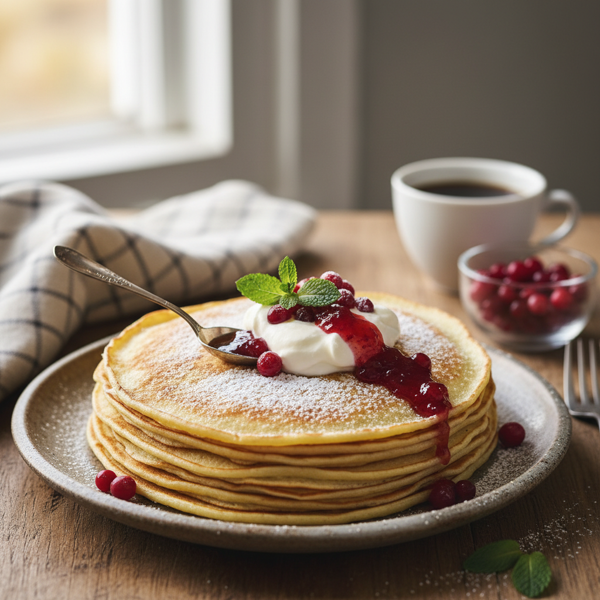
Experience the delightful taste of these traditional Swedish pancakes that have been shared across generations. Originally brought to America by my husband's grandmother, who expertly crafted these light and tender pancakes, they have become a beloved family tradition. Perfect for breakfast or brunch, these pancakes are versatile and can be served with a variety of toppings. Enjoy them rolled up with butter and syrup, or for a more authentic experience, try them with Lingonberry preserves or a dusting of powdered sugar. Each bite is a warm reminder of family gatherings, heritage, and the joy of sharing food with loved ones.
12
Servings
100
Calories
6
Ingredients
Ingredients
Eggs
2 (large, beaten)
Milk
2/3 cup (whole or your preferred type)
Oil
2 tablespoons (neutral-flavored, such as vegetable oil)
Flour
1/2 cup (all-purpose or whole wheat)
Sugar
2 tablespoons (granulated)
Salt
1/2 teaspoon (fine)
Instructions
1
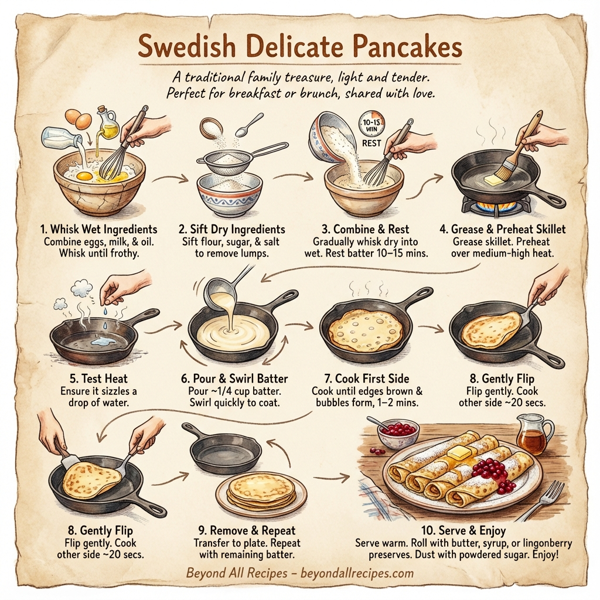
In a 2-quart mixing bowl, combine the eggs, milk, and oil. Whisk vigorously until all ingredients are well combined and frothy.
2
In a separate small bowl, sift together the flour, sugar, and salt to ensure there are no lumps.
3
Gradually incorporate the flour mixture into the egg mixture using a wire whisk, stirring until smooth. Allow the batter to rest for 10–15 minutes to enhance the texture.
4
While the batter rests, prepare a skillet by lightly greasing it. You can use either a non-stick sauté pan or a well-seasoned cast iron skillet for optimal results.
5
Preheat the skillet over medium-high heat. Ensure it’s hot enough to sizzle a drop of water.
6
Pour approximately 1/4 cup of the pancake batter into the skillet. Quickly swirl the pan using a circular wrist motion to evenly coat the bottom.
7
Cook the pancake until the edges begin to brown and small bubbles form on the surface, about 1–2 minutes.
8
Using a thin spatula, gently flip the pancake over and cook the other side for an additional 20 seconds or until lightly browned.
9
Transfer the cooked pancake to a plate and allow it to cool slightly. Repeat the cooking process with the remaining batter.
10
Serve the pancakes warm, spreading with butter and drizzling with syrup, or add a layer of Lingonberry preserves. Dust with powdered sugar and roll them like crepes for a deliciously authentic experience.
Nutrition Information
3.75g
Fat
14g
Carbs
2.5g
Protein
Frequently Asked Questions
Frequently Asked Questions
What are Swedish Delicate Pancakes?
Swedish Delicate Pancakes are a traditional family recipe for light, tender, and thin pancakes that are often compared to crepes.
How many servings does this recipe provide?
This recipe yields approximately 12 servings.
What are the primary ingredients needed?
The ingredients include 2 large eggs, 2/3 cup milk, 2 tablespoons of oil, 1/2 cup flour, 2 tablespoons of sugar, and 1/2 teaspoon of salt.
How should I prepare the egg mixture?
In a 2-quart bowl, whisk the eggs, milk, and oil vigorously until the mixture is well combined and frothy.
Why is it important to sift the dry ingredients?
Sifting the flour, sugar, and salt together helps ensure there are no lumps in the final batter.
How long should the pancake batter rest?
The batter should be allowed to rest for 10 to 15 minutes to enhance the texture.
What kind of oil is recommended for this recipe?
A neutral-flavored oil, such as vegetable oil, is best for these pancakes.
Can I use whole wheat flour instead of all-purpose?
Yes, you can use either all-purpose or whole wheat flour based on your preference.
What type of milk should be used?
You can use whole milk or any preferred type of milk.
What is the best way to grease the skillet?
Lightly grease a non-stick saute pan or a well-seasoned cast iron skillet for optimal results.
How much batter is used for each individual pancake?
Use approximately 1/4 cup of the batter for each pancake.
How do I ensure the batter coats the pan evenly?
Quickly swirl the skillet using a circular wrist motion immediately after pouring the batter.
What heat setting should I use for cooking?
Preheat and cook the skillet over medium-high heat.
How can I tell if the skillet is hot enough?
The skillet is ready when it is hot enough to sizzle a drop of water.
How long does the first side take to cook?
The first side typically takes about 1 to 2 minutes to cook.
When is it time to flip the pancake?
Flip the pancake when the edges begin to brown and small bubbles form on the surface.
How long should the second side cook?
Cook the second side for about 20 seconds or until it is lightly browned.
What tool is best for flipping these pancakes?
A thin spatula is ideal for gently flipping these delicate pancakes.
What are traditional Swedish toppings for these pancakes?
Lingonberry preserves and a dusting of powdered sugar provide a deliciously authentic experience.
Can these pancakes be rolled?
Yes, these pancakes are designed to be rolled like crepes after adding your favorite toppings.
What is the calorie count per pancake?
Each pancake contains approximately 100 calories.
How much protein is in a serving?
Each serving provides about 2.5 grams of protein.
What is the fat content per serving?
There is approximately 3.75 grams of fat per serving.
How many carbohydrates are in each pancake?
Each serving contains 14 grams of carbohydrates.
Are these pancakes suitable for a brunch menu?
Yes, these versatile pancakes are perfect for both breakfast and brunch.
What is the history of this recipe?
This recipe was originally brought to America by the author's husband's grandmother.
Should the pancakes be served hot?
Yes, for the best experience, serve the pancakes warm.
Is a cast iron skillet better than non-stick?
Both work well; a non-stick pan is easy to use, while a well-seasoned cast iron skillet offers great heat distribution.
Can I serve these with butter and syrup?
Absolutely, they are delicious when served rolled up with butter and syrup.
What is the general texture of these pancakes?
They have a light, thin, and tender texture, similar to a traditional crepe.