Stuffed Chicken Breasts with Prosciutto and Muenster
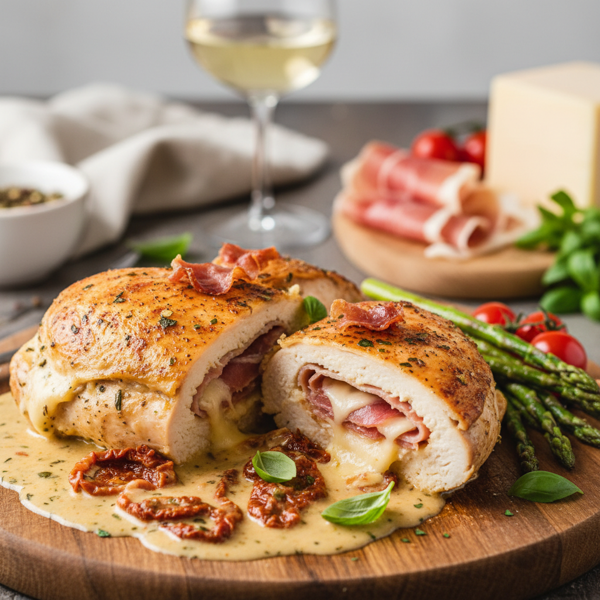
Indulge in a sumptuous and elegant dish that's surprisingly easy to prepare. These Stuffed Chicken Breasts are filled with rich, savory Muenster cheese and flavorful prosciutto, all wrapped in tender chicken goodness. Perfect for weeknight dinners or special occasions, this recipe promises to impress without requiring extensive cooking skills. Each serving is approximately 250 calories, making it a guilt-free delight that satisfies the palate. For the best results, opt for high-quality ingredients and consider slightly freezing the chicken for effortless handling.
N/A
Servings
N/A
Calories
9
Ingredients
Ingredients
boneless skinless chicken breast halves
4 (slightly frozen for easier slicing)
fresh Italian parsley
2 tablespoons (minced)
Dijon mustard
1 teaspoon (none)
Muenster cheese
2 slices (halved)
prosciutto or deli ham
2 slices (halved)
salt
1/2 teaspoon (none)
all-purpose flour
3 tablespoons (none)
olive oil
1 tablespoon (none)
dry white wine
1/4 cup (none)
Instructions
1
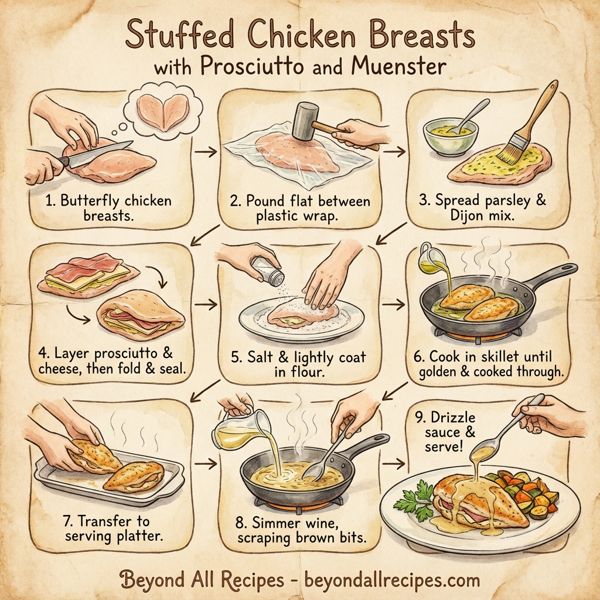
Begin by taking the boneless skinless chicken breast halves and slice them horizontally but do not cut all the way through; open them like a book until they are flat.
2
Place each chicken breast between two pieces of plastic wrap and gently pound them with the flat side of a meat mallet until they are evenly flattened.
3
In a small bowl, mix together the minced parsley and Dijon mustard to create a flavorful spread. Evenly distribute this mixture over one half of each chicken breast.
4
Layer the halved Muenster cheese and prosciutto over the mustard-spread chicken. Carefully fold the chicken breasts over the filling, pressing the edges together firmly to seal in the delicious ingredients.
5
Sprinkle the stuffed chicken breasts with salt to enhance the flavor. Then, place the flour on a plate and lightly dip each chicken breast in the flour, shaking off any excess.
6
Heat the olive oil in a large nonstick skillet over medium heat until hot. Carefully add the stuffed chicken breasts to the skillet and cook for 6-10 minutes, or until they are golden brown, cooked through, and the juices run clear when pierced.
7
Once cooked, transfer the stuffed chicken breasts to a serving platter, keeping them warm.
8
Next, increase the heat to medium-high and pour the dry white wine into the skillet. Let it simmer for 30-60 seconds, scraping up any brown bits from the bottom of the skillet to create a flavorful reduction.
9
Finally, drizzle the reduced wine sauce over the stuffed chicken breasts before serving, enhancing the dish’s elegance and flavor.
Nutrition Information
Frequently Asked Questions
Frequently Asked Questions
What is the main filling for these stuffed chicken breasts?
The filling consists of Muenster cheese, prosciutto (or deli ham), and a mixture of minced fresh Italian parsley and Dijon mustard.
How many calories are in a serving of this chicken dish?
Each serving is approximately 250 calories, making it a guilt-free and healthy dinner option.
Why should I slightly freeze the chicken before preparation?
Slightly freezing the chicken breasts makes them firmer and much easier to slice horizontally without cutting all the way through.
What is the purpose of pounding the chicken with a mallet?
Pounding the chicken between plastic wrap ensures an even thickness, which helps the meat cook uniformly and makes it easier to fold over the filling.
Can I substitute the prosciutto in this recipe?
Yes, if you do not have prosciutto, you can use high-quality deli ham as an alternative filling.
What kind of cheese is best for this stuffed chicken recipe?
This recipe specifically calls for Muenster cheese, which provides a rich and savory flavor that pairs perfectly with the prosciutto.
How do I prepare the mustard spread?
In a small bowl, simply mix together 2 tablespoons of minced fresh Italian parsley and 1 teaspoon of Dijon mustard until well combined.
How do I ensure the filling stays inside the chicken?
After layering the ingredients, fold the chicken over and press the edges together firmly. Pounding the meat thin helps create a better seal.
Why is the chicken dipped in flour before cooking?
Lightly coating the chicken in flour helps create a golden-brown crust and assists in thickening the wine reduction sauce later in the process.
How long should I cook the stuffed chicken breasts?
Cook the chicken in a nonstick skillet over medium heat for 6 to 10 minutes, or until golden brown and the juices run clear.
What kind of wine should I use for the pan sauce?
A dry white wine is recommended for deglazing the skillet to create a light and elegant reduction sauce.
How do I make the wine reduction sauce?
After removing the chicken, add 1/4 cup of dry white wine to the hot skillet, increase the heat, and simmer for 30-60 seconds while scraping up brown bits.
Can I use dried parsley instead of fresh?
Fresh Italian parsley is recommended for the best flavor, but you can use dried parsley if needed, though you should reduce the amount slightly.
Is this recipe suitable for a weeknight dinner?
Yes, this dish is designed to be elegant enough for guests but simple and quick enough for a busy weeknight meal.
What type of skillet is recommended?
A large nonstick skillet is ideal for this recipe to prevent the chicken and melting cheese from sticking while ensuring even browning.
Do I need to use toothpicks to hold the chicken closed?
The recipe suggests pressing the edges together firmly, but you can use toothpicks if you find the chicken is not staying closed during the flouring process.
What should I look for to know the chicken is done?
The chicken is cooked through when the exterior is golden brown and the internal juices run clear when the thickest part is pierced.
Can I make this recipe gluten-free?
To make this recipe gluten-free, substitute the all-purpose flour with a gluten-free flour blend or cornstarch for the light coating.
What does 'butterflying' the chicken mean?
It means slicing the chicken breast horizontally almost all the way through so it can be opened up like a book, creating a larger surface area for stuffing.
Is the wine sauce necessary?
While the chicken is flavorful on its own, the wine reduction adds a layer of elegance and moisture that completes the dish.
Can I use olive oil for frying?
Yes, the recipe uses 1 tablespoon of olive oil heated over medium heat to cook the chicken breasts.
How many chicken breasts does this recipe prepare?
This recipe is designed for 4 boneless skinless chicken breast halves.
What flavor does Dijon mustard add?
Dijon mustard provides a tangy, slightly spicy depth that cuts through the richness of the Muenster cheese.
Can I use red wine instead of white?
White wine is preferred for poultry and lighter sauces; red wine may significantly change the color and flavor profile of the dish.
How much salt is used in this recipe?
The recipe calls for 1/2 teaspoon of salt to be sprinkled over the stuffed chicken breasts before flouring.
What is the first step in the instructions?
The first step is to slice the chicken breasts horizontally without cutting all the way through and opening them flat like a book.
Should I season the flour?
The recipe suggests salting the chicken directly, but you can also add a pinch of pepper or extra herbs to the flour if desired.
What are the brown bits in the skillet called?
Those brown bits are called 'fond,' and they contain concentrated flavor that makes the wine reduction sauce delicious.
How thick should the chicken be after pounding?
The chicken should be pounded gently until it is evenly flattened, usually about 1/4 inch thick, to ensure quick and even cooking.
What category does this recipe fall into?
This recipe is categorized as a stuffed chicken dish with Italian cuisine influences, perfect for elegant meals or dinner.