Strawberry Mochi Delight - Ichigo Daifuku
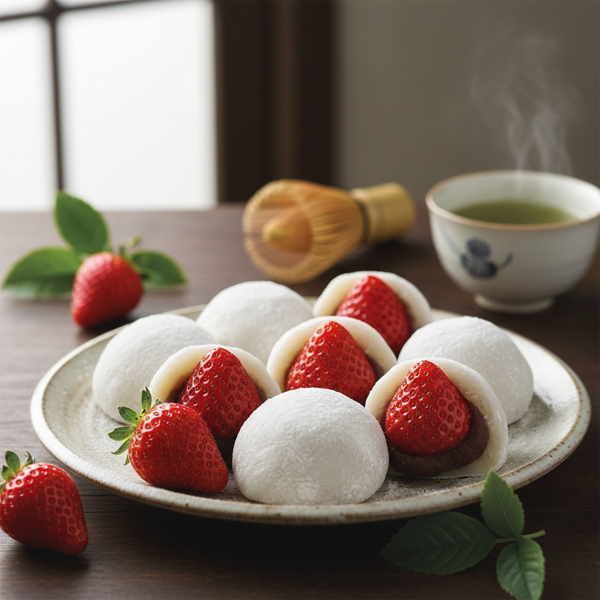
Indulge in the exquisite flavors of Ichigo Daifuku, a delightful Japanese confection that pairs the natural sweetness of fresh strawberries with the creamy texture of anko (sweet red bean paste) enveloped in soft, chewy mochi. This delightful dessert, perfect for any occasion, offers a harmonious balance of sweetness and freshness, and is sure to impress your guests. Whether enjoyed as a snack or a charming dessert, each bite captures the essence of traditional Japanese sweets, making it a must-try for any mochi lover.
12
Servings
N/A
Calories
5
Ingredients
Ingredients
Mochiko sweet rice flour
1 1/2 cups (none)
Sugar
1/2 cup (none)
Water
1 1/2 cups (none)
Small strawberries
12 (washed, dried, stems removed)
Sweetened red bean paste (Tsubushian)
1 (18 ounce) can (none)
Instructions
1
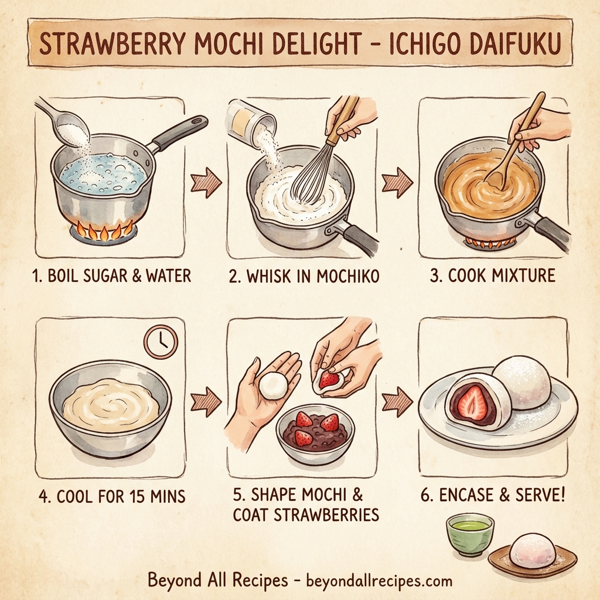
In a large saucepan, combine the sugar and water. Heat the mixture over medium-high heat until it comes to a boil, stirring occasionally.
2
Once boiling, remove the saucepan from the heat and gradually whisk in the mochiko until fully incorporated and smooth.
3
Return the pot to low heat and cook the mixture for an additional 2 minutes, stirring often to prevent sticking.
4
After cooking, let the mochi mixture cool for about 15 minutes, stirring occasionally to maintain an even temperature.
5
After cooling, lightly dust your hands and work surface with mochiko to prevent sticking. Take pieces of the mochi mixture and shape them into walnut-sized balls, then flatten them into disks.
6
Carefully coat each strawberry in a thin layer of sweetened red bean paste, ensuring they are completely covered.
7
Place one coated strawberry in the center of each mochi disk and gently bring the edges together, pinching to seal and encase the strawberry.
8
Dust any exposed mochi with mochiko to prevent sticking, and continue until all mochi are filled and sealed.
9
Your Ichigo Daifuku are now ready to serve! Enjoy these delightful treats as is, or chill them in the refrigerator for a refreshing dessert.
Nutrition Information
Frequently Asked Questions
Frequently Asked Questions
What is Ichigo Daifuku?
Ichigo Daifuku is a popular Japanese confection consisting of a fresh strawberry and sweet red bean paste (anko) wrapped in a soft, chewy layer of mochi.
What kind of rice flour is used for this recipe?
This recipe uses Mochiko, which is a type of sweet rice flour or glutinous rice flour that provides the characteristic chewy texture of mochi.
Can I substitute regular rice flour for Mochiko?
No, regular rice flour (non-glutinous) will not produce the stretchy, chewy texture required for mochi. You must use glutinous rice flour like Mochiko.
What is Tsubushian?
Tsubushian is a type of sweetened red bean paste where the azuki beans are cooked with sugar but left partially whole or chunky.
How many servings does this recipe provide?
This recipe is designed to make 12 individual Ichigo Daifuku treats.
Do I need to wash the strawberries?
Yes, strawberries should be washed and thoroughly dried. It is important that they are dry so the red bean paste adheres to them properly.
Should the strawberry stems be removed?
Yes, you should remove the stems and leaves before coating the strawberries in the red bean paste.
How do I prevent the mochi from sticking to my hands?
Dust your hands and your work surface generously with extra Mochiko or cornstarch to prevent the sticky mochi dough from adhering to your skin.
How long should the mochi mixture cool before handling?
The mochi mixture should cool for approximately 15 minutes, or until it is cool enough to handle comfortably with your hands.
What is the best way to apply the red bean paste to the strawberry?
Carefully coat each strawberry in a thin, even layer of sweetened red bean paste until the fruit is completely covered before wrapping it in mochi.
Can I serve Ichigo Daifuku cold?
Yes, while they can be enjoyed at room temperature, many people prefer them chilled in the refrigerator for a more refreshing experience.
What should I do if the mochi dough is too sticky to work with?
Use more Mochiko flour for dusting. Mochi is naturally very sticky, so using a dry starch barrier is essential for shaping.
Is this recipe gluten-free?
Mochiko is made from glutinous rice, which despite the name, is naturally gluten-free. However, check your specific brand of red bean paste to ensure no gluten-based additives are present.
Can I use Koshian instead of Tsubushian?
Yes, you can use Koshian (smooth red bean paste) if you prefer a uniform texture without the pieces of bean skins.
What size strawberries are best for this recipe?
Small to medium-sized strawberries are ideal as they are easier to wrap and provide a good ratio of fruit to mochi.
How do I seal the mochi?
Place the strawberry in the center of the mochi disk, bring the edges together at the top, and gently pinch the dough to create a seal.
How long does the mochi take to cook on the stove?
After the sugar and water boil and the flour is added, it typically takes about 2 minutes of cooking on low heat to reach the right consistency.
Can I make this dessert in advance?
Ichigo Daifuku is best eaten the same day it is made. If stored, the mochi may harden over time and the strawberry may release moisture.
What is the flavor profile of this dessert?
It features a harmonious balance of the fresh, tart sweetness of the strawberry, the earthy sweetness of the bean paste, and the mild flavor of the rice dough.
Why do I need to stir the mixture while it cools?
Stirring occasionally during the 15-minute cooling period helps maintain an even temperature and prevents a skin from forming on the dough.
Is Ichigo Daifuku a traditional sweet?
Yes, it is a traditional Japanese sweet (wagashi) that is particularly popular during the spring season when strawberries are fresh.
Can I use frozen strawberries?
It is not recommended to use frozen strawberries because they become mushy and release too much liquid when thawed, which will ruin the mochi texture.
How should I store leftovers?
Store any leftovers in an airtight container in the refrigerator and consume within 24 hours for the best quality.
What does the mochi feel like?
The mochi has a soft, elastic, and chewy texture that is slightly sticky but becomes smooth when dusted with starch.
Can I add food coloring to the mochi?
Yes, you can add a drop of food coloring (often pink) to the water/sugar mixture if you want the outer mochi shell to be colored.
How much red bean paste is needed?
This recipe calls for one 18-ounce can of sweetened red bean paste to cover 12 strawberries.
Is this recipe suitable for vegans?
Yes, the ingredients (Mochiko, sugar, water, strawberries, and red bean paste) are typically vegan-friendly, but always check the label on the bean paste.
What happens if I don't cook the mochi long enough?
If undercooked, the mochi may taste like raw flour and lack the necessary elasticity to stretch over the strawberry.
Can I use other fillings besides strawberries?
While this specific recipe is for Ichigo (strawberry) Daifuku, the mochi and bean paste technique can be used with other fruits like grapes or kiwi.
Should I use a specific type of pot for cooking?
A large, heavy-bottomed saucepan is best to ensure even heating and to prevent the sugar and rice flour mixture from scorching.