Spring Vegetable Risotto
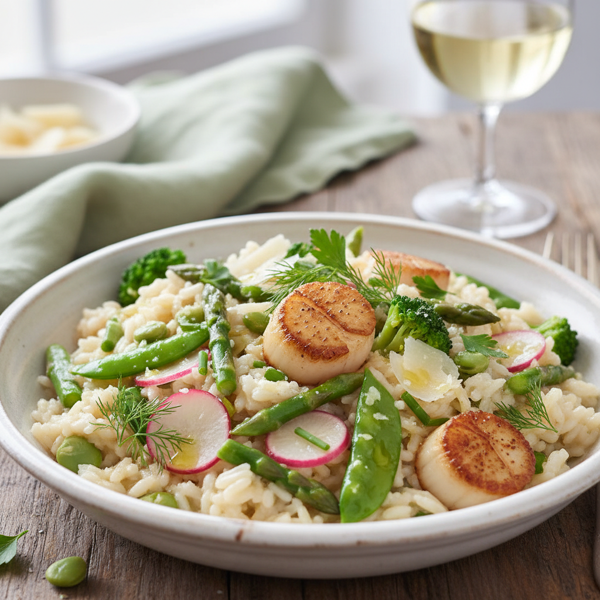
Indulge in the vibrant flavors of Spring with this delightful Spring Vegetable Risotto. Utilizing the creamy texture of Arborio rice, this dish is complemented by a medley of fresh vegetables like tender asparagus, crisp carrots, and zucchini, all perfectly combined to create a satisfying one-dish meal. Enhanced with a splash of dry white wine, aromatic herbs, and a hint of lemon, this risotto not only captivates the palate but also brings a splash of color to your plate. Perfect as an elegant entrée or a comforting first course, prepare this dish to elevate your culinary repertoire. Just remember: having all your ingredients prepped and ready to go will ensure a seamless cooking experience!
N/A
Servings
N/A
Calories
18
Ingredients
Ingredients
thin asparagus
1/2 lb (trimmed and cut into 1/2-inch pieces)
medium carrots
2 (scraped and diced into 1/4-inch pieces)
large zucchini
2 (diced into 1/4-inch pieces)
large yellow squash
1 (diced into 1/4-inch pieces)
chicken broth
2 1/2 cups (warm)
water
3 cups (warm)
olive oil
3 tablespoons (divided)
butter
3 tablespoons (divided)
onion
1 cup (minced and divided)
minced garlic
2 teaspoons (fresh)
arborio rice
2 1/4 cups (or short-grain rice)
dry white wine
1/2 cup
freshly grated parmesan cheese
2 tablespoons (plus more for serving)
salt
3/4 teaspoon
fresh ground black pepper
1/4 teaspoon
chopped fresh mint
2 tablespoons
grated lemon peel
1/2 teaspoon
frozen peas
1/2 cup
Instructions
1
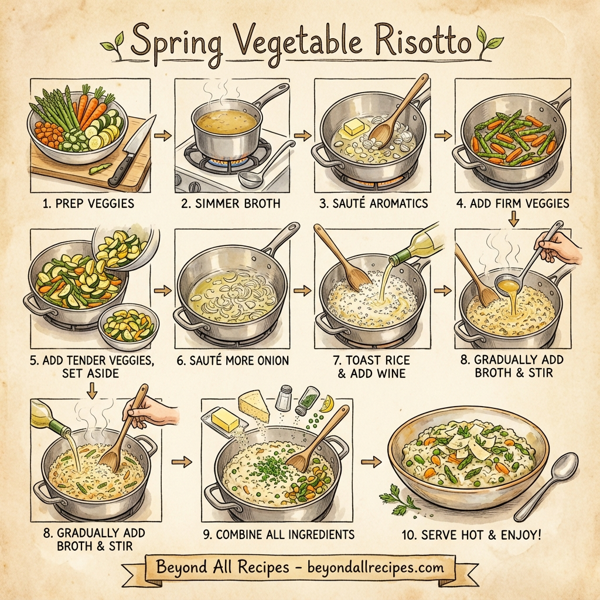
Before you begin, ensure all vegetables— asparagus, carrots, zucchini, and yellow squash— are washed and cut as directed. Set the prepared vegetables aside.
2
In a medium saucepan, bring the chicken broth and water to a gentle simmer; keep it warm over low heat for later use.
3
In a large saucepan, heat 1 tablespoon of olive oil and 1 tablespoon of butter over medium heat. Add 1/2 cup of minced onion and minced garlic, sautéing for about 3 minutes until softened and fragrant.
4
Incorporate the asparagus and carrots into the pan, cooking for an additional 2 minutes. Then, add the zucchini and yellow squash and cook until all vegetables are just tender, around 2 more minutes. Transfer the sautéed vegetables into a bowl and set aside.
5
In the same large saucepan, heat an additional 2 tablespoons of olive oil over medium heat. Add 1/2 cup more of minced onion and cook for another 3 minutes until soft and translucent.
6
Stir in the Arborio (or short-grain) rice, ensuring each grain is coated in oil, then pour in the dry white wine, cooking for 2 to 3 minutes until nearly absorbed.
7
Gradually add 3/4 cup of the reserved warm broth to the rice, cooking and stirring constantly until absorbed. Continue to add broth, 1/2 cup at a time, stirring until each addition is absorbed before adding more. This process should take about 20 minutes, and the rice should be creamy and al dente by the end.
8
Once the rice reaches the desired texture, stir in the remaining 2 tablespoons of butter, 2 tablespoons of Parmesan cheese, salt, pepper, chopped mint, grated lemon peel, peas, and the reserved sautéed vegetables.
9
Serve the risotto hot, garnished with additional Parmesan cheese and enjoy the burst of seasonal flavors!
Nutrition Information
Frequently Asked Questions
Frequently Asked Questions
What is Spring Vegetable Risotto?
Spring Vegetable Risotto is a creamy Italian rice dish made with Arborio rice and a variety of seasonal vegetables like asparagus, zucchini, and peas.
What type of rice is best for this risotto?
Arborio rice is the best choice because its high starch content creates the classic creamy texture, though other short-grain rices can also work.
Can I use long-grain rice instead of Arborio?
It is not recommended as long-grain rice lacks the necessary starch to produce the signature creamy consistency of a true risotto.
How do I prepare the asparagus for this dish?
The asparagus should be trimmed to remove woody ends and then cut into small 1/2-inch pieces.
What vegetables are included in this recipe?
This recipe features thin asparagus, medium carrots, large zucchini, yellow squash, and frozen peas.
Is this Spring Vegetable Risotto recipe vegetarian?
The recipe calls for chicken broth, but you can easily make it vegetarian by substituting it with an equal amount of vegetable broth.
Can I make this recipe vegan?
To make it vegan, use vegetable broth instead of chicken broth, replace the butter with olive oil or vegan butter, and omit the Parmesan cheese or use a vegan alternative.
How long does it take to cook the risotto rice?
The process of adding broth and stirring usually takes about 20 minutes until the rice reaches a creamy, al dente texture.
Why do I need to warm the broth before adding it to the rice?
Warm broth maintains a consistent cooking temperature; adding cold broth would shock the rice and slow down the cooking process.
How do I know when the risotto is finished?
The risotto is done when the rice is tender but still has a slight bite (al dente) and the overall texture is thick and creamy.
What does 'al dente' mean in the context of rice?
Al dente means the rice is cooked enough to be soft on the outside but still firm to the bite in the center.
Can I skip the dry white wine?
Yes, you can skip the wine, but it adds a layer of acidity that balances the richness of the dish. You can substitute it with a splash of lemon juice or extra broth.
What is a good substitute for white wine?
A good substitute is using a small amount of white wine vinegar or simply adding more broth with a squeeze of fresh lemon.
How should the carrots be cut for this recipe?
The carrots should be scraped and diced into small 1/4-inch pieces to ensure they cook through at the same rate as the other vegetables.
What role does the lemon peel play in the risotto?
Grated lemon peel provides a bright, citrusy finish that highlights the fresh flavors of the spring vegetables.
Can I use dried mint instead of fresh?
Fresh mint is preferred for its vibrant flavor, but if you use dried, reduce the amount to about one-third of the fresh measurement.
When are the frozen peas added to the dish?
The frozen peas are stirred in at the very end of the cooking process along with the butter, cheese, and other cooked vegetables.
How do I prevent the risotto from becoming mushy?
Avoid overcooking the rice and ensure you add the broth gradually, stirring constantly to release the starch without breaking down the grains.
Can I use vegetable broth instead of chicken broth?
Yes, vegetable broth is a perfect 1:1 substitute and will make the dish vegetarian-friendly.
How much total liquid is used in this recipe?
The recipe uses a total of 5 1/2 cups of liquid, consisting of 2 1/2 cups of chicken broth and 3 cups of water.
What is the best way to reheat leftover risotto?
Reheat it on the stovetop over low heat, adding a splash of broth or water to bring back the creamy consistency.
Can I add other spring vegetables like leeks?
Absolutely, leeks or even ramps would be a delicious addition to the aromatic base of onions and garlic.
Why is the butter added in two separate stages?
The first portion is used to sauté the aromatics, while the final portion is stirred in at the end to create a glossy, rich finish.
Do I need to peel the zucchini or yellow squash?
No, there is no need to peel them; the skin adds beautiful color and texture to the dish.
How should I store leftovers?
Store leftovers in an airtight container in the refrigerator for up to 3 to 4 days.
What can I serve with Spring Vegetable Risotto?
It serves well as a main dish or can be paired with grilled fish, roasted chicken, or a crisp green salad.
Can I use frozen vegetables instead of fresh?
While fresh vegetables provide the best texture, frozen vegetables can be used; just be aware they may require less cooking time.
Is this recipe gluten-free?
The recipe is naturally gluten-free since rice is the base, but always check your broth and cheese labels to ensure no gluten additives are present.
What type of pan is best for making risotto?
A large, heavy-bottomed saucepan or a wide, deep skillet is ideal for even heat distribution and easy stirring.
What is the most important tip for a successful risotto?
The most important tip is to have all your ingredients prepped ('mise en place') before you start, as the rice requires constant attention once you begin adding liquid.