Spicy Szechuan Stir-Fried Eggplant
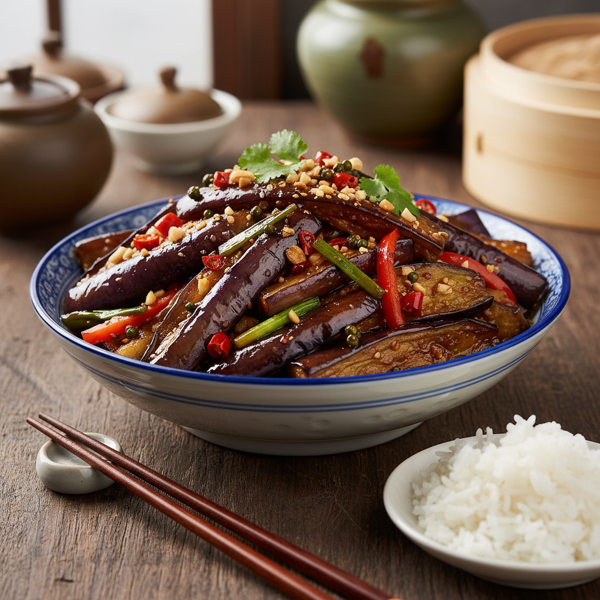
Indulge in the bold flavors of this Spicy Szechuan Stir-Fried Eggplant. The tender Japanese eggplants soak up a rich, spicy sauce that fuses soy sauce, brown sugar, and aromatic spices with a hint of heat. Each bite is an explosion of taste, complemented by crunchy water chestnuts and bright scallions. This dish pairs beautifully with steamed jasmine rice, making it a perfect choice for a vibrant vegetarian meal or a hearty side dish that will impress everyone at your dinner table.
4
Servings
N/A
Calories
13
Ingredients
Ingredients
Japanese eggplants
6 (cut into finger-sized strips)
soy sauce
1 1/2 tablespoons
brown sugar
1 tablespoon
chicken broth
1/4 cup
peanut oil
4 tablespoons
grated ginger
1 tablespoon
minced garlic
1 tablespoon
red pepper flakes
1/2-1 teaspoon
water chestnuts
1/4 cup (rinsed and chopped)
scallions
3-4 (finely chopped)
rice wine vinegar
1 1/2 tablespoons
dark sesame oil
1 tablespoon
toasted sesame seeds
1 tablespoon
Instructions
1
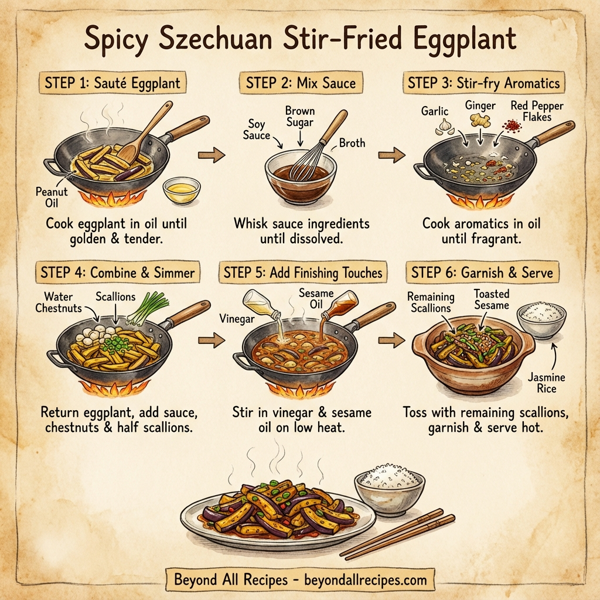
In a large deep skillet or wok, heat 2-3 tablespoons of peanut oil over medium-high heat. Add the eggplant strips and sauté, stirring frequently until they are golden brown and tender, about 5–7 minutes. If necessary, add a bit more oil or water to prevent sticking.
2
While the eggplant is cooking, combine the soy sauce, brown sugar, and chicken broth in a small bowl and mix until the sugar is fully dissolved. Set aside.
3
Once the eggplant is cooked, remove it from the skillet and keep it warm on a plate.
4
In the same skillet, add 1 tablespoon of peanut oil. Heat over medium heat, then add the minced garlic, grated ginger, and red pepper flakes. Stir-fry until fragrant, about 30 seconds.
5
Add the chopped water chestnuts and half of the scallions to the skillet, stirring to combine. Then, return the cooked eggplant to the skillet along with the soy sauce mixture.
6
Stir well and cook for another 3–5 minutes, allowing the eggplant to absorb the flavors of the sauce.
7
Reduce the heat to low, then add the rice wine vinegar and dark sesame oil. Stir to mix all ingredients evenly.
8
Finally, toss in the remaining chopped scallions and serve the dish hot on a platter, garnished with toasted sesame seeds.
Nutrition Information
Frequently Asked Questions
Frequently Asked Questions
What is Spicy Szechuan Stir-Fried Eggplant?
It is a bold and flavorful dish featuring tender Japanese eggplants, crunchy water chestnuts, and a spicy soy-based sauce infused with ginger and garlic.
What type of eggplant is best for this recipe?
Japanese eggplants are recommended because they are tender and soak up the spicy sauce effectively.
How should I slice the eggplant?
The eggplant should be cut into finger-sized strips to ensure even cooking and better sauce absorption.
Is this recipe spicy?
Yes, it contains red pepper flakes and Szechuan-inspired aromatics to provide a moderate level of heat.
How many servings does this recipe make?
This recipe is designed to serve 4 people.
What is the base of the stir-fry sauce?
The sauce is a mixture of soy sauce, brown sugar, and chicken broth.
Is this dish vegetarian?
The recipe is tagged as vegetarian, but note that it uses chicken broth; you should substitute vegetable broth to make it strictly vegetarian.
What oil is used for the stir-fry?
Peanut oil is used for sautéing the eggplant and aromatics.
How long does it take to cook the eggplant?
The initial sauté takes about 5 to 7 minutes, followed by another 3 to 5 minutes of simmering in the sauce.
What can I do if the eggplant sticks to the pan?
If sticking occurs, you can add a bit more peanut oil or a small amount of water to the skillet.
What are the main aromatics in this dish?
The primary aromatics are minced garlic, grated ginger, and red pepper flakes.
What ingredients provide the crunch?
Rinsed and chopped water chestnuts provide a pleasant crunch to the dish.
When should I add the sesame oil?
Dark sesame oil should be added at the end over low heat to maintain its aromatic flavor.
What is the role of rice wine vinegar?
Rice wine vinegar is added near the end of cooking to provide a bright, acidic balance to the rich sauce.
How many scallions are needed?
The recipe calls for 3 to 4 finely chopped scallions.
What is a recommended side dish for this eggplant?
It pairs beautifully with steamed jasmine rice.
How do I prepare the water chestnuts?
They should be rinsed and then chopped before being added to the skillet.
What should the eggplant look like when it is finished sautéing?
The eggplant strips should be golden brown and tender.
Can I adjust the level of heat?
Yes, you can adjust the amount of red pepper flakes between 1/2 and 1 teaspoon depending on your preference.
What is used as a garnish?
The dish is garnished with toasted sesame seeds and the remaining fresh scallions.
How many ingredients are in this recipe?
There are 13 total ingredients used in this recipe.
What is the purpose of brown sugar in the sauce?
Brown sugar balances the saltiness of the soy sauce and the heat of the pepper flakes.
Do I need a wok to make this?
While a wok is excellent, a large deep skillet also works perfectly for this stir-fry.
Is this recipe easy to make?
Yes, it is tagged as an easy-to-make dish that is suitable for a quick meal.
How much ginger is required?
The recipe requires 1 tablespoon of grated ginger.
When do I add the scallions?
Half of the scallions are stirred in with the water chestnuts, and the other half are tossed in at the very end.
What category does this recipe belong to?
This recipe is categorized under Vegetable dishes.
Should the sesame seeds be toasted?
Yes, the recipe specifies using toasted sesame seeds for the best flavor.
How much garlic is used?
One tablespoon of minced garlic is used to flavor the stir-fry.
What is the final step of the cooking process?
The final step is to toss in the remaining scallions and serve the dish hot, garnished with sesame seeds.