Spicy Ssamjang Dipping Sauce for Grilled Pork Belly

Elevate your Korean BBQ experience with this rich, flavorful Ssamjang dipping sauce, perfectly crafted for enjoying with Samgyeopsal—the beloved grilled pork belly. This versatile condiment combines the deep umami of Korean soybean paste (Doenjang) with the spicy-sweet notes of Gochuchang and a hint of sesame oil. Ideal for wrapping in crisp lettuce with a slice of pork belly and a spoonful of rice, this Ssamjang is sure to impress at your next gathering. Encourage your guests to personalize their wraps, making this dish both interactive and delicious!
N/A
Servings
N/A
Calories
11
Ingredients
Ingredients
Korean red pepper paste (Gochuchang)
2 tablespoons
Sugar
1 1/2 tablespoons
Korean soybean paste (Doenjang)
1 tablespoon
Sesame oil
1/8 teaspoon
Water
1 tablespoon
Garlic cloves
3 (peeled)
Onion
1 small (roughly chopped)
Korean green pepper (or Anaheim pepper)
1 whole
Korean red pepper flakes (Gochugaru)
1 tablespoon
Soy sauce
4 tablespoons
Salt and pepper
1 pinch
Instructions
1
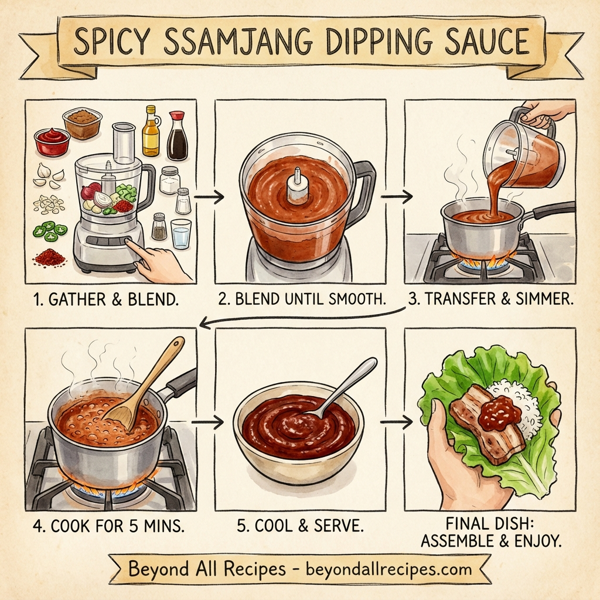
Gather all the ingredients in a food processor.
2
Add the Korean red pepper paste (Gochuchang), sugar, soybean paste (Doenjang), sesame oil, water, garlic cloves, chopped onion, Korean green pepper, red pepper flakes (Gochugaru), soy sauce, and a pinch of salt and pepper to the processor.
3
Pulse the mixture until it begins to combine, then blend continuously until the sauce is smooth and well incorporated.
4
Transfer the Ssamjang sauce into a small pot and place it over medium heat.
5
Bring the sauce to a simmer and allow it to cook for about five minutes, stirring occasionally, until the flavors meld beautifully.
6
Remove from heat and let the sauce cool slightly before serving.
7
To enjoy, take a fresh lettuce leaf, add a slice of grilled Samgyeopsal, top it with a spoonful of rice, and drizzle generously with the homemade Ssamjang. Roll it up and savor the delightful explosion of flavors!
Nutrition Information
Frequently Asked Questions
Frequently Asked Questions
What is Ssamjang?
Ssamjang is a thick, spicy paste used in Korean cuisine as a dipping sauce for wraps, typically served with grilled meats.
What is the primary use for this specific Ssamjang recipe?
This recipe is specifically crafted to elevate the experience of eating Samgyeopsal, which is grilled pork belly.
What are the two main fermented pastes used in Ssamjang?
The sauce combines Korean soybean paste (Doenjang) and Korean red pepper paste (Gochujang).
How do I achieve a smooth consistency for the sauce?
Pulse the ingredients in a food processor until they begin to combine, then blend continuously until smooth.
Do I need to cook the Ssamjang sauce?
Yes, after blending, the sauce should be simmered in a small pot for about five minutes to help the flavors meld.
What type of pepper can I use if I cannot find Korean green peppers?
An Anaheim pepper is a suitable substitute for a Korean green pepper in this recipe.
How much Gochujang is required?
The recipe calls for 2 tablespoons of Korean red pepper paste (Gochujang).
What is Gochugaru and how much is used?
Gochugaru is Korean red pepper flakes, and this recipe uses 1 tablespoon.
Is sesame oil included in the ingredients?
Yes, 1/8 teaspoon of sesame oil is added to provide a hint of toasted flavor.
How do I prepare the garlic for this recipe?
You should use 3 garlic cloves that have been peeled before processing.
What is the role of sugar in this Ssamjang?
The 1.5 tablespoons of sugar help balance the spicy and salty notes of the fermented pastes.
How should the onion be prepared?
One small onion should be roughly chopped before being added to the food processor.
What is the serving suggestion for Samgyeopsal?
Take a fresh lettuce leaf, add a slice of grilled pork belly, a spoonful of rice, and a generous drizzle of Ssamjang.
Does this sauce contain soy sauce?
Yes, the recipe includes 4 tablespoons of soy sauce.
How long should I simmer the sauce?
The sauce should be simmered over medium heat for approximately five minutes.
Why is water added to the sauce?
One tablespoon of water is added to help the ingredients blend together into the proper consistency.
Should the sauce be served hot?
The instructions recommend removing the sauce from the heat and letting it cool slightly before serving.
What makes this sauce umami-rich?
The combination of Doenjang (soybean paste) and soy sauce provides a deep umami profile.
Can I make this sauce without a food processor?
While a processor ensures a smooth texture, you could finely mince the onion, garlic, and pepper by hand for a chunkier version.
What tags are associated with this recipe?
Tags include korean, ssamjang, samgyeopsal, dipping sauce, spicy, grilled pork belly, and condiment.
Is this recipe suitable for a BBQ?
Yes, it is an ideal condiment for Korean BBQ gatherings.
What is the total number of ingredients needed?
There are 11 distinct ingredients required for this spicy Ssamjang.
Can I adjust the spiciness?
Yes, you can adjust the amount of Gochujang, Gochugaru, or the green pepper to suit your heat preference.
How is the flavor profile described?
It is described as rich and flavorful, combining deep umami with spicy-sweet notes.
What kind of lettuce is best for the wraps?
Crisp lettuce leaves are recommended to provide a refreshing contrast to the rich pork and sauce.
Should I stir the sauce while it simmers?
Yes, you should stir the sauce occasionally while it simmers to prevent sticking and ensure even cooking.
Is salt and pepper used in this recipe?
Yes, a pinch of salt and pepper is added to the food processor during the blending stage.
What is the texture of the finished sauce?
The finished sauce is smooth and well incorporated after being blended and simmered.
Is this sauce interactive for guests?
Yes, guests can personalize their own wraps at the table, making the dining experience interactive.
What is the literal meaning of 'Ssam'?
While not explicitly in the text, Ssam refers to the 'wrap' style of eating where ingredients are bundled in a leaf.