Spicy Kung Pao Shrimp with Crunchy Vegetables
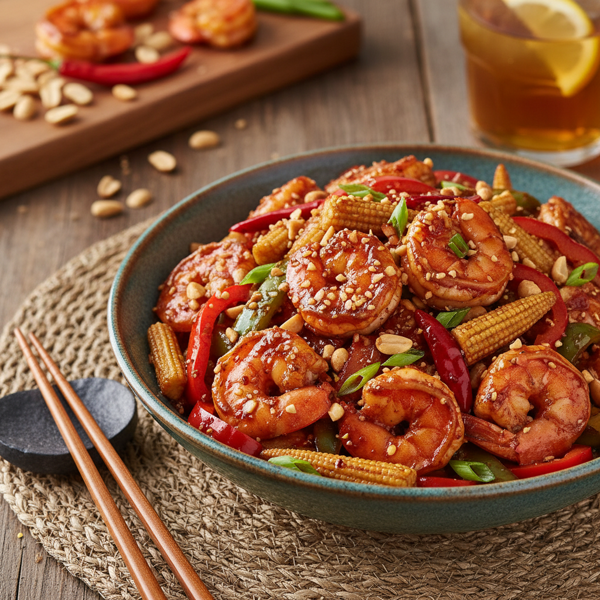
This vibrant dish brings together succulent prawns and a medley of colorful vegetables, all brought to life with a spicy and tangy Kung Pao sauce. Perfectly balanced with the crunch of roasted peanuts and the aromatic touch of sesame oil, this recipe is a delightful fusion of textures and flavors. Feel free to adjust the heat level to your taste by varying the amount of dried chilies and chili oil. Serve it over fluffy long-grain rice to soak up the delicious sauce and create a meal that's sure to impress family and friends.
N/A
Servings
N/A
Calories
17
Ingredients
Ingredients
long-grain white rice
2 cups (cooked according to package directions)
vegetable oil
1 tablespoon (for cooking)
medium prawns
2 lbs (peeled and deveined)
garlic cloves
2 (minced)
dried red chilies (such as arbol)
3 small (whole)
chili oil
1-2 teaspoons (to taste)
soy sauce
2 tablespoons (for flavoring)
sugar
1/2 teaspoon (for sweetness)
distilled white vinegar
1 teaspoon (for acidity)
dried roasted peanuts
1/2 cup (for crunch)
carrot
1 medium (peeled and thinly sliced on the diagonal)
celery
1 stalk (thinly sliced on the diagonal)
chicken broth
1/2 cup (for sauce)
cornstarch
1 teaspoon (for thickening)
sesame oil
2 teaspoons (for flavor)
salt
to taste
green onions
3 (thinly sliced, for garnish)
Instructions
1
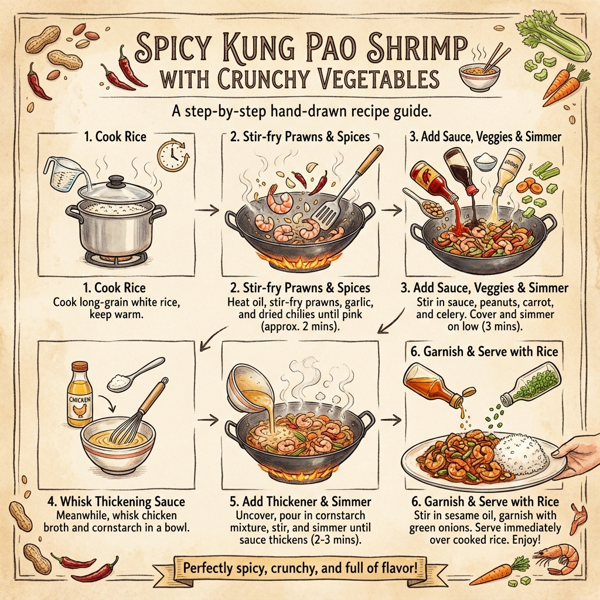
Begin by cooking the long-grain white rice according to the package instructions. Once cooked, keep it warm and set aside.
2
In a large wok or deep skillet, heat the vegetable oil over high heat until shimmering. Carefully add the prawns, minced garlic, and dried red chilies into the hot oil and stir-fry for about 2 minutes, or until the prawns are pink and cooked through.
3
Stir in the chili oil, soy sauce, sugar, and vinegar, mixing well to coat the prawns evenly. Then add the roasted peanuts, sliced carrot, and celery, tossing to combine. Reduce the heat to low, cover, and let it cook for an additional 3 minutes to allow the vegetables to soften slightly.
4
While the prawns and vegetables are cooking, prepare the thickening sauce by whisking together the chicken broth and cornstarch in a small bowl until smooth.
5
After 3 minutes, uncover the wok and pour in the cornstarch mixture, stirring thoroughly. Increase the heat to bring the sauce to a simmer and cook for an additional 2 to 3 minutes or until the sauce has thickened to your desired consistency.
6
Finish by stirring in the sesame oil, and season the dish with salt to taste. Remove from heat.
7
Garnish with thinly sliced green onions before serving. Plate the Kung Pao shrimp alongside a generous portion of the cooked rice, and enjoy!
Nutrition Information
Frequently Asked Questions
Frequently Asked Questions
What is Spicy Kung Pao Shrimp?
It is a vibrant stir-fry dish featuring succulent prawns and colorful vegetables in a spicy and tangy Kung Pao sauce, served over fluffy rice.
How do I prepare the prawns for this recipe?
The prawns should be peeled and deveined before you begin cooking.
What kind of rice is best for this dish?
Long-grain white rice is recommended as it creates a fluffy base that effectively soaks up the Kung Pao sauce.
How can I adjust the heat level of the Kung Pao shrimp?
You can adjust the spiciness by varying the amount of dried red chilies and chili oil used in the recipe.
What vegetables are included in this recipe?
The recipe features a medley of crunchy vegetables including medium carrots and celery stalks.
What ingredients make up the Kung Pao sauce?
The sauce is composed of chili oil, soy sauce, sugar, distilled white vinegar, and chicken broth thickened with cornstarch.
How long does it take to cook the prawns?
Prawns should be stir-fried over high heat for approximately 2 minutes until they are pink and cooked through.
Why is cornstarch used in this recipe?
Cornstarch is mixed with chicken broth to create a slurry that thickens the sauce to the desired consistency.
What provides the signature crunch in this dish?
The crunch comes from the addition of dried roasted peanuts along with the carrot and celery.
When should I add the sesame oil?
Sesame oil is stirred in at the very end of the cooking process to preserve its aromatic flavor.
What type of dried chilies are recommended?
Small dried red chilies, such as Arbol chilies, are ideal for adding heat and flavor.
How should the carrots and celery be sliced?
They should be thinly sliced on the diagonal to ensure they cook quickly while remaining crunchy.
How many garlic cloves are needed?
The recipe calls for 2 minced garlic cloves for aromatic depth.
Is this recipe considered a quick meal?
Yes, it is categorized as a quick meal and a stir-fry, making it suitable for a fast and flavorful dinner.
What is the purpose of the distilled white vinegar?
The vinegar adds necessary acidity to balance the spicy and savory notes of the sauce.
Can I use frozen prawns?
Yes, but ensure they are completely thawed, peeled, and deveined before stir-frying.
How do I garnish the final dish?
Garnish with thinly sliced green onions before serving for a fresh finish.
Why is the wok covered for 3 minutes during cooking?
Covering the wok on low heat allows the vegetables to soften slightly while retaining their bright color.
What should the consistency of the sauce be?
The sauce should be simmered until it is thickened enough to coat the prawns and vegetables evenly.
Is there sugar in this recipe?
Yes, a small amount (1/2 teaspoon) of sugar is used to provide a hint of sweetness and balance the acidity.
What oil is used for the high-heat stir-fry?
Vegetable oil is used because it has a high smoke point suitable for searing the prawns.
Can I use pre-cooked rice?
Yes, you can use pre-cooked rice; simply ensure it is warmed through before serving the shrimp over it.
How much shrimp do I need for this recipe?
The recipe specifies 2 pounds of medium prawns.
What is the role of soy sauce in this dish?
Soy sauce provides the primary savory, salty flavor profile for the Kung Pao sauce.
How do I prepare the thickening slurry?
Whisk together 1/2 cup of chicken broth and 1 teaspoon of cornstarch in a small bowl until smooth.
Should the chilies be left whole or chopped?
The recipe calls for 3 small dried red chilies to be added whole during the initial stir-fry.
When do I add the peanuts?
Add the roasted peanuts along with the soy sauce, vinegar, and sliced vegetables after the prawns have been seared.
What tags are associated with this recipe?
Tags include asian, spicy, shrimp, prawns, vegetables, kung pao, quick meal, and stir-fry.
How do I ensure the oil is hot enough?
Heat the vegetable oil over high heat until it is shimmering before adding the prawns and garlic.
Is salt added during the cooking process?
Salt is added at the very end to taste, after the sauce has thickened and the heat is removed.