Spicy Korean Kimchi Stew (Kimchi Jjigae)

Experience the bold flavors of Korean cuisine with this delightful Spicy Korean Kimchi Stew, also known as Kimchi Jjigae. This hearty dish combines tender pork belly, traditional napa cabbage kimchi, and silky tofu in a rich, savory broth. Perfect for any meal, Kimchi Jjigae is not only a comforting one-pot wonder but also an excellent way to utilize your homemade kimchi. Serve this dish with steamed rice and a selection of Korean side dishes for a truly authentic experience.
N/A
Servings
N/A
Calories
11
Ingredients
Ingredients
Pork belly
1 ounce (sliced)
Ground black pepper
1 teaspoon
Salt
1 teaspoon
Cabbage kimchi
1 cup (homemade or store-bought)
Smashed garlic
1/2 teaspoon
Korean rice cakes (ddeok)
4 slices (oval disc-shaped)
Granulated sugar
1 teaspoon
Soft or medium firm tofu
5 slices
Scallion
to taste (cut into 2-inch pieces for garnish)
Steamed rice
for serving
Korean side dishes
for serving (such as kimchi, cucumber kimchi, daikon radish kimchi, bean sprouts, watercress)
Instructions
1
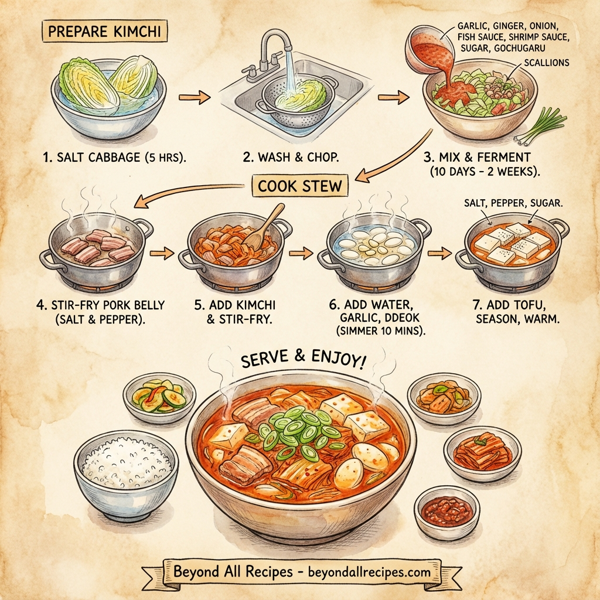
Begin by preparing your kimchi in advance. To make kimchi, start by dissolving coarse salt in a large bowl of water. Immerse the quartered napa cabbage and sprinkle fine salt between the leaves. Let it rest for at least 5 hours.
2
After soaking, wash the napa cabbage three times with fresh water, then drain and chop it into small pieces. Place the cabbage in a large bowl.
3
Blend the garlic, ginger, and onion into a loose puree. Mix this puree with fish sauce, shrimp sauce, granulated sugar, and Korean red chili paste to your preferred spice level. Pour this sauce over the chopped cabbage and fold in the chopped scallions. Transfer the mixture to a nonreactive container and let it ferment in the refrigerator for 10 days to 2 weeks.
4
For the stew, heat a small heavy pot over medium-high heat. Add the sliced pork belly, sprinkle with black pepper and salt, and stir occasionally until the pork is nearly cooked through and fat is rendered.
5
Add the prepared kimchi to the pot and stir-fry together with the pork for a few minutes to combine the flavors.
6
Pour in 2 cups of water and add the smashed garlic. Bring the mixture to a boil, then gently add the oval rice cakes (ddeok) and allow it to simmer for about 10 minutes.
7
After simmering, season the stew with the remaining black pepper, salt, and sugar. Carefully place the tofu slices on top and let them warm through in the hot broth.
8
Garnish with fresh scallions before serving. Enjoy your Kimchi Jjigae hot with a bowl of steamed rice and a variety of Korean side dishes, such as various kimchis and pickled vegetables.
Nutrition Information
Frequently Asked Questions
Frequently Asked Questions
What is Kimchi Jjigae?
Kimchi Jjigae is a Spicy Korean Kimchi Stew, a hearty dish that combines tender pork belly, napa cabbage kimchi, and tofu in a savory broth.
What protein is primarily used in this stew?
The recipe uses sliced pork belly, which is seasoned with salt and black pepper and cooked until the fat is rendered.
How is the napa cabbage prepared for kimchi?
The napa cabbage is quartered, immersed in a coarse salt water solution, and sprinkled with fine salt to rest for at least 5 hours.
How many times should the cabbage be washed after soaking?
After soaking in salt, the cabbage should be washed three times with fresh water before being chopped.
What ingredients are in the kimchi spice paste?
The paste consists of a puree of garlic, ginger, and onion mixed with fish sauce, shrimp sauce, sugar, and Korean red chili paste.
How long does the kimchi need to ferment?
For the best flavor, the kimchi mixture should ferment in a nonreactive container in the refrigerator for 10 days to 2 weeks.
Can I use store-bought kimchi?
Yes, the recipe specifically mentions that you can use either homemade or store-bought cabbage kimchi.
How do you start cooking the stew?
Start by heating a small heavy pot over medium-high heat and frying the sliced pork belly with salt and pepper until nearly cooked through.
At what point do you add the kimchi to the pot?
Add the kimchi to the pot after the pork belly fat has rendered and stir-fry them together for a few minutes.
How much water is added to the stew?
The recipe calls for 2 cups of water to be added after stir-frying the pork and kimchi.
What kind of garlic is added during the simmering phase?
A half-teaspoon of smashed garlic is added to the broth once it is brought to a boil.
What are the oval rice cakes called?
The oval, disc-shaped Korean rice cakes are known as ddeok.
How long should the stew simmer once the rice cakes are added?
The stew should simmer for approximately 10 minutes after adding the rice cakes.
What types of tofu are suitable for this dish?
The recipe recommends using either soft or medium firm tofu sliced into 5 pieces.
When is the tofu added to the recipe?
Tofu is placed on top of the stew after simmering is complete, allowing it to warm through in the hot broth.
What is used as a garnish for the finished stew?
The stew is garnished with fresh scallions before serving.
How should the scallions be prepared?
The scallions should be cut into 2-inch pieces for use as a garnish.
What should be served with Spicy Korean Kimchi Stew?
It is traditionally served hot with a bowl of steamed rice and various Korean side dishes.
What are some examples of Korean side dishes to serve?
Recommended side dishes include various kimchis, cucumber kimchi, daikon radish kimchi, bean sprouts, or watercress.
Is sugar used in the stew?
Yes, sugar is used both in the kimchi fermentation paste and as a final seasoning for the stew to balance the flavors.
Is this recipe spicy?
Yes, the stew is spicy as it uses Korean red chili paste, which can be adjusted to your preferred heat level.
Why is a heavy pot recommended?
A heavy pot helps maintain even heat when rendering the pork fat and simmering the stew.
What is the serving size for this recipe?
While specific servings are not listed, the recipe uses 1 ounce of pork, 1 cup of kimchi, and 5 slices of tofu, typically suitable for a small meal or individual serving.
What flavor profile can I expect?
The dish offers a bold, savory, and spicy flavor profile with rich notes from the fermented kimchi and rendered pork fat.
Can I make this dish if I don't have homemade kimchi ready?
Yes, you can use store-bought cabbage kimchi to save time on the 10-14 day fermentation process.
Is Kimchi Jjigae considered comfort food?
Yes, it is described as a comforting one-pot wonder and a staple of Korean cuisine.
What type of container should be used for fermentation?
A nonreactive container should be used to prevent chemical reactions with the acidic kimchi during the fermentation process.
How do you season the stew at the end?
The stew is seasoned with the remaining black pepper, salt, and sugar after the 10-minute simmer.
What is the role of the rice cakes in the stew?
The rice cakes add a chewy texture and help thicken the broth slightly during the simmering process.
Is the pork belly seasoned before cooking?
Yes, the pork belly is sprinkled with black pepper and salt immediately after being added to the hot pot.