Spicy Fermented Napa Cabbage Kimchi
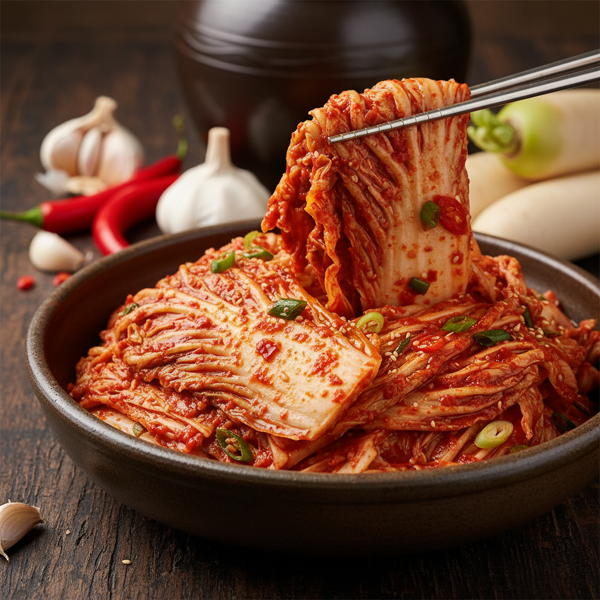
This Spicy Fermented Napa Cabbage Kimchi is a delightful blend of traditional flavors and techniques, inspired by authentic Korean recipes. Featuring Chinese cabbage (Napa), this kimchi captures the essence of Korean culinary heritage, perfectly balancing heat and tanginess. It’s easy to prepare at home and can be fermented in just a few days! The inclusion of fresh ginger and scallions amplifies its flavor profile, while the fermentation process preserves the vegetables, creating a deliciously probiotic condiment that can enhance a variety of dishes. Enjoy it as a side, in salads, or as a tangy topping on rice and noodles. With simple ingredients and straightforward steps, this recipe invites you into the world of Korean ferments, offering a burst of umami that’s hard to forget!
N/A
Servings
40
Calories
9
Ingredients
Ingredients
Pickling salt
3 tablespoons (Dissolved in water)
Pickling salt
1 teaspoon (For mixing with other ingredients)
Water
6 cups (Used for brining)
Chinese cabbage (Napa)
2 lbs (Cut into 2-inch squares)
Scallions
6 (Cut into 2-inch lengths and then slivered)
Fresh ginger
1 1/2 tablespoons (Minced)
Korean red pepper powder
2 tablespoons (Use as desired)
Crushed red pepper flakes
1 1/2 tablespoons (Use as a substitute if needed)
Sugar
1 teaspoon (For balancing flavors)
Instructions
1
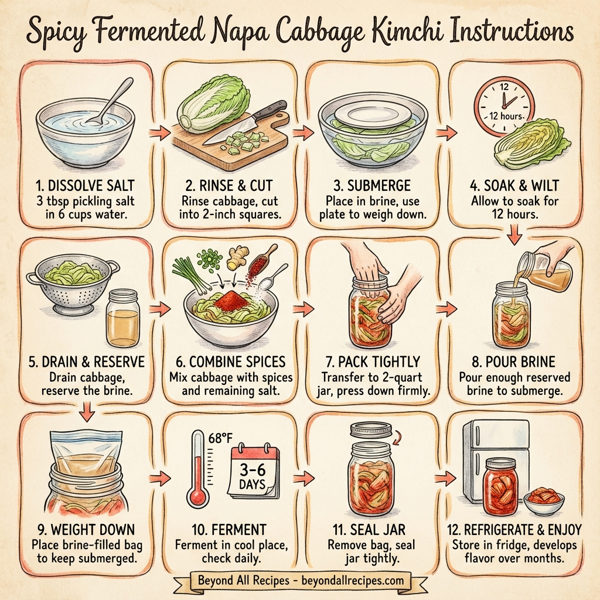
In a large bowl, dissolve 3 tablespoons of pickling salt in 6 cups of water to create a brine.
2
Rinse the Napa cabbage and cut it into 2-inch squares, ensuring even sizes for uniform fermentation.
3
Place the cabbage in the bowl with the brine and ensure it is fully submerged. Use a plate to weigh it down if necessary.
4
Allow the cabbage to soak in the brine for 12 hours, letting it wilt and absorb the salt.
5
After the soaking period, drain the cabbage, reserving the brine for later use.
6
In a clean bowl, combine the drained cabbage with the slivered scallions, minced ginger, Korean red pepper powder, crushed red pepper flakes, and 1 teaspoon of pickling salt. Mix well until the cabbage is thoroughly coated with the spices.
7
Transfer the cabbage mixture into a 2-quart jar, pressing it down firmly to eliminate air pockets.
8
Pour enough of the reserved brine over the cabbage to completely submerge it.
9
To keep the cabbage submerged, place a freezer bag inside the jar's opening, then fill the bag with the remaining brine and securely seal it.
10
Allow the kimchi to ferment in a cool location (ideally below 68°F or 20°C) for 3 to 6 days, depending on how sour you prefer it. Check daily and taste for the desired flavor.
11
Once done, remove the brine-filled bag and seal the jar tightly with a lid.
12
Store the kimchi in the refrigerator, where it will continue to develop flavor and can last for several months.
Nutrition Information
0.5g
Fat
8g
Carbs
1g
Protein
2g
Fiber
Frequently Asked Questions
Frequently Asked Questions
What is Spicy Fermented Napa Cabbage Kimchi?
It is a traditional Korean-inspired condiment made from fermented Napa cabbage, spices, ginger, and scallions, known for its probiotic benefits and umami flavor.
What type of cabbage is used in this recipe?
This recipe uses 2 pounds of Chinese cabbage, specifically Napa cabbage.
How long should the cabbage soak in the brine?
The cabbage needs to soak in the brine for 12 hours to wilt and absorb the salt properly.
How do I make the initial brine?
Dissolve 3 tablespoons of pickling salt in 6 cups of water in a large bowl.
What size should I cut the cabbage?
The Napa cabbage should be cut into 2-inch squares to ensure uniform fermentation.
Do I throw away the brine after soaking?
No, you should drain the cabbage but reserve the brine to use later for submerging the kimchi in the jar.
What spices are included in the kimchi mixture?
The mixture includes Korean red pepper powder, crushed red pepper flakes, minced fresh ginger, slivered scallions, and pickling salt.
How many scallions are needed and how are they prepared?
You need 6 scallions, cut into 2-inch lengths and then slivered.
Can I substitute the Korean red pepper powder?
The recipe suggests crushed red pepper flakes can be used as a substitute if needed.
Why is sugar added to the recipe?
One teaspoon of sugar is used to help balance the flavors of the kimchi.
How should I pack the cabbage into the jar?
Transfer the mixture into a 2-quart jar and press it down firmly to eliminate any air pockets.
What is the best way to keep the cabbage submerged in the jar?
Place a freezer bag inside the jar's opening, fill it with the remaining brine, and seal it to act as a weight.
At what temperature should the kimchi ferment?
It should ferment in a cool location, ideally below 68°F (20°C).
How many days does the fermentation process take?
Fermentation usually takes between 3 to 6 days, depending on your preference for sourness.
How do I know when the kimchi is ready?
Check the kimchi daily and taste it; once it reaches your desired flavor and sourness, it is ready.
How should the kimchi be stored once fermentation is complete?
Remove the brine bag, seal the jar tightly with a lid, and store it in the refrigerator.
How long does homemade kimchi last in the refrigerator?
Stored in the refrigerator, the kimchi will continue to develop flavor and can last for several months.
What is the calorie count for this kimchi?
One serving of this kimchi contains approximately 40 calories.
What are the nutritional facts regarding fat and protein?
This recipe contains 0.5g of fat and 1g of protein per serving.
Does this kimchi contain fiber?
Yes, there are 2 grams of fiber per serving.
What are the total carbohydrates in a serving?
There are 8 grams of carbohydrates per serving.
How much ginger is required?
The recipe calls for 1.5 tablespoons of minced fresh ginger.
Is this recipe suitable for vegetarians?
Yes, based on the ingredients provided, this is a vegetable-based probiotic dish suitable for vegetarians.
What are some ways to serve this kimchi?
It can be enjoyed as a side dish, mixed into salads, or used as a tangy topping for rice and noodles.
What type of salt should I use?
Pickling salt is recommended for both the brine and the spice mix.
How many total ingredients are in this recipe?
There are 9 ingredients in total used to make this kimchi.
Should the cabbage be rinsed?
Yes, the Napa cabbage should be rinsed before being cut into squares.
What size jar is needed for this recipe?
A 2-quart jar is required to hold the cabbage mixture.
Does the kimchi stay the same once refrigerated?
No, it will continue to slowly develop flavor even while stored in the refrigerator.
Is the brine used for anything else?
The reserved brine is used to submerge the cabbage in the jar and to fill the freezer bag used as a weight.