Spicy Fermented Korean Kimchi
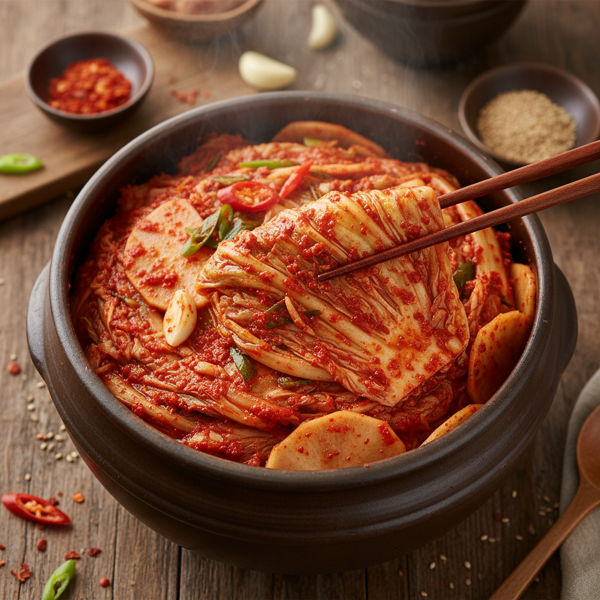
This traditional Korean Kimchi recipe has been passed down from generations, originating from a recipe my dad learned from a local Korean lady during his time in Korea nearly three decades ago. This dish brings together the crunch of fresh cabbage, the zing of garlic, and the distinctive umami flavor of fermented vegetables. While my mom prefers to crank up the heat by adding extra red pepper flakes, this version strikes the perfect balance for those who enjoy a milder taste. It's a great accompaniment to any meal and an essential side dish in Korean cuisine, known not only for its unique flavor but also for its myriad health benefits, including probiotics and vitamins.
N/A
Servings
N/A
Calories
5
Ingredients

Ingredients
Cabbage
1 head (Chopped or sliced into bite-sized pieces)
Red pepper flakes
1/4 teaspoon (For seasoning)
Salt
1/2 cup (For brining)
Garlic cloves
3 (Chopped)
Water
2 cups (plus additional as needed) (For soaking and mixing)
Instructions
1
Begin by chopping or slicing the head of cabbage into bite-sized pieces.
2
Place the chopped cabbage into a large mixing bowl.
3
In a separate container, mix salt into about 2 cups of water, stirring until the salt dissolves completely.
4
Pour the saltwater solution over the cabbage, adding more water as needed to completely submerge the cabbage.
5
Let the cabbage soak in the saltwater for 24 to 48 hours, allowing it to become tender and begin the fermentation process.
6
Once the cabbage has soaked, drain and rinse it under cold water to remove excess salt.
7
In a new bowl, combine 1 cup of water with the chopped garlic and red pepper flakes, mixing well.
8
Add the drained and rinsed cabbage to this mixture, ensuring all pieces are coated evenly.
9
Cover the mixture and allow it to sit at room temperature for an additional 48 hours to continue fermenting.
10
Once fermented to your liking, transfer the kimchi to an airtight container and refrigerate. It can be enjoyed immediately, but the flavors deepen with time.
Nutrition Information
Frequently Asked Questions
Frequently Asked Questions
What is Spicy Fermented Korean Kimchi?
It is a traditional Korean side dish made from fermented vegetables, specifically cabbage, known for its crunch and umami flavor.
Where does this specific recipe originate?
This recipe was learned from a local Korean lady nearly three decades ago and has been passed down through the family.
What are the primary flavor components of this kimchi?
The dish combines the crunch of fresh cabbage with the zing of garlic and a distinctive umami flavor from fermentation.
How spicy is this version of the recipe?
This version strikes a perfect balance for those who enjoy a milder taste, though it can be made hotter by adding more red pepper flakes.
What are the health benefits of eating kimchi?
Kimchi is known for various health benefits, including providing essential vitamins and probiotics.
How many ingredients are needed for this recipe?
There are five main ingredients: cabbage, red pepper flakes, salt, garlic, and water.
How should the cabbage be prepared?
The head of cabbage should be chopped or sliced into bite-sized pieces.
How is the saltwater solution for brining made?
Mix 1/2 cup of salt into approximately 2 cups of water and stir until the salt is completely dissolved.
How long should the cabbage soak in the saltwater?
The cabbage needs to soak for 24 to 48 hours to become tender and begin fermentation.
Why must the cabbage be submerged in the brine?
Complete submersion ensures the cabbage softens evenly and begins the fermentation process properly.
What is the next step after the cabbage has finished soaking?
The cabbage should be drained and rinsed under cold water to remove any excess salt.
How much garlic is used in this kimchi recipe?
The recipe calls for 3 chopped garlic cloves.
How much red pepper flakes should be used for a mild flavor?
For a milder seasoning, use 1/4 teaspoon of red pepper flakes.
How do you prepare the seasoning mixture?
Combine 1 cup of water with the chopped garlic and red pepper flakes in a new bowl and mix well.
How do you ensure the cabbage is properly seasoned?
Add the rinsed cabbage to the seasoning mixture and ensure every piece is coated evenly.
How long is the second fermentation period?
The mixture should sit covered at room temperature for an additional 48 hours.
Where should the kimchi be stored after the second fermentation?
Once fermented to your liking, transfer the kimchi to an airtight container and store it in the refrigerator.
Can I eat the kimchi as soon as it is finished mixing?
Yes, it can be enjoyed immediately, although the flavors will continue to deepen over time.
Is this kimchi recipe suitable for vegetarians?
Yes, this recipe is tagged as vegetarian and contains no meat or fish products.
What role does salt play in this recipe?
Salt is used for brining the cabbage to draw out moisture and facilitate the fermentation process.
What is the total preparation and fermentation time?
The total process takes between 4 to 6 days depending on how long you choose to soak and ferment the vegetables.
Can I use more garlic if I want a stronger taste?
While the recipe calls for 3 cloves, you can adjust the garlic to suit your personal flavor preference.
What gives kimchi its 'zing'?
The combination of garlic and the natural fermentation process gives the kimchi its characteristic zing.
Why is an airtight container recommended for storage?
An airtight container helps preserve the flavor and prevents the strong aroma of the kimchi from affecting other foods in the fridge.
Is kimchi considered a main dish?
No, it is primarily considered an essential side dish in Korean cuisine.
What kind of water should be used for the brine?
Standard water is used, with additional amounts added as needed to fully submerge the cabbage.
Does the recipe require any special equipment?
You only need basic kitchen items like mixing bowls, a container for soaking, and an airtight storage container.
Is this recipe considered traditional?
Yes, it is described as a traditional recipe passed down through generations.
What happens to the flavor of kimchi as it ages?
The flavors deepen and become more complex over time as it continues to sit in the refrigerator.
Why is the cabbage rinsed under cold water?
Rinsing removes the excess salt from the brining stage so the final dish is not overly salty.