Spicy Bicolano Pork in Coconut Milk

A delectable dish from the Bicol region of the Philippines, Spicy Bicolano Pork in Coconut Milk celebrates the bold flavors and spicy essence of Filipino cuisine. This culinary adventure features tender pieces of pork simmered in rich coconut milk, infused with vibrant green chili and fermented shrimp paste for a unique umami kick. Originating from the scenic route between Manila and Bicol, this dish is not only filling but also showcases the region's love for heat and flavor. Ideal for the adventurous eater, this meal pairs excellently with steamed rice and is sure to bring a taste of the Philippines to your table. For the best results, seek out ingredients at local Filipino or Asian markets.
N/A
Servings
N/A
Calories
8
Ingredients
Ingredients
Elongated green chili
1/2 kg (Julienned (you can use serrano or habanero as a milder substitute))
Shrimp paste
200 g ((Filipino version recommended; avoid Thai shrimp paste))
Garlic
4 cloves (Minced)
Onion
1 whole (Chopped)
Pork
1/2 kg (Cut into small pieces)
Plum tomato
1/2 kg (Chopped)
Vegetable oil
4 tablespoons (For sautéing)
Thick coconut milk
1 cup ((avoid light versions for better flavor))
Instructions
1
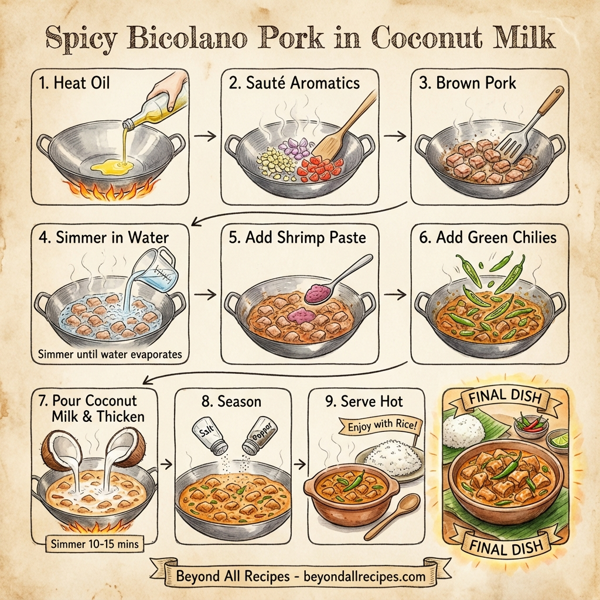
In a large pan or wok, heat the vegetable oil over medium heat.
2
Add the minced garlic, chopped onion, and chopped tomatoes. Sauté until the onion becomes translucent and fragrant.
3
Introduce the pork pieces to the pan and cook for about 2 minutes, stirring occasionally until the pork becomes slightly browned.
4
Pour in 1/2 cup of water and bring the mixture to a boil. Allow it to simmer until the water has mostly evaporated and the pork is thoroughly cooked.
5
Stir in the shrimp paste and mix well, allowing the flavors to meld.
6
Add the julienned green chilies to the pan and stir to combine.
7
Pour in the thick coconut milk and stir continuously. Reduce the heat to low and let it simmer until the mixture thickens and becomes less saucy, about 10-15 minutes.
8
Season with salt and pepper to taste.
9
Serve hot over steamed rice for a truly satisfying meal.
Nutrition Information
Frequently Asked Questions
Frequently Asked Questions
What is Spicy Bicolano Pork in Coconut Milk?
It is a delectable Filipino dish from the Bicol region featuring tender pork simmered in rich coconut milk with chilies and shrimp paste.
What is the common name for this dish in the Philippines?
This dish is widely known as Bicol Express.
What are the main ingredients of Bicol Express?
The main ingredients include pork, thick coconut milk, elongated green chilies, and shrimp paste.
How much pork is required for this recipe?
The recipe calls for 1/2 kg of pork cut into small pieces.
What type of shrimp paste should I use?
It is recommended to use the Filipino version of fermented shrimp paste (bagoong) and avoid Thai shrimp paste for this specific dish.
How much green chili is used?
The recipe uses 1/2 kg of elongated green chilies, which are julienned.
What can I use if I cannot find elongated green chilies?
You can use serrano or habanero peppers as a milder or alternative substitute.
What type of coconut milk is best for this dish?
You should use 1 cup of thick coconut milk and avoid light versions to ensure a better, richer flavor.
How do I prepare the aromatics?
Mince 4 cloves of garlic, chop 1 whole onion, and chop 1/2 kg of plum tomatoes.
What is the first step in cooking Spicy Bicolano Pork?
Heat 4 tablespoons of vegetable oil in a large pan or wok over medium heat.
How long should I sauté the pork?
Sauté the pork pieces for about 2 minutes or until they become slightly browned.
Why is water added during the cooking process?
1/2 cup of water is added and simmered until evaporated to ensure the pork is thoroughly cooked and tender.
When do I add the shrimp paste?
The shrimp paste is added after the pork is cooked and the initial water has mostly evaporated.
When should the chilies be added to the pan?
Add the julienned green chilies after mixing in the shrimp paste.
What is the simmering time after adding coconut milk?
Simmer the mixture on low heat for about 10-15 minutes until it thickens.
What should be the final consistency of the sauce?
The sauce should be thick and less saucy as the coconut milk reduces.
What is the recommended serving suggestion?
Serve the dish hot over steamed white rice for a satisfying meal.
Is this dish spicy?
Yes, it is known for its heat due to the large amount of green chilies used.
What region of the Philippines does this dish come from?
It originates from the Bicol region, known for its spicy cuisine and use of coconut milk.
How many calories are in this dish?
The specific calorie count is not provided, but it is a rich, high-protein main dish.
How many ingredients are in this recipe?
There are 8 primary ingredients excluding salt and pepper.
Can I use different types of oil?
The recipe specifies vegetable oil for sautéing the aromatics and pork.
What kind of tomatoes are used?
The recipe calls for 1/2 kg of chopped plum tomatoes.
Do I need to peel the chilies?
No, the chilies should be julienned (cut into thin strips) before being added.
What gives the dish its 'umami' kick?
The combination of fermented shrimp paste and the slow-simmered pork provides the umami flavor.
Is this recipe suitable for beginners?
Yes, the instructions are straightforward, involving basic sautéing and simmering techniques.
Where can I find these Filipino ingredients?
Look for these ingredients at local Filipino or Asian grocery markets.
Can I use light coconut milk instead?
It is recommended to avoid light versions as thick coconut milk provides the necessary richness for the sauce.
What is the role of the onion in this recipe?
The onion is chopped and sautéed until translucent to provide a fragrant base for the pork.
How do I season the final dish?
Season with salt and pepper to taste after the coconut milk has thickened.