Spiced Harissa Chicken Thighs with Chickpeas
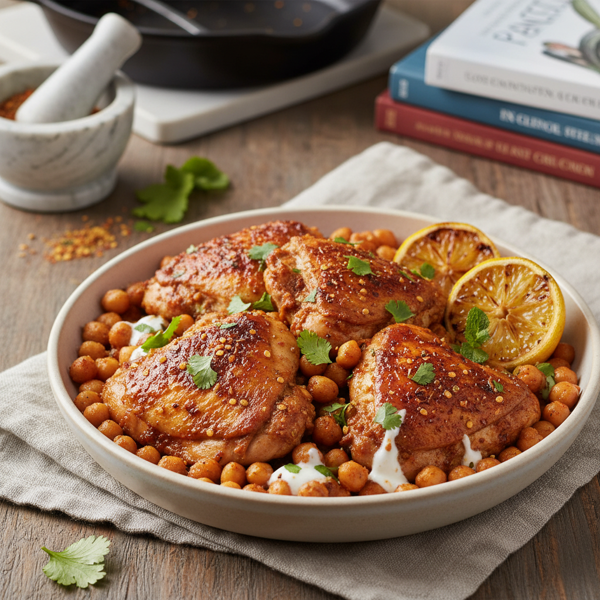
This dish features succulent pan-roasted chicken thighs infused with the bold flavors of harissa, a North African chili paste that adds spice and depth to the meal. Nestled amongst tender chickpeas and aromatic vegetables, this one-pan wonder offers a perfect balance of heat and richness. The crispy skin of the chicken contrasts beautifully with the creamy chickpeas, creating a satisfying and flavorful experience. Garnished with fresh parsley and served with a squeeze of lemon, this recipe is sure to impress your family and friends, making it an ideal choice for both dinner parties and weeknight meals. Adjust the spiciness of the harissa to your taste for a customized flavor profile!
N/A
Servings
N/A
Calories
12
Ingredients
Ingredients
olive oil
1 (tablespoon)
skin-on bone-in chicken thighs
8 ((about 3 pounds))
kosher salt
to taste
fresh ground pepper
to taste
onion
1 (small, finely chopped)
garlic cloves
2 (finely chopped)
tomato paste
2 (tablespoons)
chickpeas
2 ((15 ounce cans, rinsed))
harissa
1/4 (cup)
low sodium chicken broth
1/2 (cup)
fresh flat-leaf parsley
1/4 (cup, chopped)
lemon wedge
for serving
Instructions
1
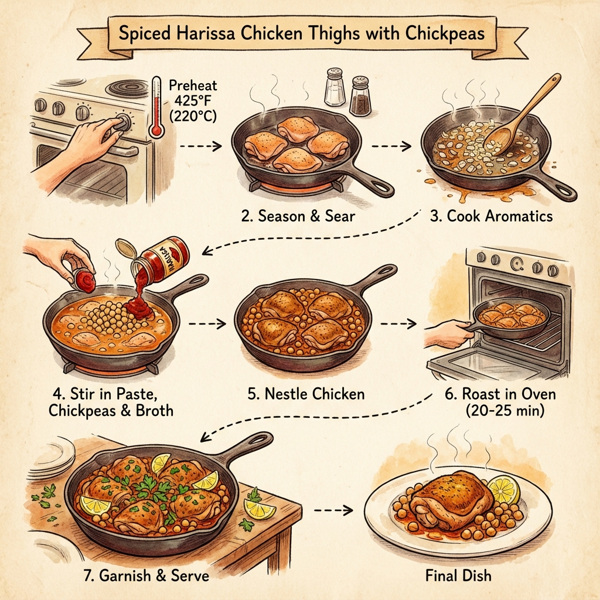
Preheat your oven to 425°F (220°C).
2
In a large ovenproof skillet, heat the olive oil over medium-high heat.
3
Season the chicken thighs generously with kosher salt and freshly ground pepper.
4
Working in two batches, place the chicken thighs skin-side down in the skillet and cook until nicely browned, about 5 minutes per side. Transfer the browned chicken to a plate and set aside.
5
Remove excess drippings from the pan, leaving about 1 tablespoon. Add the finely chopped onion and garlic, cooking while stirring frequently until softened, about 3 minutes.
6
Stir in the tomato paste and cook for about 1 minute, or until it darkens a bit.
7
Add the rinsed chickpeas, harissa, and low-sodium chicken broth to the skillet. Mix well and bring the mixture to a gentle simmer.
8
Carefully nestle the browned chicken thighs skin-side up into the chickpea mixture.
9
Transfer the skillet to the preheated oven and roast until the chicken is cooked through and reaches an internal temperature of 165°F (74°C), about 20-25 minutes.
10
Once done, remove from the oven, sprinkle with chopped fresh parsley, and serve with lemon wedges for a fresh squeeze of brightness over the dish.
Nutrition Information
Frequently Asked Questions
Frequently Asked Questions
What are Spiced Harissa Chicken Thighs with Chickpeas?
This is a one-pan dish featuring succulent pan-roasted chicken thighs infused with North African harissa, nestled among tender chickpeas and aromatic vegetables.
What is harissa?
Harissa is a North African chili paste that adds significant spice and depth of flavor to the meal.
Is this recipe spicy?
Yes, harissa provides a spicy kick, though you can adjust the amount used to control the heat level.
How can I customize the spiciness?
You can adjust the 1/4 cup of harissa to your personal taste to create a customized flavor profile.
What kind of chicken is best for this recipe?
Skin-on, bone-in chicken thighs are recommended for their flavor and ability to stay moist during roasting.
Can I use boneless chicken thighs?
Yes, but you should monitor the internal temperature carefully as they may cook faster than bone-in thighs.
What temperature should the oven be set to?
The oven should be preheated to 425°F (220°C) before roasting the skillet.
How long should I sear the chicken in the skillet?
Cook the chicken skin-side down for about 5 minutes, then another 5 minutes on the other side until nicely browned.
What internal temperature should the chicken reach?
The chicken should reach an internal temperature of 165°F (74°C) to be considered fully cooked.
Do I need to rinse the chickpeas?
Yes, the recipe specifies using two 15-ounce cans of chickpeas that have been rinsed.
Can I use dried chickpeas instead of canned?
Yes, but the chickpeas must be soaked and fully cooked before being added to the skillet for roasting.
How long does the dish need to roast in the oven?
The dish should roast for approximately 20-25 minutes until the chicken is cooked through.
What aromatic vegetables are included in the recipe?
The recipe calls for one small finely chopped onion and two finely chopped garlic cloves.
How long do I sauté the onion and garlic?
Cook the onion and garlic for about 3 minutes until they are softened.
Why is tomato paste cooked for a minute before adding liquid?
Cooking the tomato paste for about a minute allows it to darken and deepens the overall flavor of the sauce.
Can I use chicken breasts instead of thighs?
You can use chicken breasts, but be careful not to overcook them as they are leaner and can dry out more easily than thighs.
What should I serve with this dish?
The dish is great on its own but can be served with lemon wedges for brightness and pairs well with couscous or bread.
Is this a one-pan meal?
Yes, this is a one-pan wonder where everything is prepared and roasted in a single ovenproof skillet.
What is the purpose of the chicken broth?
The 1/2 cup of low-sodium chicken broth provides the necessary liquid to simmer the chickpeas and keep the dish moist.
How much harissa is needed for the recipe?
The recipe calls for 1/4 cup of harissa paste.
What herb is used as a garnish?
Freshly chopped flat-leaf parsley is used to garnish the dish after it comes out of the oven.
What does the lemon wedge add to the dish?
A fresh squeeze of lemon adds a layer of brightness that cuts through the richness of the chicken and chickpeas.
Can I prepare this dish ahead of time?
You can brown the chicken and prep the veggies ahead, but for the best texture, finish the roasting step just before serving.
How do I ensure the chicken skin is crispy?
Searing the chicken skin-side down in olive oil for 5 minutes before roasting helps achieve a crispy texture.
Is store-bought harissa okay to use?
Yes, store-bought harissa is perfectly fine; just be sure to choose a brand whose heat level you enjoy.
Is this recipe gluten-free?
The main ingredients are gluten-free, but always verify that your chicken broth and harissa paste are certified gluten-free.
How many people does this recipe serve?
With 8 chicken thighs, this recipe typically serves 4 to 6 people.
Can I use other beans instead of chickpeas?
Yes, beans like cannellini or butter beans make good substitutes if you do not have chickpeas.
What kind of skillet should I use?
A large ovenproof skillet, such as a cast-iron pan, is ideal for moving from the stovetop to the oven.
What culinary tradition influences this dish?
This dish is influenced by North African flavors, specifically through the use of harissa paste.