Spaghetti Squash Chicken Pad Thai Deluxe
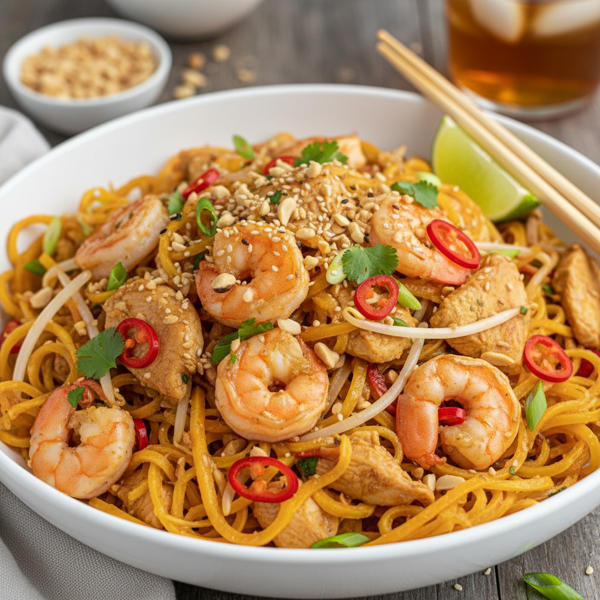
Indulge in a healthier twist on traditional Pad Thai with this Spaghetti Squash Chicken Pad Thai Deluxe recipe. This dish takes the comforting flavors of authentic Pad Thai and swaps out rice noodles for spaghetti squash, creating a lighter, gluten-free option that’s just as satisfying. Tossed with succulent chicken pieces, vibrant vegetables, and a rich Thai peanut sauce, it's a flavorful meal that's perfect for busy weeknights or a delightful weekend feast. Not only is it quick to prepare, but it also bursts with nutrition, making it an ideal addition to your healthy eating routine.
N/A
Servings
N/A
Calories
13
Ingredients
Ingredients
spaghetti squash
1 large (cut in half and seeds scooped out)
chicken breast
1 large (pounded to 1/2 inch thickness and chopped into bite-sized pieces)
eggs
2 (cracked into the pan)
green onion
1/4 cup (sliced for garnishing)
white onion
1/4 cup (diced)
bean sprouts or matchstick carrots
1 cup (fresh bean sprouts or matchstick carrots for stir-frying)
olive oil
2 tablespoons (divided for cooking)
Thai peanut sauce
1 (11 1/2 ounce) jar (for mixing into the stir fry)
crushed peanuts
1/2 cup (optional for garnish)
salt
1/4 teaspoon (for seasoning chicken and squash)
pepper
1/4 teaspoon (for seasoning chicken and squash)
garlic powder
1/4 teaspoon (for seasoning chicken)
turmeric
1/4 teaspoon (optional for seasoning chicken)
Instructions
Nutrition Information
Frequently Asked Questions
Frequently Asked Questions
What is Spaghetti Squash Chicken Pad Thai Deluxe?
It is a healthier, low-carb twist on traditional Pad Thai that replaces rice noodles with roasted spaghetti squash strands, combined with chicken, vegetables, and peanut sauce.
Is this recipe gluten-free?
Yes, spaghetti squash is naturally gluten-free, making this a great alternative for those with gluten sensitivities, provided your peanut sauce is also certified gluten-free.
How do I prepare the spaghetti squash?
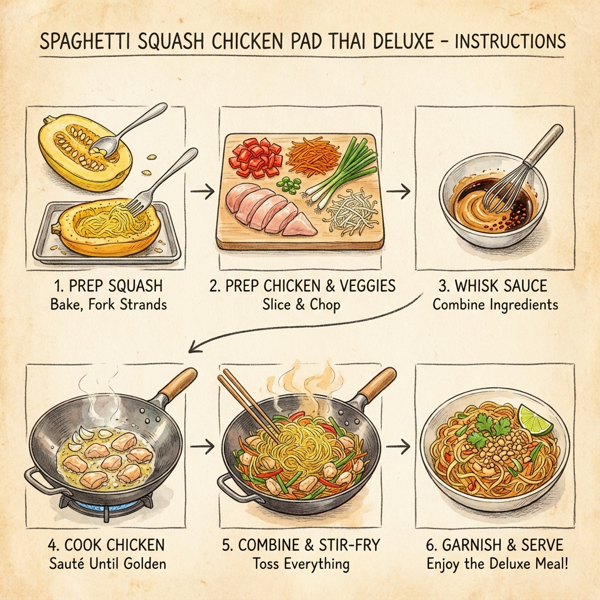
You should cut the large spaghetti squash in half and scoop out the seeds before cooking it until the flesh can be shredded into noodle-like strands.
Can I substitute the chicken with another protein?
Yes, you can easily substitute the chicken breast with shrimp, tofu, or lean pork depending on your preference.
What kind of sauce is used in this recipe?
The recipe uses one 11.5-ounce jar of Thai peanut sauce to provide a rich and authentic flavor profile.
How are the eggs incorporated?
Two eggs are cracked directly into the pan during the stir-frying process to add texture and protein.
What vegetables are included in the stir-fry?
The dish includes white onions and your choice of fresh bean sprouts or matchstick carrots for crunch.
Is this a low-carb meal?
Yes, by using spaghetti squash instead of rice noodles, the carbohydrate content is significantly reduced.
What seasonings are used for the chicken?
The chicken is seasoned with salt, pepper, garlic powder, and an optional touch of turmeric.
How do I garnish this Pad Thai?
Garnish the dish with sliced green onions and optional crushed peanuts for added texture.
Can I use matchstick carrots instead of bean sprouts?
Yes, matchstick carrots are a perfect substitute if bean sprouts are unavailable or if you prefer the flavor of carrots.
What type of oil is recommended for cooking?
The recipe calls for two tablespoons of olive oil, divided for different stages of the cooking process.
Is turmeric mandatory in this recipe?
No, turmeric is listed as an optional seasoning for the chicken to add a bit of color and earthy flavor.
How should the chicken be prepped?
The chicken breast should be pounded to a half-inch thickness and then chopped into bite-sized pieces for even cooking.
Is this recipe considered a one-pan meal?
Yes, it is designed as a quick one-pan stir-fry once the spaghetti squash has been prepared.
How many eggs are required?
The recipe requires two eggs.
Can I make this recipe vegan?
You can make it vegan by omitting the chicken and eggs, and using tofu and a vegan-friendly peanut sauce.
What is the role of the white onion?
The diced white onion is sautéed to provide a savory base layer of flavor for the stir-fry.
Is this recipe spicy?
The spice level depends on the specific brand of Thai peanut sauce you choose; you can select a mild or spicy version.
How do I get the squash to look like noodles?
Once the squash is cooked, use a fork to scrape the inside flesh, which naturally separates into long, spaghetti-like strands.
Can I store leftovers?
Yes, leftovers can be stored in an airtight container in the refrigerator for up to 3 days.
Does this dish contain nuts?
Yes, it contains peanuts via the Thai peanut sauce and the optional crushed peanut garnish.
How long does it take to make?
It is described as a quick recipe, making it ideal for busy weeknights once the squash is ready.
What is the texture of the spaghetti squash in this dish?
The squash provides a tender yet slightly crunchy 'al dente' texture that mimics traditional noodles.
Can I add more vegetables?
Absolutely, you can add bell peppers, broccoli, or snap peas to increase the nutrient density.
Is this recipe dairy-free?
Yes, this recipe does not contain any milk, butter, or cheese products.
Should I use fresh or jarred sauce?
The recipe specifically recommends an 11.5-ounce jar of Thai peanut sauce for convenience and consistent flavor.
Is garlic powder necessary?
It is used to season the chicken, but you can substitute it with fresh minced garlic if you prefer.
Is this recipe kid-friendly?
Yes, the familiar peanut flavor and noodle-like texture often make it a hit with children.
Why pound the chicken to 1/2 inch thickness?
Pounding the chicken ensures it stays tender and cooks quickly and evenly during the stir-fry process.