South African Style Beef Biltong
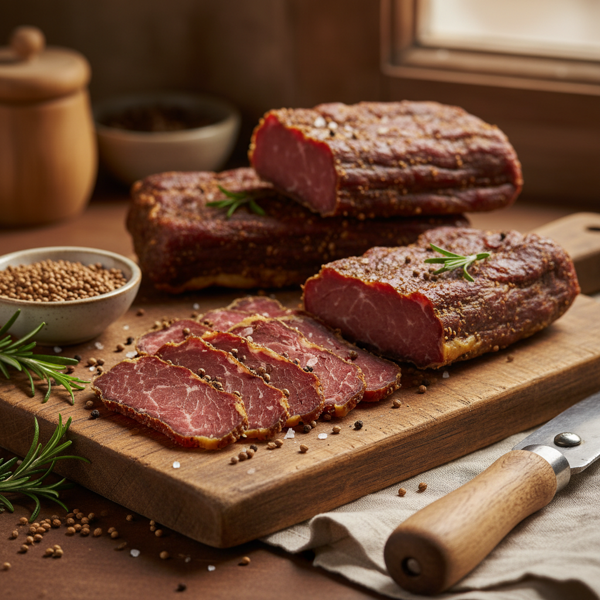
Discover the authentic South African method of making beef biltong, a flavorful and satisfying snack loved by many. This recipe transforms simple rump steak into a deliciously seasoned dried meat that is perfect for sharing at gatherings or enjoying during outdoor adventures. The combination of coarse rock salt, aromatic spices, and a tangy marinade creates a rich flavor profile that elevates beef jerky to a whole new level. With easy-to-follow steps, you’ll be able to craft this traditional delicacy right in your kitchen and impress friends and family with your culinary skills.
N/A
Servings
N/A
Calories
9
Ingredients
Ingredients
Rump Steak
5 (Trimmed and cut against the grain)
Rock Salt
300 (For initial salting)
Mixed Whole Peppercorns
50 (Coarsely ground)
Whole Coriander Seeds
25 (Coarsely ground)
Sugar
4 (Mixed with spices)
Brown Vinegar
500 (Used in marinade)
Worcestershire Sauce
25 (Used in marinade)
All-Purpose Seasoning
50 (Mixed with spices)
Warm Water
250 (Used in marinade)
Instructions
1
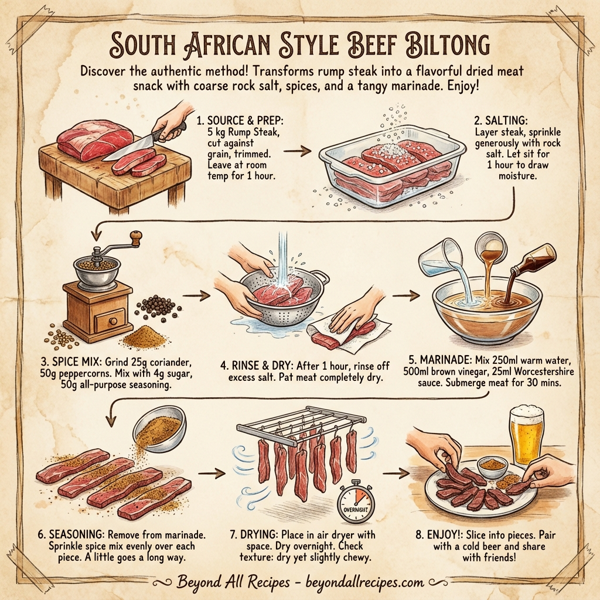
Start by sourcing 5 kg of high-quality rump steak, preferably from a trusted butcher like Bull and Cleaver. Request that the meat be cut against the grain and trimmed of excess fat to enhance flavor.
2
Once you have the meat, leave it at room temperature for at least one hour to allow it to breathe.
3
In a large plastic or glass dish, layer the rump steak and sprinkle rock salt generously between each layer. Let it sit for an hour to draw moisture from the meat.
4
While the meat is resting, prepare your spice mix. Begin by grinding 25 g of whole coriander seeds using a coffee grinder. You can adjust the grind size based on your preference.
5
Add 50 g of mixed whole peppercorns to the grinder and pulse until coarsely ground, typically around 5-10 g of pepper depending on your taste.
6
In a small bowl, combine 4 g of sugar and 50 g of all-purpose seasoning with the freshly ground spices. Mix well and set aside—you can store any unused spice mix for future use.
7
After an hour, the salt will have drawn out moisture from the steak. Rinse the meat to remove excess salt and pat it dry with a paper towel.
8
Prepare the marinade by mixing 250 ml of warm water with 500 ml of brown vinegar and 25 ml of Worcestershire sauce in a large bowl.
9
Submerge the meat in the marinade, ensuring it’s fully coated. Allow it to marinate for at least 30 minutes.
10
After marinating, remove the meat and sprinkle your prepared spice mix evenly over each piece, remembering that a little goes a long way.
11
Place the seasoned strips in an air dryer, ensuring there is enough space between each piece for air circulation. Set your air dryer according to its instructions.
12
Leave the meat to dry overnight. Check for texture in the morning—ideal biltong should be dry yet slightly chewy. If it's still moist, continue drying until the desired consistency is achieved.
13
Once ready, slice into manageable pieces and serve. Pair your delicious biltong with a cold beer for an enjoyable treat. Gather your friends for a delightful snack that captures the essence of South African cuisine!
Nutrition Information
Frequently Asked Questions
Frequently Asked Questions
What is South African Style Beef Biltong?
It is a traditional South African snack made of seasoned, air-dried meat, typically using rump steak and a blend of vinegar and spices.
What is the best cut of meat for making biltong?
Rump steak is recommended for this recipe, particularly when sourced from a quality butcher like Bull and Cleaver.
How much beef is required for this recipe?
This specific recipe calls for 5 kg of rump steak.
Why should the meat be cut against the grain?
Cutting against the grain helps to ensure the final dried meat has a better texture and is easier to chew.
How long should the meat sit at room temperature before preparation?
The meat should be left at room temperature for at least one hour to allow it to breathe.
What is the purpose of using rock salt?
Rock salt is layered with the meat for an hour to draw out moisture, which is a critical step in the curing process.
How long should the meat be salted?
The meat should sit in the rock salt for one hour.
What spices are used in the biltong spice mix?
The mix includes whole coriander seeds, mixed whole peppercorns, all-purpose seasoning, and a small amount of sugar.
How do I prepare the coriander seeds?
You should grind 25 g of whole coriander seeds using a coffee grinder to your preferred grind size.
How much pepper should be added to the mix?
You should pulse 50 g of mixed whole peppercorns until you have approximately 5-10 g of coarsely ground pepper.
Can the unused spice mix be saved?
Yes, any unused spice mix can be stored for future biltong batches.
Do I need to rinse the meat after salting?
Yes, after the hour of salting, rinse the meat to remove excess salt and then pat it dry with a paper towel.
What ingredients are in the marinade?
The marinade consists of 250 ml of warm water, 500 ml of brown vinegar, and 25 ml of Worcestershire sauce.
How long does the meat need to marinate?
The meat should be submerged in the marinade for at least 30 minutes.
How do I apply the spices to the marinated meat?
Remove the meat from the marinade and sprinkle the prepared spice mix evenly over each piece.
What equipment is used to dry the biltong?
An air dryer is used to circulate air around the meat strips for drying.
How should the meat be arranged in the air dryer?
The seasoned strips should be placed with enough space between each piece to allow for proper air circulation.
How long does the drying process take?
The meat should be left to dry overnight, then checked in the morning for the correct texture.
What is the ideal texture for finished biltong?
Ideal biltong should be dry on the outside yet slightly chewy on the inside.
What should I do if the meat is still moist after drying overnight?
If the meat is still too moist, continue the drying process until you achieve the desired consistency.
How should biltong be served?
Once dried, slice the biltong into manageable pieces for serving.
What is a recommended drink pairing for biltong?
Biltong pairs excellently with a cold beer.
Is sugar necessary in the spice mix?
The recipe uses 4 g of sugar to help balance the savory and tangy flavors of the spices and vinegar.
What type of vinegar is used?
Brown vinegar is used to provide the traditional tangy profile characteristic of South African biltong.
What is the role of Worcestershire sauce?
Worcestershire sauce adds depth and a savory umami flavor to the marinade.
Should I remove the fat from the steak?
The meat should be trimmed of excess fat to enhance the overall flavor and drying process.
How much all-purpose seasoning is needed?
The recipe requires 50 g of all-purpose seasoning for the spice mix.
Can I use a different type of salt?
While rock salt is specified for drawing out moisture effectively, the recipe focuses on the traditional use of coarse rock salt.
How many ingredients are in this recipe?
There are 9 primary ingredients: rump steak, rock salt, peppercorns, coriander seeds, sugar, brown vinegar, Worcestershire sauce, all-purpose seasoning, and warm water.
Is biltong the same as beef jerky?
Biltong is similar to jerky but uses a different curing process involving vinegar and air-drying without the high heat or sugar-heavy marinades often found in jerky.