Sour Ethiopian Injera Flatbread
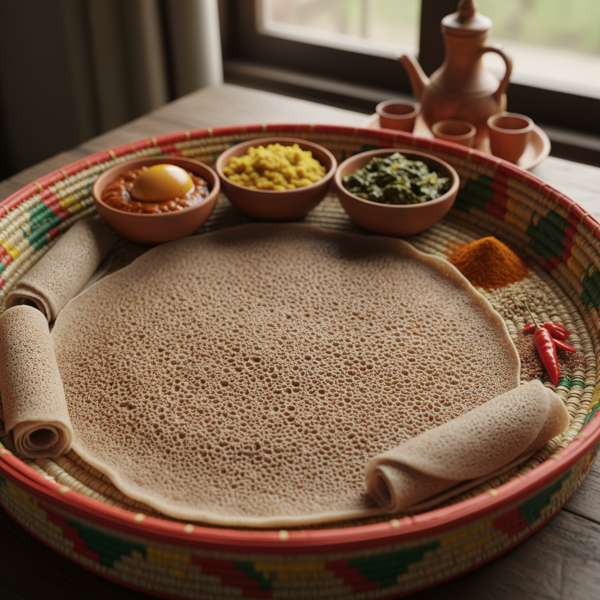
Injera is a traditional sourdough flatbread hailing from Ethiopia, characterized by its sour taste and spongy texture. This staple is not just a side dish; it serves as the very foundation for Ethiopian meals, bringing people together around a communal platter filled with savory stews and vegetables. This adaptation by renowned chef Marcus Samuelsson enables American home cooks to recreate this iconic dish with accessible ingredients. The bread's unique texture allows it to absorb flavors, making each bite an explosion of taste. Enjoy it by tearing pieces off and using them to scoop up delicious dishes, creating an interactive and delightful dining experience. Perfect for serving at any gathering or family dinner, Injera elevates your meal from ordinary to extraordinary.
N/A
Servings
N/A
Calories
6
Ingredients
Ingredients
Teff flour or whole wheat flour
2 cups (Not stone ground)
All-purpose flour
1 cup (Not self-rising)
Salt
1 teaspoon
Baking soda
1 1/2 teaspoons
Plain yogurt
1/2 cup (Use a tart, non-sweet variety (Nancy's preferred))
Club soda
3 cups
Instructions
1
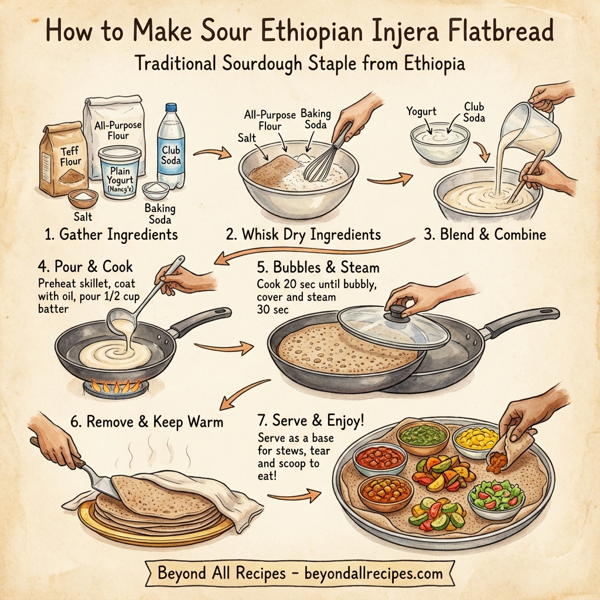
Begin by gathering your ingredients. For authentic flavor, you can use teff flour, which is available at specialty stores or Northern African markets. Nancy's plain yogurt is recommended for its tartness, which is essential to achieving the characteristic sour taste.
2
In a large bowl, whisk together the teff (or whole wheat) flour, all-purpose flour, salt, and baking soda until combined.
3
In a separate bowl, blend the plain yogurt with the club soda until smooth. Gradually pour this mixture into the dry ingredients, stirring until you achieve a thin, lump-free batter.
4
Preheat a non-stick skillet over medium-high heat and lightly coat it with cooking spray or oil. Once heated, pour about 1/2 cup of batter into the skillet, starting from the center and spiraling outward to form a flat round.
5
Cook the injera for about 20 seconds until you see a myriad of tiny bubbles form on the surface, indicating it’s ready to be covered. Cover the skillet and let it steam for another 30 seconds; this helps achieve the desired texture.
6
Carefully remove the injera from the skillet and place it on a warm platter. Cover it with a clean cloth to keep it warm as you continue cooking the remaining flatbreads.
7
To serve, lay a piece of warm injera on your largest plate. In the center, place a generous scoop of your favorite stew or curry. Tear pieces of injera off the edges to scoop up the stew, enjoying the delightful flavors and textures without utensils.
8
For an even more lavish spread, add additional servings of sides like sautéed vegetables or a fresh spinach salad. Enjoy your meal together with family or friends!
Nutrition Information
Frequently Asked Questions
Frequently Asked Questions
What is Injera?
Injera is a traditional sourdough flatbread from Ethiopia that serves as a spongy, sour foundation for communal meals.
What does Sour Ethiopian Injera taste like?
It is characterized by a distinctively tart or sour taste that complements savory stews and vegetables.
What is the texture of this flatbread?
Injera has a unique spongy and porous texture, which is ideal for absorbing flavors and scooping up food.
Who developed this specific adaptation of the Injera recipe?
This version was adapted by the renowned chef Marcus Samuelsson to make it accessible for home cooks.
Can I use a substitute for teff flour?
Yes, while teff flour provides the most authentic flavor, you can substitute it with whole wheat flour if necessary.
What kind of yogurt is recommended for this recipe?
A tart, non-sweet variety of plain yogurt is recommended; the recipe specifically suggests Nancy's brand.
Why is club soda used in the batter?
Club soda is used to help create the thin consistency and the signature bubbly, airy texture of the bread.
How many ingredients are required for this Injera recipe?
The recipe requires 6 main ingredients: teff (or whole wheat) flour, all-purpose flour, salt, baking soda, plain yogurt, and club soda.
What is the first step in preparing the batter?
The first step is to whisk together the flours, salt, and baking soda in a large bowl until well combined.
How do I mix the wet ingredients?
In a separate bowl, blend the plain yogurt with the club soda until the mixture is completely smooth.
What should the final batter look like?
The final batter should be thin and free of any lumps before you begin cooking.
What type of pan should be used for cooking Injera?
A non-stick skillet is best, lightly coated with cooking spray or oil and preheated over medium-high heat.
How much batter should I pour for a single flatbread?
You should use approximately 1/2 cup of batter for each piece of injera.
What technique is used to pour the batter into the skillet?
Pour the batter starting from the center and spiral outward to create a flat, even round.
How do I know when to cover the skillet?
Cover the skillet once you see a myriad of tiny bubbles form on the surface, which usually takes about 20 seconds.
How long does the Injera need to steam?
Once covered, the flatbread should steam for about 30 seconds to reach the desired texture.
How do I keep the cooked Injera warm?
Place the cooked bread on a warm platter and keep it covered with a clean cloth while you cook the rest.
How is Injera traditionally served with stew?
Lay a piece on a large plate and place a generous scoop of stew or curry directly in the center.
What is the proper way to eat a meal with Injera?
Tear off pieces from the edges of the bread and use them to scoop up the stew and vegetables with your hands.
Is this recipe suitable for vegetarians?
Yes, this recipe is vegetarian as it contains only grain-based ingredients, dairy yogurt, and leavening agents.
Where can I buy teff flour?
Teff flour can be found at specialty grocery stores, Northern African markets, or health food sections.
Can I use self-rising flour for this recipe?
No, the recipe calls for standard all-purpose flour and specific amounts of baking soda for leavening.
What makes this bread 'sourdough' if there is no starter?
The combination of tart yogurt and baking soda mimics the sour flavor and airy lift of traditional fermented sourdough.
Is this recipe considered 'gluten-friendly'?
The tags list it as gluten-friendly, likely referring to the option of using teff (which is naturally gluten-free), though this specific blend includes all-purpose wheat flour.
What side dishes pair well with Injera?
It pairs beautifully with Ethiopian stews (wat), sautéed vegetables, or fresh spinach salads.
Do I need to flip the Injera while cooking?
No, Injera is typically cooked on one side only and finished by steaming under a lid.
What role does the baking soda play?
Baking soda reacts with the acidic yogurt to create bubbles, giving the bread its signature 'eyes' and lift.
Why is Injera described as a 'communal foundation'?
In Ethiopian culture, the bread is shared on a large platter, bringing people together to eat from the same plate.
Can I make this bread ahead of time?
While best served fresh and warm, you can keep them warm under a cloth until the meal is served.
How does the bread absorb flavors?
The spongy, porous texture of the flatbread acts like a sponge, soaking up the juices and spices from the stews served on top.